
Bathroom Safety for Seniors: A Wet-Room Inspection Plan for Families
A practical bathroom inspection plan for Indian families checking shower entry, floor grip, drainage, grab bars, toilet transfer, night lighting, dry changing space, and caregiver access.
Quick Answer
A senior-safe bathroom is a wet-room system, not a collection of accessories. Families should inspect the route from bed to bathroom, the shower entry, wet floor grip, drainage, grab-bar placement, toilet transfer, towel and clothes reach, night lighting, door swing, dry changing space, and whether another person can help without trapping the elder inside. The best test is practical: can the parent enter half-awake, use the toilet, bathe, dry, dress, and leave while tired, wet-footed, or holding one support point?
Design safety note
This guide is educational and does not replace advice from qualified architects, accessibility consultants, occupational therapists, physiotherapists, doctors, emergency responders, or licensed care providers. If an older adult has repeated falls, dizziness, confusion, sudden weakness, injury, severe pain, breathing difficulty, or immediate danger, seek urgent local medical help.
5
wet-room risks
Water, soap, glare, thresholds, and unsupported transfers create most bathroom danger.
3
transfer points
Toilet, shower entry, and dry changing area each need stable support.
1
door decision
The door must allow help to enter if the elder falls, faints, or cannot unlock it.
Start with the night bathroom route
Bathroom safety starts before the bathroom door. Many falls happen when an older adult wakes at night, walks quickly, is half-asleep, needs the toilet urgently, or has taken medicines that affect balance. The bedroom-to-bathroom route should have a clear path, low-glare night light, no loose rug, visible threshold, and a switch that can be found without searching.
Families should walk the route as the parent would use it: in slippers, with one hand occupied, and without switching on every decorative light. If the parent instinctively touches walls, furniture, towel rods, or the basin for support, the design is already telling you where support is missing.
Privacy matters. A safer bathroom should not make the elder feel watched or infantilized. The goal is to reduce risk while allowing the parent to bathe, dress, and use the toilet with as much independence as possible.
Treat the shower as a transfer zone
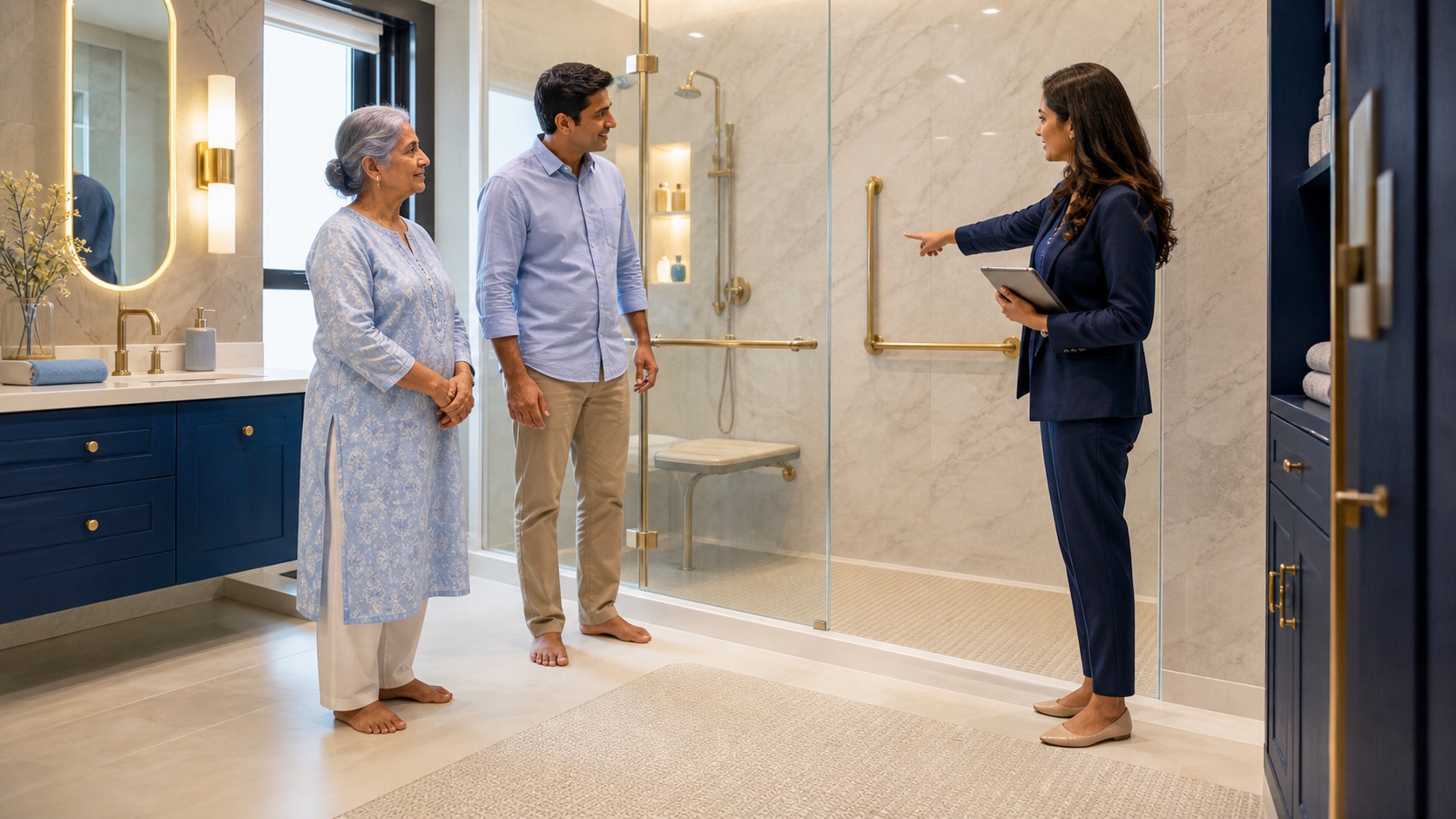
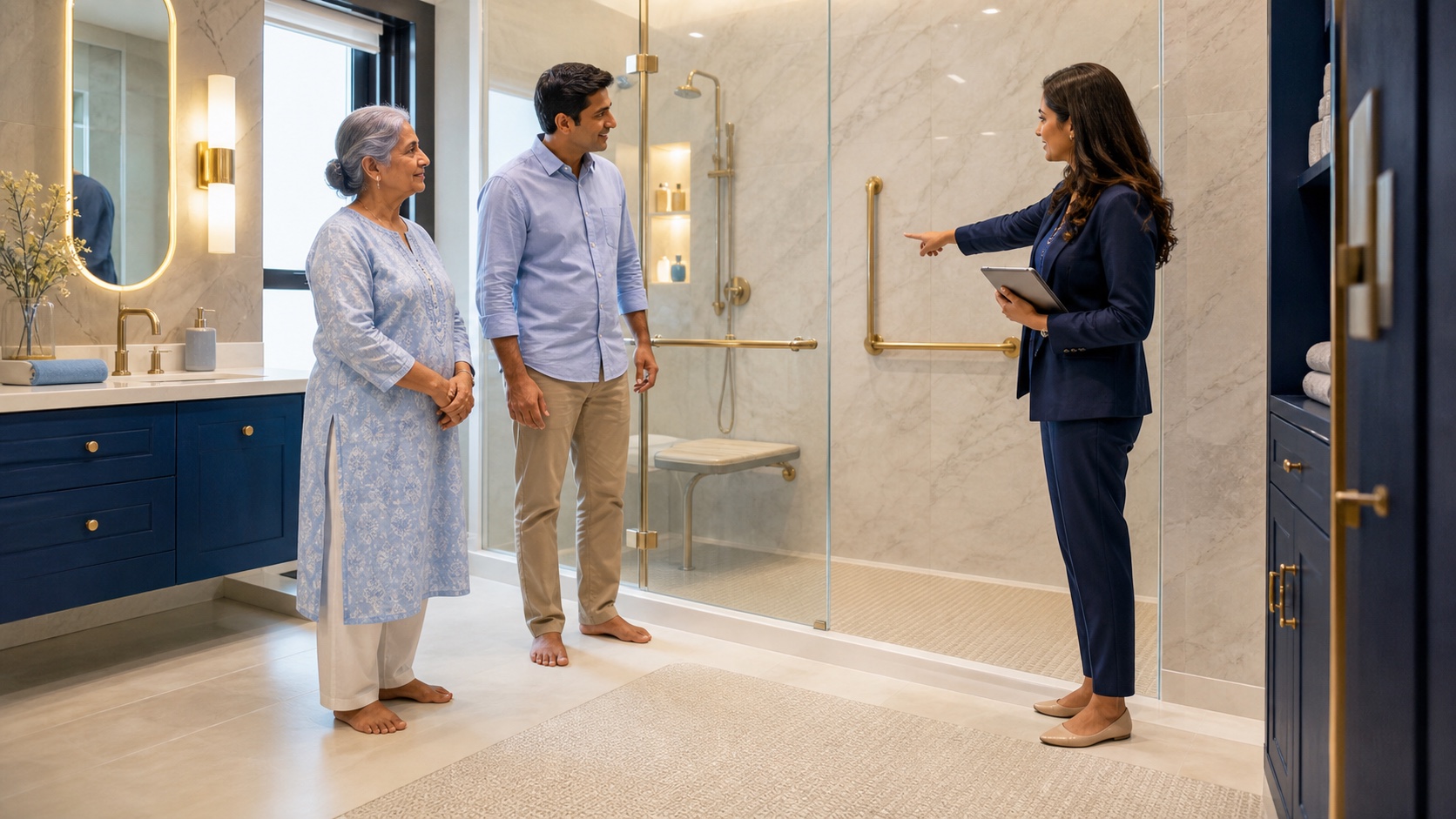
The shower is not just a place to stand under water. It is a transfer zone: entering, turning, reaching for soap, washing feet, drying, and stepping out. A low or no-step entry, non-slip texture, good drainage slope, handheld shower, reachable soap shelf, and a stable place to sit can reduce rushed movements.
Grab bars should be placed where the parent naturally reaches, not where they look symmetrical. They must be anchored into proper backing and should not be confused with towel rods. A family should ask the parent to simulate entry and exit while holding one support point.
Glass, marble, and polished stone can look premium but create glare, invisible edges, and wet slip risk. Contrast at the shower edge, clear handles, matte floor texture, and warm even lighting can make the room safer without making it look institutional.
Plan toilet transfer, dry changing, and emergency access together
The toilet area needs stable side support, usable seat height, toilet paper within reach, and enough space to stand without twisting. Families should not depend on a vanity edge, towel rod, door handle, or shower partition as a substitute for support.
The dry changing area is often ignored. After bathing, the parent needs towel access, clothes within reach, a dry place to sit or stand, and enough turning space. Many falls happen after the shower, when the elder is wet, hurried, cold, or trying to reach a towel placed too far away.
Emergency access must be decided before a crisis. An inward-opening locked bathroom door can trap a person after a fall. Families should check whether the door can be opened from outside in an emergency, whether someone can assist without blocking the exit, and where the emergency call device or bell can be reached from the toilet and shower area.
The senior bathroom inspection checklist
Night route from bed
Check clear walking space, low-glare night light, visible switches, no loose rugs, and no raised threshold hidden in shadow.
Low or no-step shower entry
A flush or very low transition reduces trip risk for knee pain, dizziness, walkers, wheelchairs, and post-surgery recovery.
Wet-floor grip and drainage
Check floor texture, soap slip, drainage slope, water pooling, and whether the floor stays readable under bathroom lighting.
Load-bearing support
Grab bars should be anchored, placed near toilet and shower transfers, and tested against where the elder naturally reaches.
Toilet transfer space
Check seat height, side support, paper reach, flush reach, and whether the elder can stand without twisting.
Dry changing zone
Place towel, clothes, slippers, and seating where the elder can dry and dress without crossing a wet floor.
Door and emergency access
Confirm how help enters if the door is locked and whether an assistant can reach the elder without blocking the exit.
Reachable daily items
Soap, shampoo, towel, clothes, grooming items, medicines, and call device should not require bending, climbing, or stretching.
Bathroom safety decisions families should test
| Design feature | Why it matters | Family question |
|---|---|---|
| Shower entry | A raised curb becomes harder when the elder is wet, tired, dizzy, or using support. | Can the parent enter and exit while holding one stable support point? |
| Grab bar placement | Support fails when bars are decorative, poorly anchored, or placed away from natural reach. | Where does the parent actually reach during toilet and shower transfer? |
| Floor grip and contrast | Wet glossy floors can hide water, edges, and level changes. | Can the parent see and feel the floor edge when the surface is wet? |
| Toilet support | Standing from the toilet requires strength, balance, and hand placement. | Does the parent use real support or reach for unsafe fixtures? |
| Emergency access | A locked inward-opening door can delay help after a fall. | How does help enter if the parent cannot unlock the door? |
Age-friendly design scenes to inspect
A good senior bathroom lets the elder feel private and capable while making wet, tired, night-time movement less risky.

At a glance
Age-friendly design is quiet support
The strongest senior living environments do not make elders feel supervised or reduced. They make movement, rest, help, worship, meals, guests, and emergency response feel natural inside a beautiful home and community.
Questions families ask
Are grab bars enough to make a bathroom senior-safe?
No. Grab bars help only when they are anchored and placed correctly, and when flooring, lighting, drainage, shower entry, toilet transfer, dry changing space, storage, and emergency access are also planned.
What should families inspect first?
Start with the night route from bed to bathroom, then test shower entry, wet-floor grip, toilet support, towel reach, dry changing space, and whether help can enter if the door is locked.
Should bathroom safety look medical?
No. Strong senior design can use premium materials, warm lighting, matte textures, elegant fixtures, and integrated support while still providing real load-bearing safety.
Is a bathtub a good idea for older adults?
Many families find walk-in showers easier because stepping over a tub edge can become difficult after knee pain, weakness, dizziness, or surgery. The choice should be reviewed against mobility, balance, space, and assistance needs.
Where should the emergency call point be?
It should be reachable from likely risk points, especially the toilet and shower or dry changing area. A call point outside the bathroom does not help if the elder cannot reach it after a fall.
Sources