
Emergency Response Systems for Senior Communities: A Family Audit
A practical audit for families checking call points, first responders, locked-door access, medical records, ambulance escalation, night protocols, family updates, and incident review.
Quick Answer
A senior emergency system is only useful when a button, bell, phone, app, or sensor leads to trained human help. Families should audit the full chain: how the elder calls for help, who receives the alert, who reaches the room first, how they enter if the door is locked, where medicines and allergies are recorded, when ambulance or 112 escalation is used, who informs family, and how the community reviews the incident afterward. For NRI families, the critical question is not whether technology exists; it is whether the response pathway works at 2 a.m., during festivals, during staff changeover, and when the elder cannot explain clearly.
Design safety note
This guide is educational and does not replace advice from qualified architects, accessibility consultants, occupational therapists, physiotherapists, doctors, emergency responders, or licensed care providers. If an older adult has repeated falls, dizziness, confusion, sudden weakness, injury, severe pain, breathing difficulty, or immediate danger, seek urgent local medical help.
112
public emergency
Families should know when on-site staff escalate to India's emergency response system.
4
chain links
Alert, access, assessment, and escalation should each have a named owner.
24/7
is the promise to test
Night, weekends, staff leave, and festival crowds reveal whether the system is real.
Map alert to human arrival
A call button is not a response system. It is only the first signal. Families should ask where the alert goes, who sees it, who is allowed to act, how quickly someone reaches the resident, what they are trained to check, and what happens if the first responder is busy.
Walk through common scenarios: a fall in the bathroom, dizziness at night, chest pain, confusion after missed medicine, a locked bedroom door, a parent who cannot speak clearly, and a false alarm. Each scenario should have a named first responder and a backup.
The system should not depend on one helpful guard, one nurse, or one receptionist. A senior community needs written night, weekend, holiday, and staff-changeover protocols because emergencies do not wait for ideal staffing.
Plan access, records, and escalation before the crisis
Locked doors are a dignity issue and a safety issue. Families should decide in advance who can enter, how emergency access works, how privacy is protected, and what happens if the elder has fallen behind an inward-opening bathroom door.
The emergency record should be boring and easy to find: medicines, allergies, diagnoses, doctor numbers, preferred hospital, blood thinner use, diabetes status, recent surgeries, emergency contacts, insurance card location, and consent preferences. Staff should not be searching WhatsApp messages during a crisis.
Escalation rules should be explicit. Staff should know when to call family, when to call the doctor, when to call an ambulance or the public emergency number, and when to use senior citizen support services such as Elderline for non-immediate distress, neglect, abuse, loneliness, or welfare guidance.
Protect dignity while keeping family informed
A response system should not make the elder feel watched all day. Consent, privacy, and clear boundaries matter. The parent should know what is monitored, who receives alerts, when staff can enter, and when children will be informed.
For NRI children, useful updates are specific: time of alert, who responded, what was found, vital observations if available, what action was taken, whether doctor or ambulance escalation happened, and what follow-up is planned. Vague reassurance after an incident is not enough.
After every fall, dizziness episode, missed medicine, confusion event, or emergency call, the plan should improve. Review whether the alert was reachable, access was smooth, records were current, staff acted within protocol, and family communication was clear.
Emergency response audit checklist
Alert points in real risk zones
Check bedside, bathroom, living area, balcony, corridor, lift lobby, and garden routes. A call point outside the bathroom does not help after a bathroom fall.
Named first responder
Ask who physically reaches the elder first at night, during meals, during festivals, and when regular staff are on leave.
Locked-door access plan
Clarify keys, consent, privacy rules, bathroom access, master-key control, and who is authorized to enter during a suspected emergency.
One-page emergency record
Keep medicines, allergies, diagnoses, doctor, hospital preference, insurance details, and emergency contacts available to responders.
Escalation thresholds
Set clear rules for when staff call family, doctor, ambulance, 112, or a local hospital emergency desk.
Family update format
Agree on immediate calls, written incident notes, follow-up timing, and who receives updates when children live abroad.
Drill and false alarm review
A false alarm should improve device placement and staff training, not make the elder afraid to ask for help.
Post-incident review
After every event, review alert reachability, arrival time, access, record accuracy, escalation, and family communication.
Emergency response decisions families should test
| Design feature | Why it matters | Family question |
|---|---|---|
| Call point placement | Alerts fail when devices are not reachable from likely fall or distress locations. | Can the elder call from bed, toilet, shower area, floor level, and living space? |
| First responder | Technology only helps when a trained person arrives and knows what to do. | Who comes first, what is their training, and who backs them up? |
| Door and key protocol | Locked rooms and bathroom doors can delay help after a fall or fainting episode. | How does help enter quickly while respecting privacy and consent? |
| Emergency record | Medicines, allergies, doctors, and diagnoses guide safer escalation. | Can staff find the latest record in one minute without calling family first? |
| Medical escalation | Some events need urgent ambulance, doctor, or 112 support. | Who decides escalation, which number is called, and which hospital is preferred? |
| Family communication | NRI families need facts, timing, and follow-up rather than vague reassurance. | What information is shared immediately, and what is documented after the event? |
Age-friendly design scenes to inspect
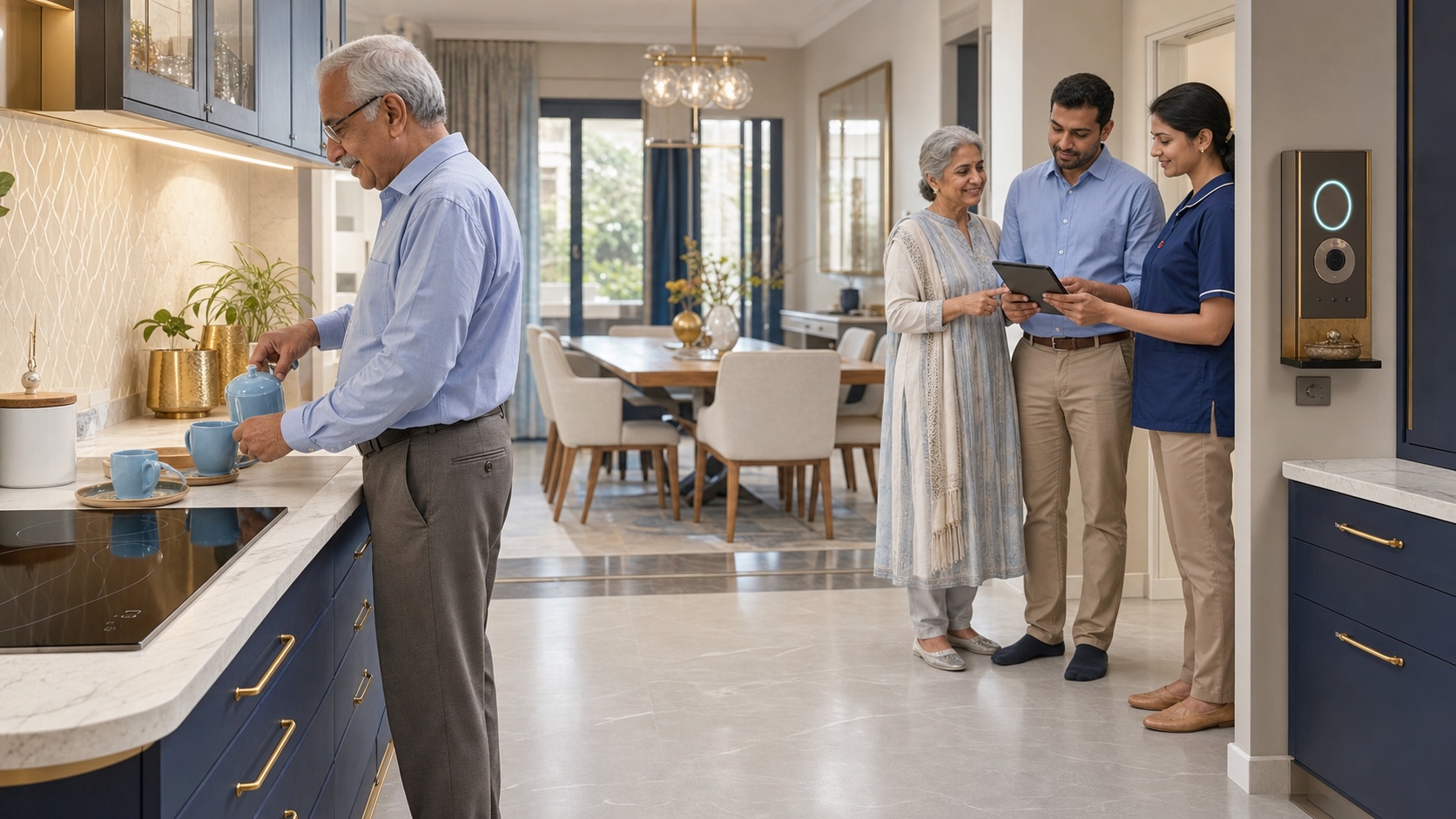
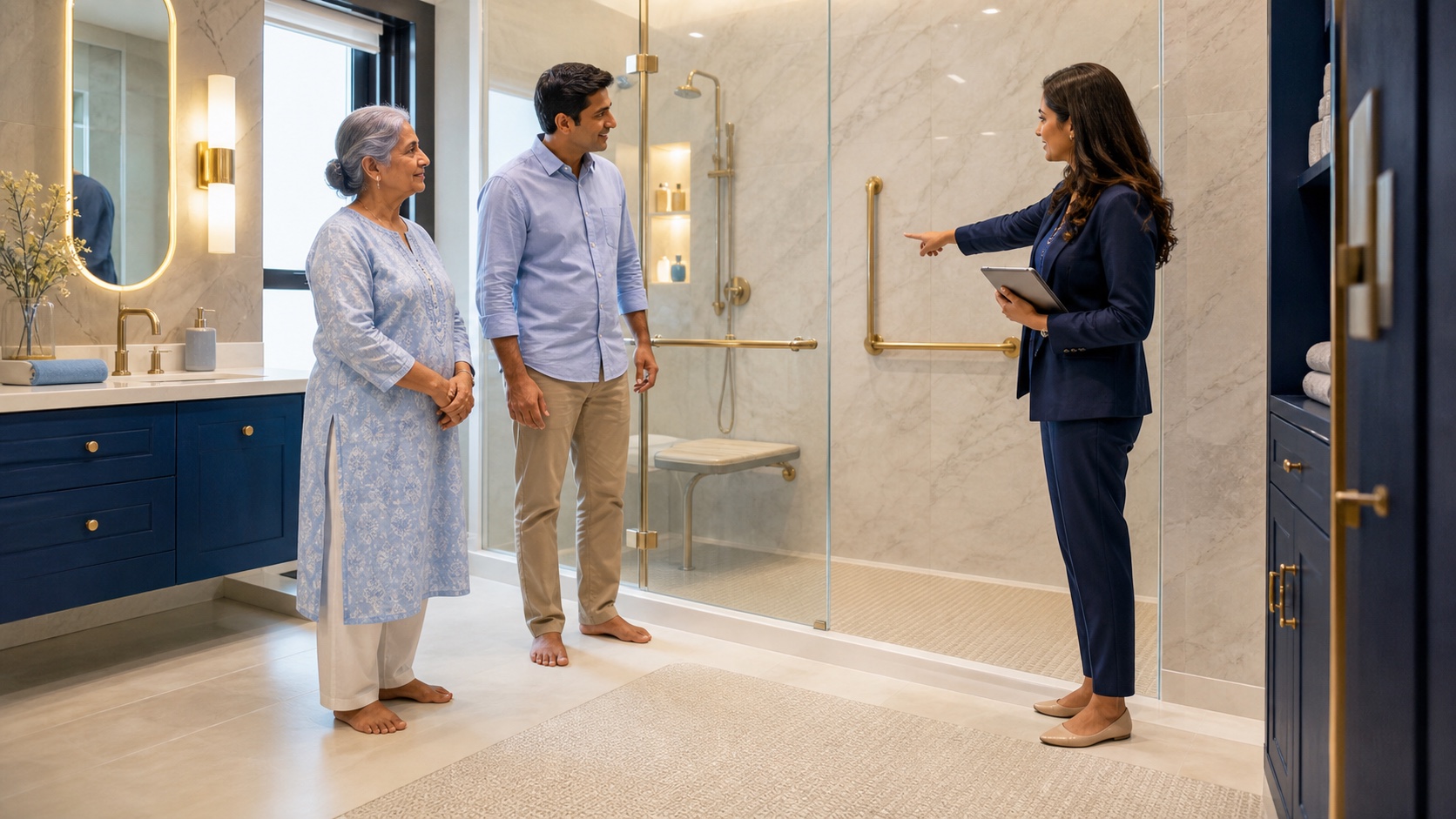
Families should inspect the response chain with the same seriousness as floor plans, views, finishes, and amenities.

At a glance
Age-friendly design is quiet support
The strongest senior living environments do not make elders feel supervised or reduced. They make movement, rest, help, worship, meals, guests, and emergency response feel natural inside a beautiful home and community.
Questions families ask
Is a panic button enough for senior safety?
No. A panic button helps only when it is reachable, routed to the right person, backed by trained staff, supported by an access plan, linked to records, and followed by clear escalation and family communication.
What should NRI children ask first?
Ask who physically reaches the parent after an alert, how they enter, what they are trained to check, when ambulance or 112 escalation happens, and what exact update the family receives.
How should privacy be handled?
The elder should understand and consent to the response plan. Families should clarify what is monitored, who sees alerts, when staff can enter, and how private health information is shared.
What should be in the emergency record?
Include medicines, allergies, diagnoses, recent surgeries, doctor numbers, emergency contacts, preferred hospital, insurance card location, and any special instructions such as blood thinner use or diabetes risk.
What should happen after a false alarm?
A false alarm should be treated as a system test. Review whether the button was too sensitive, poorly placed, confusing to use, or whether staff need better training. Do not shame the elder.
Sources