
Gentle Pilgrimage for Seniors in Vrindavan: A Safe Visit Plan
A practical visit-card guide for families planning senior temple trips around heat, walking distance, medicines, toilets, seating, crowds, and return triggers.
Quick Answer
A gentle pilgrimage plan for seniors in Vrindavan should be written before leaving home. Decide the visit version for the day: full visit, short darshan, or no-outing home ritual. Then confirm cooler timing, drop-off point, walking distance, queue exposure, shaded pauses, toilet access, seating, water, medicine and meal timing, footwear, phone charge, ID, emergency contact, and return transport. One companion should be clearly responsible for watching the elder, not the ritual. The plan should also list stop signs: chest pain, breathlessness, fainting, new confusion, sudden weakness, fall, severe dizziness, heat illness symptoms, severe pain, or the elder asking to return.
Care and dignity note
This guide is educational and cultural. It does not replace medical care, mental health support, legal advice, spiritual counselling, or emergency help. If an older adult has severe depression, self-harm thoughts, sudden confusion, chest pain, breathing difficulty, a fall, severe weakness, or immediate danger, seek urgent local help.
3
visit versions
Full visit, short darshan, and no-outing ritual prevent all-or-nothing planning.
1
named companion
One person must watch fatigue, walking, medicines, water, and the return plan.
0
guilt for stopping
A safe return is part of pilgrimage, not a failure of devotion.
Choose today's visit version
The first question is not which temple to visit. It is what kind of visit the elder can safely do today. A good plan has three versions: the usual visit, a shorter darshan with fewer steps, and a no-outing version using home prayer, bhajan, livestream, photos, or a small community ritual.
This protects dignity because the elder is not forced to choose between devotion and exhaustion. Sleep, pain, appetite, heat tolerance, blood sugar, breathing, mood, and recent illness should decide the version before the family leaves home.
Map the route in elder terms
Distance on a map is not the same as elder access. Families should count the hard parts: road crossing, uneven surface, queue length, stairs, shoe-removal point, barefoot walking, noise, shaded pauses, toilet access, seating, and the distance back to transport.
Write the route as a sequence: vehicle drop, first pause, queue decision, darshan point, seating point, toilet option, exit point, return vehicle, and who carries the phone, water, medicines, glasses, hearing aid case, and ID.
Make stopping easy
Families often fail because they decide how to go but not how to stop. The companion should know the exact return rule: leave immediately if the elder has chest pain, breathlessness, fainting, new confusion, sudden weakness, a fall, severe dizziness, heat illness symptoms, severe pain, or simply says they cannot continue.
Festival days need stricter rules. Heat, crowd movement, long standing, late nights, loud sound, and blocked exits can turn a beautiful day into a medical problem. A balcony view, short community program, seated bhajan, or home ritual may be the better pilgrimage on those days.
The senior temple visit card
Write the go/no-go check
Before leaving, check sleep, pain, dizziness, appetite, breathing, medicines, blood sugar if relevant, weather, crowd risk, and the elder's preference.
Fix medicine and meal timing
Do not let darshan delay prescribed medicines, food, water, or rest; carry only what the elder is allowed to take.
Name the companion
One person should stay beside the elder, watch fatigue, manage the return plan, and avoid getting distracted by photos or rituals.
Plan barefoot safety
Check how far the elder must walk after removing shoes, whether the surface is hot or uneven, and where footwear will be recovered.
Mark toilet and seating points
The visit should have a known toilet option, chair or ledge, shaded pause, and a place to wait if the family separates.
Keep essentials reachable
Phone, ID, emergency contact, water, medicines, glasses, hearing aid needs, and a permitted snack should not be buried in a bag.
Respect the return request
If the elder asks to go back, return without debate. Persuasion at that moment can turn devotion into pressure.
Temple visit decisions families should make before leaving
| Practice | Why it matters | Family question |
|---|---|---|
| Visit version | The elder may need a short visit or home ritual even when the family wants a full outing. | Is today full visit, short darshan, or no-outing ritual? |
| Route | Steps, road crossings, queues, barefoot walking, toilets, and shaded pauses decide real access. | Where does the elder sit, pause, use a toilet, and exit? |
| Heat and crowd rule | Older adults are more vulnerable to heat, dehydration, fatigue, and confusion during crowded outings. | What weather or crowd condition cancels the visit? |
| Return trigger | Families need permission to stop before symptoms become an emergency. | Which signs mean return now and seek help? |
| Companion duty | A large family group can still leave the elder unsupported if no one is assigned. | Who is watching the elder from door to door? |
Spiritual ageing scenes to inspect
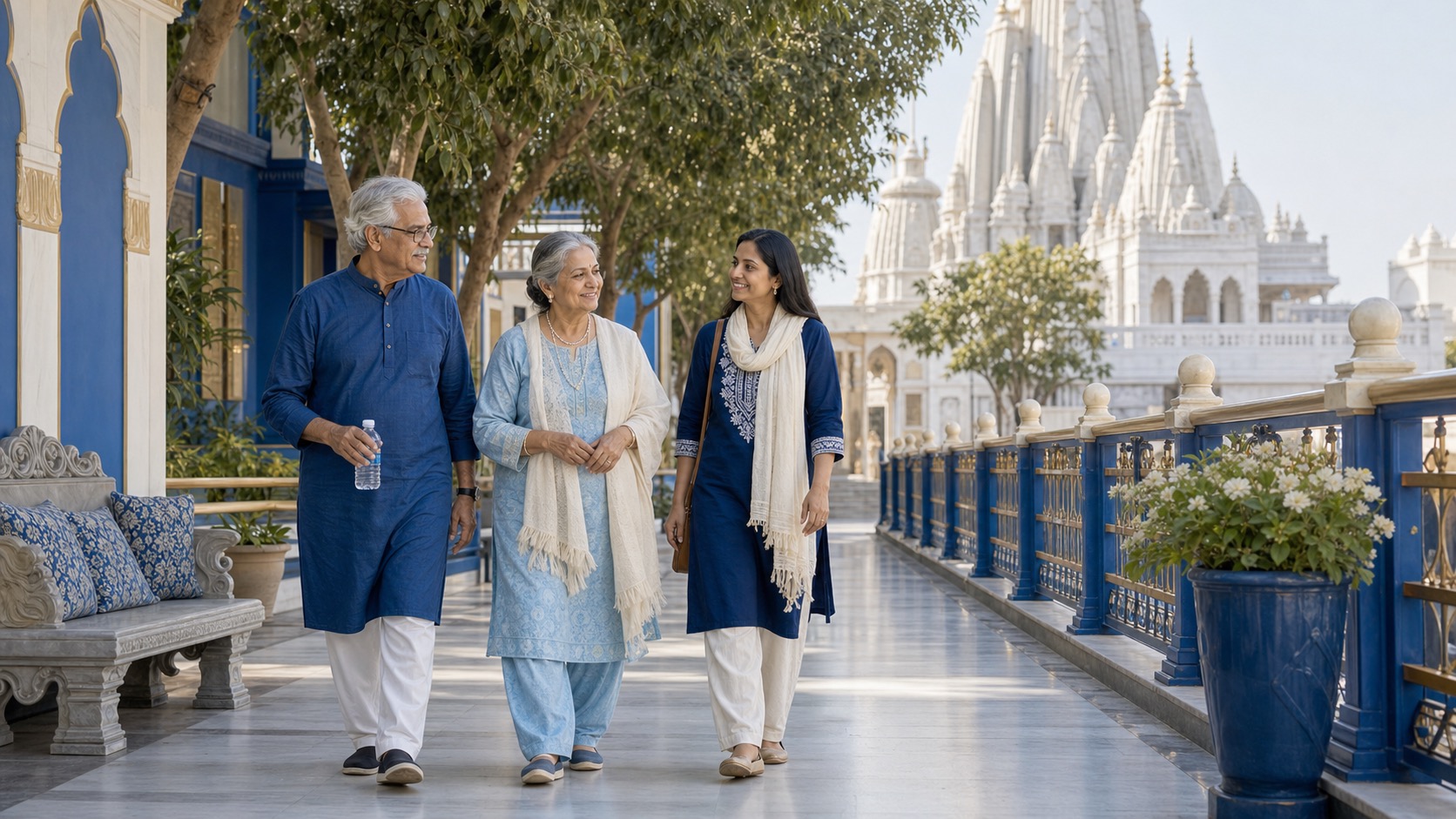
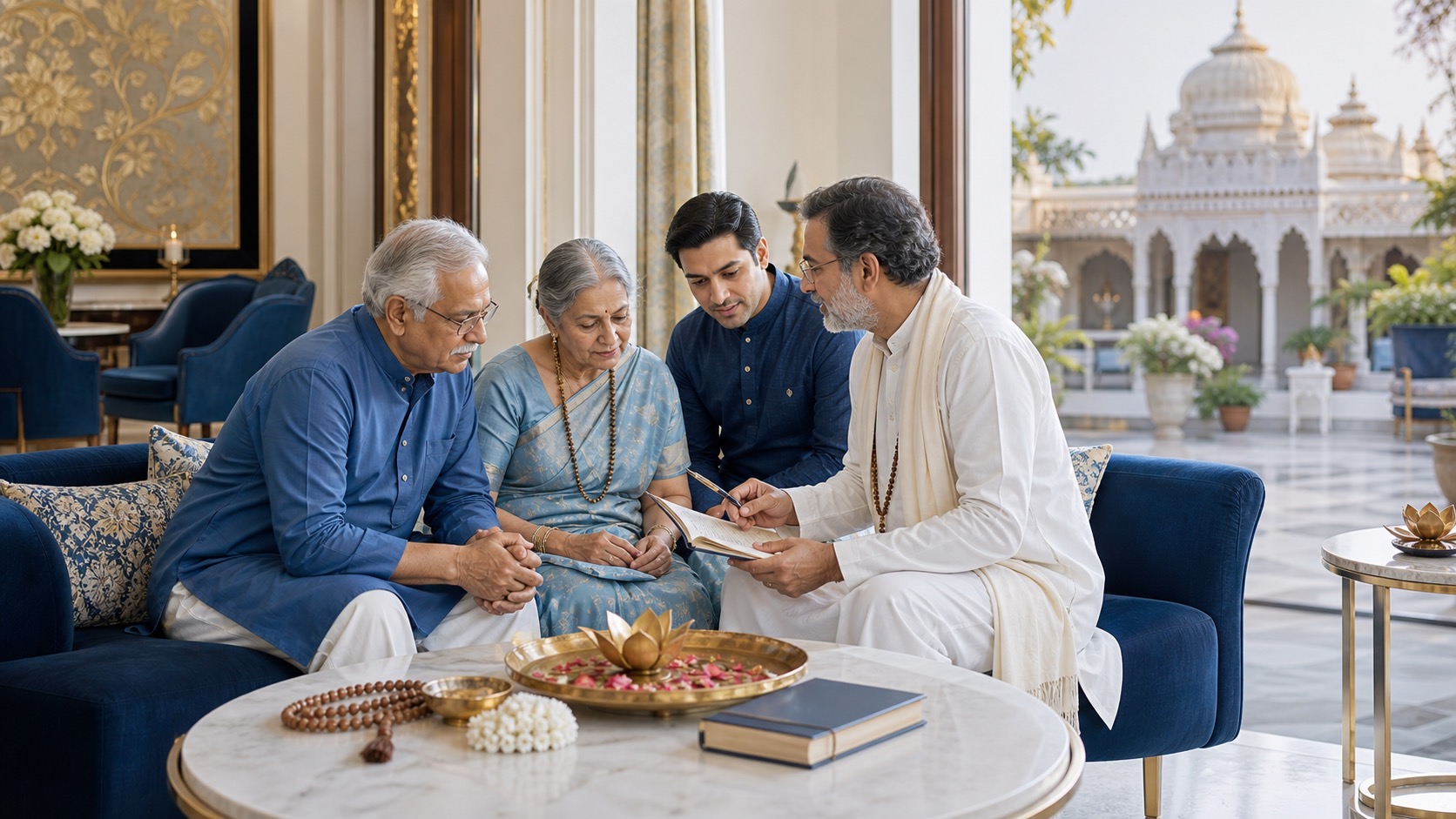
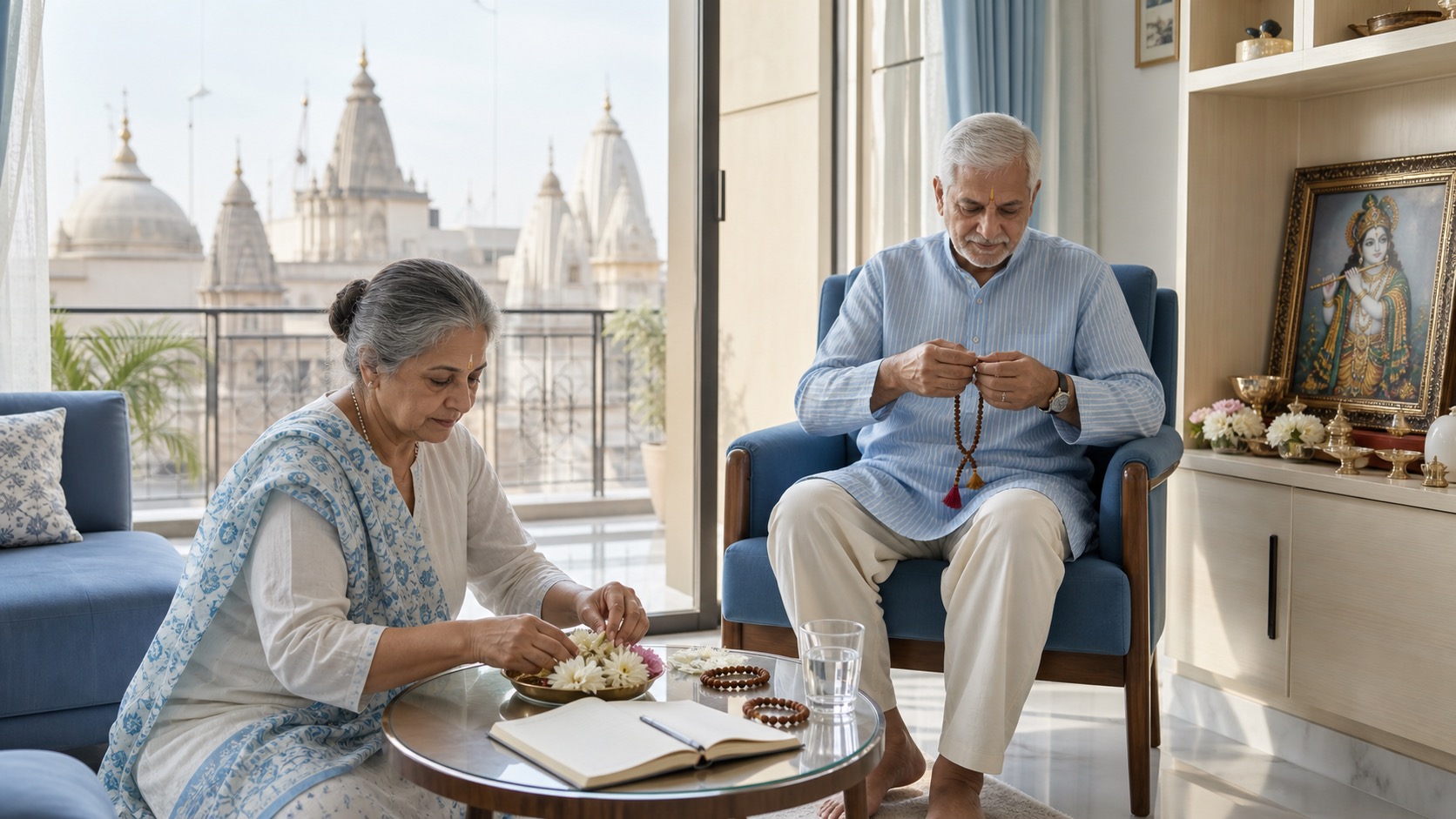
A senior-friendly temple visit is measured by whether the elder returns calm, safe, hydrated, and respected, not by the number of places covered.
At a glance
Spiritual ageing needs both meaning and support
The strongest spiritual retirement setting does not ask seniors to ignore the body. It brings devotion, safety, companionship, rest, family clarity, and dignity into one daily rhythm.
Questions families ask
Should seniors avoid crowded temple days completely?
Not always, but the plan should be stricter. If heat, standing, noise, crowd flow, toilet access, or return transport is uncertain, use a shorter visit, seated participation, community ritual, or home darshan.
What symptoms should stop a temple visit?
Stop for chest pain, breathlessness, fainting, new confusion, sudden weakness, fall, severe dizziness, heat illness symptoms, severe pain, or the elder asking to return. Seek appropriate medical help instead of continuing.
What should be packed for a senior temple outing?
Phone, charged power bank if needed, ID, emergency contact, water, prescribed medicines, glasses, hearing aid needs, a permitted snack, handkerchief, and any walking support the elder normally uses.
Is a short visit spiritually enough?
Yes. For an older adult, a peaceful ten-minute darshan or seated bhajan can be more respectful than an exhausting multi-temple route.
Sources