
Healthy Ageing After 60: Guide for Indian Families
A practical, evidence-aware guide to healthy ageing after 60 for Indian families, built around function, dignity, prevention, community, and spiritual purpose.
Quick Answer
Healthy ageing after 60 is not only the absence of disease. WHO defines healthy ageing around functional ability: the ability to be and do what a person values. For Indian families, that means protecting mobility, nutrition, cognition, emotional wellbeing, medicines, safety, social connection, and spiritual purpose together.
Key numbers to know
WHO projects a sharp global shift toward older populations.
WHO estimates the global 60+ population will reach 2.1 billion.
UNFPA projects India will have about 347 million people aged 60+.
Main guide
Why healthy ageing is a family strategy
After 60, a person's health is shaped by much more than medical reports. Walking ability, balance, food intake, sleep, medicines, confidence, friendships, and daily purpose all decide whether an elder can live independently.
Indian families often wait for a crisis before planning: a fall, sudden confusion, hospitalization, or caregiver burnout. A healthier approach is to build a routine that notices small changes early and supports the elder before independence is lost.
The better question is functional ability
A senior may have diabetes, blood pressure, arthritis, or hearing loss and still age well if these conditions are managed and the environment supports daily function. The better question is: can the person move safely, eat well, remember key routines, sleep adequately, stay connected, and make choices?
This is why a senior-friendly community matters. Flat walking paths, nearby wellness support, predictable meals, social contact, spiritual activities, and emergency readiness can protect ability even when medical conditions exist.
How Vrindavan changes the ageing conversation
For many Indian families, later life is not only a health phase. It is also a spiritual phase. Vrindavan can support routine, devotion, seva, satsang, gentle temple visits, and community belonging.
Krishna Bhumi's advantage is the combination of residential living, wellness orientation, spiritual geography, and proximity to major Vrindavan destinations. Healthy ageing should feel like dignity plus daily support, not dependency.
7 foundations of healthy ageing after 60
- 01
Safe movement every day
Walking, balance practice, stretching, and supervised strength work help preserve independence when adapted to the elder's ability.
- 02
Adequate protein and hydration
Families should watch appetite, weight changes, chewing problems, swallowing difficulty, and water intake instead of assuming low intake is normal.
- 03
Medicine review
Multiple medicines increase the need for periodic review by a qualified clinician, especially after hospitalization or new symptoms.
- 04
Fall prevention
Lighting, bathroom safety, footwear, vision checks, balance, and clutter-free walking routes are practical safety priorities.
- 05
Cognitive and emotional check-ins
Memory, confusion, mood, sleep, loneliness, and withdrawal are health signals, not just personality changes.
- 06
Community and purpose
Shared routines, spiritual practice, friendships, and meaningful roles can reduce isolation and help elders feel useful.
- 07
Family escalation plan
Every family needs a written plan for whom to call after a fall, fever, confusion, missed medicines, or sudden weakness.
Healthy ageing signals families should track
| Factor | What to Watch | Family Action |
|---|---|---|
| Mobility | Slower walking, difficulty rising from a chair, fear of stairs, near falls. | Review footwear and home safety; ask a clinician about balance or physiotherapy. |
| Nutrition | Reduced appetite, loose clothes, fatigue, low protein intake, dehydration. | Track meals for a week and discuss weight or appetite changes with a doctor. |
| Memory | Missed bills, repeated questions, medicine errors, getting lost in familiar places. | Do not dismiss sudden change; seek medical assessment, especially if confusion is acute. |
| Mood | Withdrawal, hopelessness, irritability, poor sleep, loss of interest. | Increase social contact and seek mental health or medical help when persistent. |
| Safety | Clutter, low lighting, slippery bathrooms, no emergency contact system. | Create a home safety checklist and emergency response plan. |
Care in practice
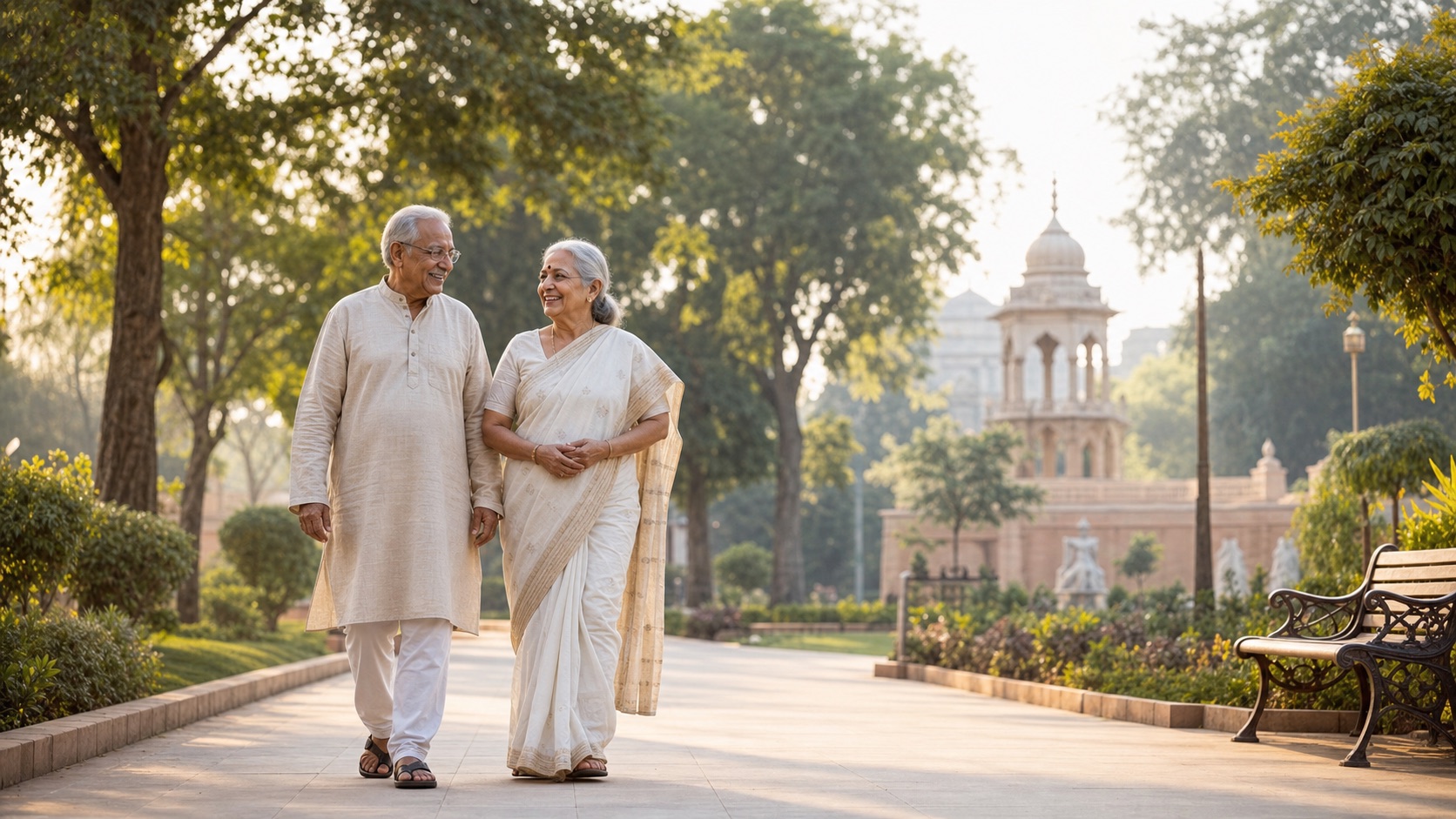
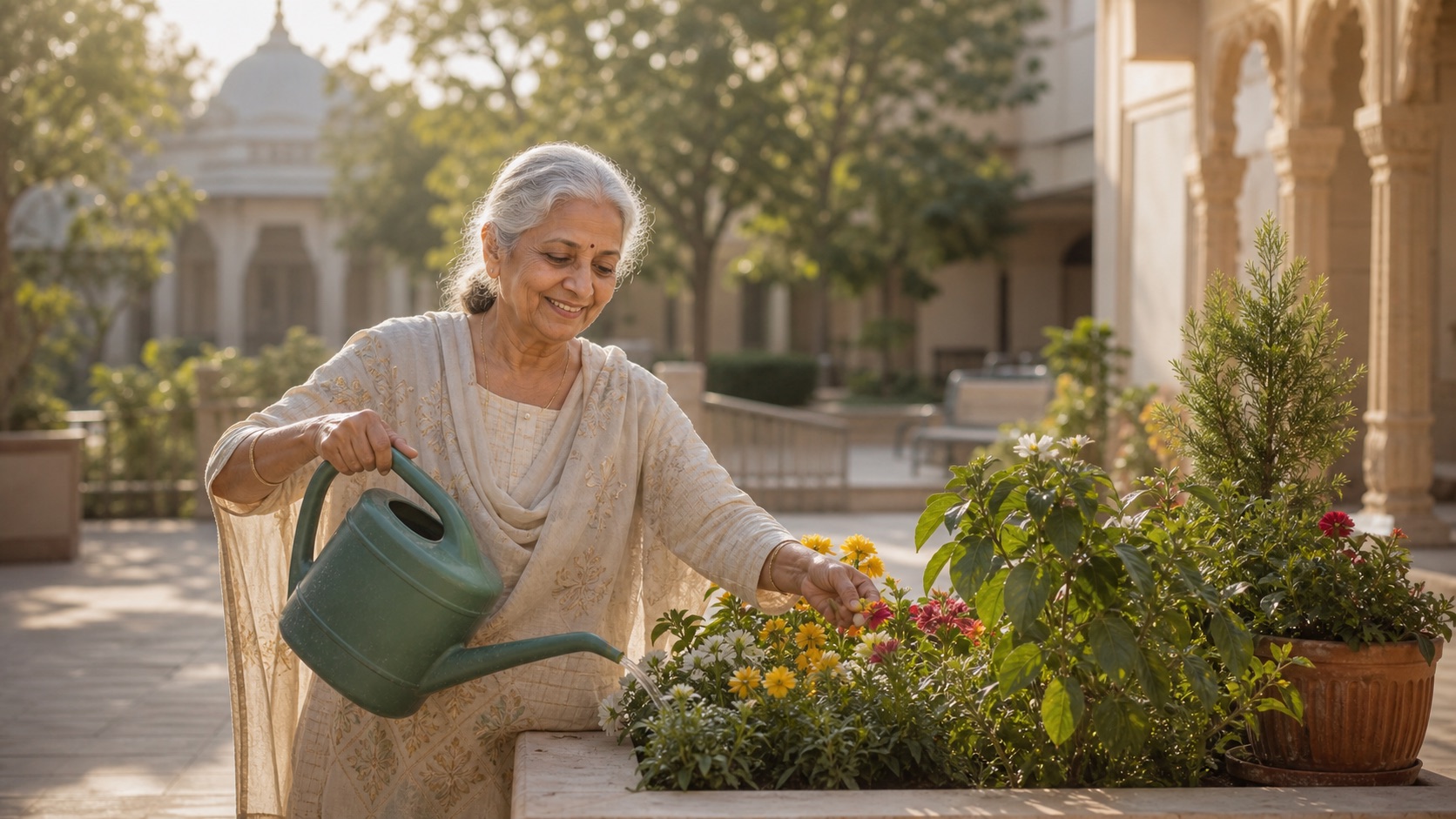
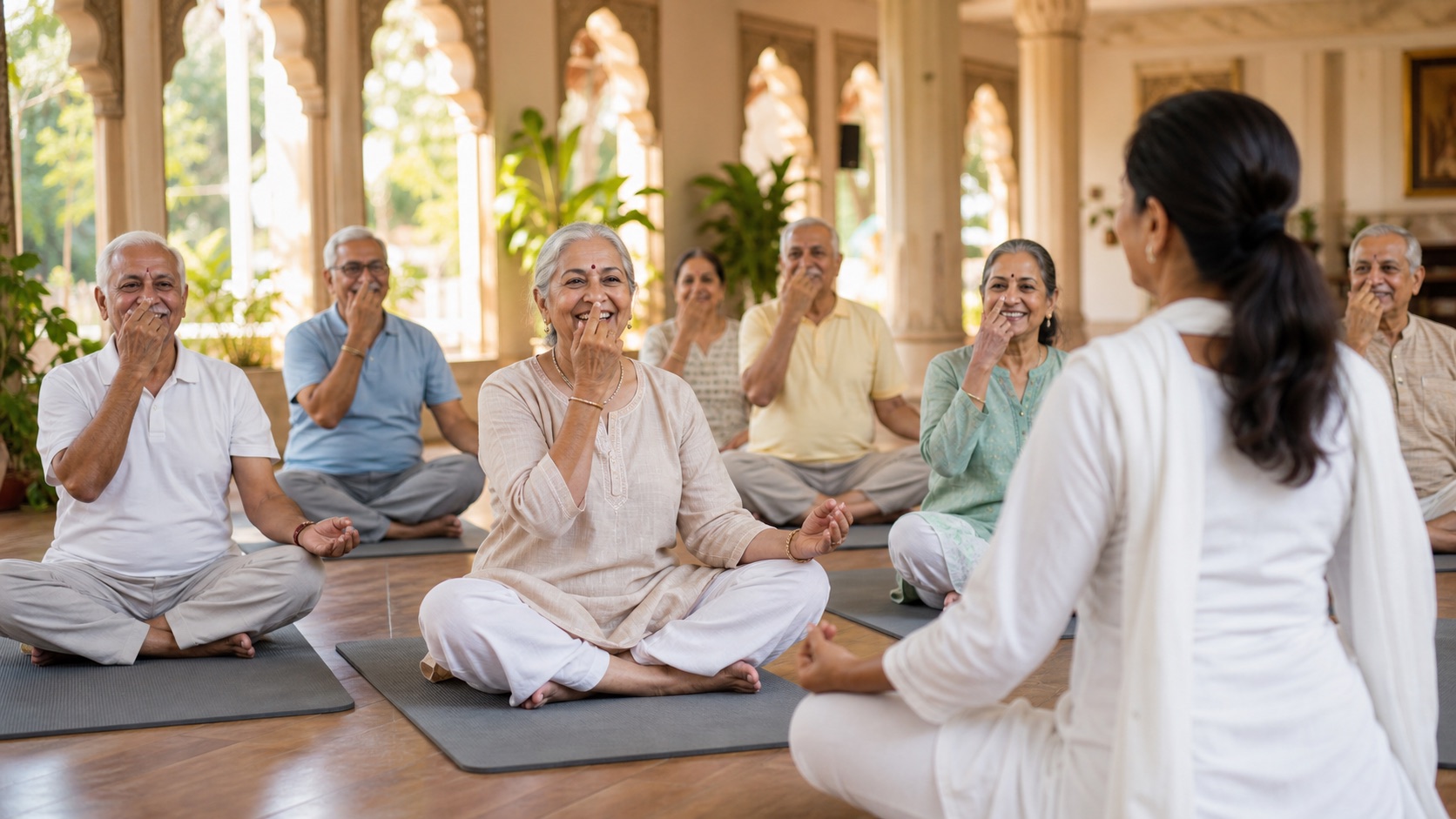
Three scenes that show how the advice can look in daily family life, clinical planning, and community routines.
At a glance
Healthy ageing is a system, not a single habit
The strongest plans combine body, mind, environment, family, and purpose instead of treating each problem separately.
WHO projects a sharp global shift toward older populations.
WHO estimates the global 60+ population will reach 2.1 billion.
UNFPA projects India will have about 347 million people aged 60+.
Before you act
This article is for education and family planning only. It does not replace advice from a qualified doctor, geriatrician, physiotherapist, psychiatrist, dietitian, or other licensed professional. Seek urgent medical help for sudden weakness, chest pain, severe breathlessness, fainting, serious injury, or sudden confusion.
Questions families ask
What is the simplest definition of healthy ageing?
Healthy ageing means preserving the ability to do meaningful daily activities, stay connected, and make choices, even when chronic conditions exist.
Is disease-free ageing realistic after 60?
Many older adults live with chronic conditions. The realistic goal is better function, fewer preventable crises, safer routines, and good quality of life.
What should families track first?
Start with walking, falls or near falls, appetite, medicines, memory, mood, sleep, and emergency readiness.
Can spiritual community support healthy ageing?
Yes, spiritual routines and community can support purpose and belonging. They should complement, not replace, medical care.
When should a doctor be consulted?
Consult a qualified clinician for sudden confusion, repeated falls, unexplained weight loss, persistent sadness, new weakness, chest pain, breathlessness, or medicine problems.
Sources and review notes
Last reviewed: 2026-05-30. The data points in this guide are based on official public-health and ageing sources where available.