
Home Safety for a Parent With Memory Loss: A Room-by-Room Audit
A practical room-by-room safety audit for families supporting a parent with memory loss, covering falls, gas, medicines, doors, nights, bathrooms, money, and dignity.
Quick Answer
A safer home for a parent with memory loss is not just tidy; it is easier to understand. Families should audit the home for falls, bathroom slips, gas and appliance risk, medicine mistakes, wandering, night confusion, balcony and stair hazards, money scams, and delayed emergency response. Start with risks that can cause immediate harm, preserve privacy where possible, document incidents, and seek medical or care guidance when safety needs exceed what the home can reliably provide.
Bathroom, kitchen, bedroom, stairs, balcony, entrance, and medicines need the first review.
Falls, fire or gas, and medicine errors should be addressed before cosmetic changes.
Every family helper should record incidents, near misses, and changes in routine.
Main guide
Start with incidents, not furniture shopping
A useful home-safety review starts with what has actually happened: a fall, a burnt pan, the gas left on, medicines mixed up, a door opened at night, a missed meal, a bathroom slip, or a parent found confused near the lift.
Write each incident with date, time, room, trigger, injury or near miss, who was present, and what changed afterwards. This prevents the family from buying random gadgets while missing the real risk pattern.
The first priority is harm reduction. Falls, gas, medicines, wandering, stairs, balconies, and emergency access deserve attention before decorative labels or general decluttering.
Make the route easy to understand
Memory loss can make a familiar home feel unfamiliar, especially at night or after illness. Clear walking paths, steady lighting, reduced glare, simple furniture placement, and consistent storage reduce decision load.
Keep essential routes obvious: bed to bathroom, bedroom to living room, chair to dining area, entrance to helper area. Remove loose rugs, cables, low stools, slippery mats, and furniture corners from these routes.
Labels and photos can help if they answer a real question. Too many signs become visual noise. Use simple cues for bathroom, bedroom, emergency contact, medicine support, and a small daily routine board.
Treat bathroom, kitchen, and medicines as high-risk zones
Bathrooms combine water, urgency, darkness, and hard surfaces. Families should check non-slip flooring, grab support where appropriate, night lighting, easy door opening, safe water temperature, and whether the elder can find the toilet without rushing.
Kitchens need a realistic decision. If the parent forgets gas, burns food, leaves appliances on, or confuses ingredients, families should simplify access, supervise cooking, shift to safer appliances where appropriate, and make meal support part of the routine.
Medicines are not a storage problem; they are a safety system. Keep an updated list, remove expired medicines, separate old prescriptions, supervise high-risk medicines, and record missed or doubled doses for the doctor.
Plan for doors, stairs, balconies, and getting lost
Wandering risk is not solved by panic after the first incident. Families should ask whether the elder has gone out at unusual hours, confused the lift or floor, walked toward an old home, left after an argument, or become anxious in crowded places.
Doors should be easy for caregivers to monitor without making the elder feel imprisoned. Identification support, neighbour awareness, a recent photo, predictable walking times, and calm response plans are usually more useful than secretive control.
Indian homes and apartments need special attention to stairs, balconies, terrace access, lifts, uneven thresholds, temple-room lamps, extension cords, and bathroom buckets. Review the actual home, not a generic checklist.
Reduce night-time confusion before it becomes a crisis
Night safety depends on light, toileting, sleep, pain, medicines, and orientation. Use soft night lights, clear bathroom access, a visible clock, stable footwear, and a predictable evening routine.
If the elder wakes repeatedly, wanders, appears frightened, or becomes more confused after sunset, document the pattern and discuss it with a doctor. Sleep disruption, pain, urinary symptoms, dehydration, medicines, or delirium may be contributing.
Do not rely on one caregiver staying awake indefinitely. Fatigue increases mistakes. If nights are unsafe, the family needs a supervision plan, respite, or a higher-support environment.
Know when the home is no longer enough
Some homes can be adapted well. Others remain risky because of stairs, isolation, cooking dependence, repeated falls, delayed emergency response, caregiver exhaustion, wandering, or night-time confusion.
The question is not whether the family loves the parent enough. The question is whether the current setting can provide reliable supervision, safe movement, medicine support, meals, hygiene, social contact, and emergency response.
A senior living or supported-care setting may become more humane when it reduces daily danger, caregiver conflict, and the elder's fear. The decision should be based on repeated incidents and realistic capacity, not guilt.
Room-by-room safety audit
Entrance and lift lobby
Check whether the parent can identify the correct door, floor, lift button, and way back home.
Walking paths
Remove loose rugs, wires, low stools, slippery mats, clutter, and sharp furniture edges from daily routes.
Bathroom
Review non-slip surfaces, grab support, night lighting, door access, bucket placement, and water temperature.
Kitchen
Assess gas, knobs, matches, knives, appliances, spoiled food, duplicate cooking attempts, and meal supervision.
Medicines
Keep one current list, remove expired strips, separate old prescriptions, and supervise high-risk medicines.
Bedroom nights
Place a clock, night light, stable footwear, clear bathroom path, and familiar orientation cues.
Stairs and balcony
Check railings, lighting, terrace access, balcony furniture, thresholds, and whether supervision is needed.
Prayer and lamps
Review diya, incense, electrical cords, floor seating, and heat sources without removing meaningful rituals unnecessarily.
Money and phone
Reduce scam exposure, confusing OTP handling, duplicate transfers, and unattended financial documents.
Emergency plan
Keep helper contacts, doctor details, address, medicine list, allergies, and a recent photo in one visible place.
Home risk signals and next actions
| Care Area | What to Watch | Family Action |
|---|---|---|
| Bathroom slip | Wet floor, rushing at night, confusion with taps, or difficulty standing. | Improve grip, lighting, support, toileting routine, and medical review after falls. |
| Gas or cooking risk | Gas left on, burnt food, repeated tea making, spoiled food, or forgotten appliances. | Supervise cooking, simplify appliances, and consider meal support. |
| Medicine error | Missed doses, doubled doses, mixed strips, old prescriptions, or hiding tablets. | Add supervised medicine system and share the log with the doctor. |
| Door or wandering risk | Leaving at odd hours, wrong floor, walking toward old routes, or getting lost. | Prepare identification, neighbour awareness, recent photo, supervised walks, and a response plan. |
| Night confusion | Repeated waking, fear, bathroom searching, falls, or late-day restlessness. | Review light, toileting, pain, sleep, medicines, and caregiver coverage. |
| Stair or balcony risk | Poor balance, leaning, confusion about terrace access, or unsafe thresholds. | Limit unsupervised access where necessary and reassess whether the home layout is suitable. |
| Financial exposure | OTP confusion, suspicious calls, duplicate payments, or lost bank messages. | Add respectful oversight and reduce scam access without humiliating the elder. |
| Caregiver fatigue | Family is missing checks, nights are unsafe, or everyone assumes someone else is watching. | Create shift responsibility, respite, or consider a higher-support setting. |
Care scenes
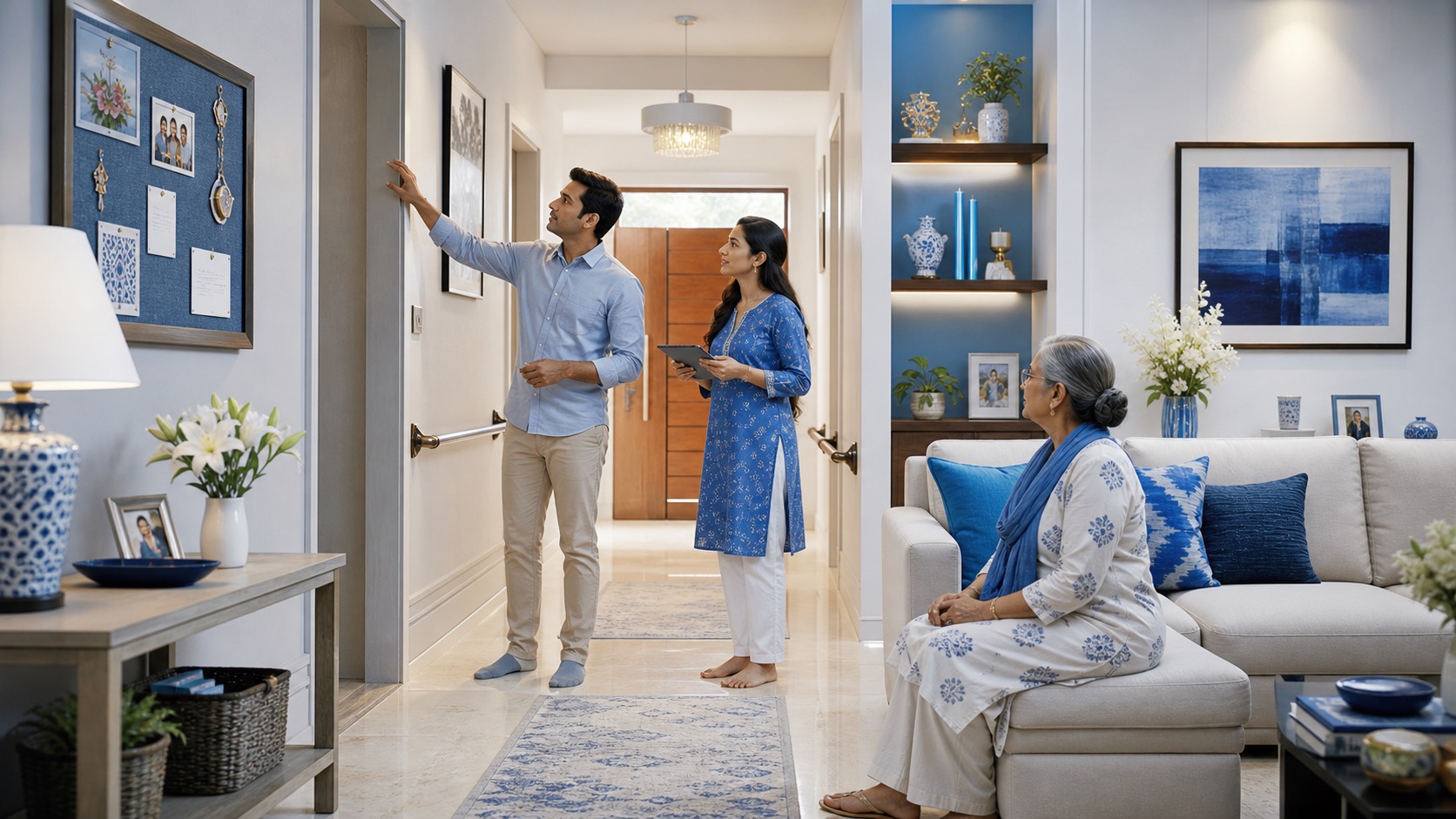

At a glance
Home safety is a living incident review
Memory-care safety changes when sleep, medicines, mobility, mood, toileting, wandering, cooking, or caregiver capacity changes. The home must be reviewed after every incident, not once a year.
Bathroom, kitchen, bedroom, stairs, balcony, entrance, and medicines need the first review.
Falls, fire or gas, and medicine errors should be addressed before cosmetic changes.
Every family helper should record incidents, near misses, and changes in routine.
This guide is for education only and does not replace advice from a qualified doctor, geriatrician, neurologist, psychiatrist, psychologist, legal professional, financial professional, or other licensed specialist.
Questions families ask
Should we lock a parent inside to prevent wandering?
Do not make a parent unable to escape fire or medical danger. Families should seek professional guidance and use safer planning, supervision, identification, neighbour awareness, and environment design.
Are labels helpful for memory loss?
Simple labels can help when they reduce a real confusion point, such as bathroom or medicine support. Too many signs can become visual clutter and may increase anxiety.
What home safety change should come first?
Start with risks that can cause immediate harm: falls, gas or fire, medicine errors, wandering, stairs, balconies, and emergency access.
How often should the family recheck safety?
Recheck after falls, night confusion, wandering, hospitalization, medicine changes, toileting change, new caregiver shifts, or any clear decline in daily function.
How can NRI children audit safety from a distance?
Ask a local relative or caregiver to send dated photos or videos of walking paths, bathroom, kitchen, medicine storage, entrance, stairs, balcony, and emergency-contact area, then keep an incident log.
When is home no longer safe enough?
Home may no longer be enough when repeated falls, gas risk, wandering, unsafe nights, medicine mistakes, isolation, or caregiver exhaustion continue despite reasonable adaptations.