
Senior-Friendly Lighting: A Room-by-Room Audit for Safer Ageing
A practical lighting audit for older adults covering night routes, glare, contrast, switches, bathrooms, medicines, kitchens, puja spaces, balconies, power cuts, and community paths.
Quick Answer
Senior-friendly lighting is not just brighter lighting. It is a plan that helps an older person see the next step, read labels, identify wet floors, find switches, avoid glare, and move calmly at night. Families should audit the full daily route: bed to bathroom, bedroom to kitchen, entrance to lift, puja space, medicine counter, balcony, garden path, parking, and emergency movement during a power cut. The best test is simple: walk each route at dusk and at night with the parent, notice where they slow down, touch walls, miss switches, avoid steps, or squint against glare.
Design safety note
This guide is educational and does not replace advice from qualified architects, accessibility consultants, occupational therapists, physiotherapists, doctors, emergency responders, or licensed care providers. If an older adult has repeated falls, dizziness, confusion, sudden weakness, injury, severe pain, breathing difficulty, or immediate danger, seek urgent local medical help.
3
tests per route
Check visibility while entering, using the space, and leaving when the elder is tired.
night
shows the truth
Bed-to-bathroom and entrance-to-bedroom routes reveal most lighting mistakes.
glare
is hidden risk
A bright fitting can still be unsafe if it reflects from floors, mirrors, glass, or water.
Audit routes, not only rooms
A room can look well designed in the daytime and still fail an older person at night. The audit should follow movement: getting out of bed, finding slippers, reaching the switch, walking to the toilet, returning to bed, moving from the entrance to the lift, or carrying tea from the kitchen to the sitting area.
Ask the parent to walk the route at their normal speed. Notice if they pause before a threshold, touch the wall for confidence, avoid a balcony edge, search for switches, or bend close to read labels. Those moments are not habits to ignore; they are design signals.
The route audit matters in homes and communities. A senior living campus may have beautiful gardens, temple paths, and dining areas, but if the path from lift to apartment or satsang hall to residence is patchy after sunset, participation quietly reduces.
Control glare before adding brightness
More brightness does not automatically mean better safety. Older eyes may take longer to adjust between bright and dim zones, and glare from polished floors, mirrors, glossy tiles, glass partitions, or water can make edges harder to read.
Families should check glare from standing and seated positions. Sit on the bed, sofa, dining chair, toilet, and prayer seat, then look toward the main fixtures. If light shines directly into the eyes or bounces off marble and glass, the room may feel premium but function poorly for ageing eyes.
Useful lighting is even, shielded, warm enough for comfort, and paired with contrast. Door tracks, shower entries, stair edges, balcony lips, ramps, switch plates, and furniture corners should be visible without harsh shadows or decorative sparkle.
Place light where real tasks happen
Task lighting should be placed at the work, not behind the person. Reading, shaving, cooking, cutting fruit, checking blood pressure, sorting medicines, applying eye drops, grooming, and reading a prayer book all need focused light without shadows from the elder's own body.
Switches and controls are part of lighting design. A senior should not have to cross a dark room to turn on the light. Bedside controls, entrance switches, illuminated switch plates, simple labels, and motion-triggered pathway lights can prevent rushed decisions.
In India, backup lighting also matters. A power cut, generator delay, or dim emergency corridor can turn a safe route into a hazard. Keep rechargeable lights, emergency strips, or backup fixtures where the elder actually moves, especially near the bed, bathroom, corridor, lift lobby, and main door.
Senior lighting audit checklist
Walk the route after sunset
Test bed to bathroom, bedroom to kitchen, entrance to lift, balcony, puja space, garden path, and parking after dark.
Check glare from real positions
Sit and stand where the elder actually uses the room, then check if fixtures, mirrors, glass, or polished floors shine into the eyes.
Light medicine and reading zones
Medicine strips, prescription labels, books, prayer texts, and phones need focused light placed in front or to the side, not behind the elder.
Make switches reachable
Switches should be visible at room entry, near the bed, before corridors, and before bathroom or balcony movement.
Reveal edges and level changes
Door tracks, stair nosings, ramp starts, balcony lips, shower entries, and lift thresholds need light plus visual contrast.
Test bathroom lighting wet
Check whether water, soap, mirror glare, and shiny tiles hide floor edges or grab-bar locations.
Plan backup lighting
Rechargeable or emergency lighting should support bed, bathroom, corridor, lift lobby, and main door movement during power cuts.
Review community routes
Garden paths, temple paths, dining routes, parking, ramps, benches, and security gates should avoid dark patches and blinding fixtures.
Lighting decisions families should test
| Design feature | Why it matters | Family question |
|---|---|---|
| Bed-to-bathroom route | Half-awake walking combines urgency, darkness, slippers, and reduced balance. | Can the parent reach the toilet and return without searching for a switch? |
| Glare control | Glare can hide wet patches, edges, steps, and low-contrast hazards. | Does the light reflect from marble, mirror, glass, or water into the elder's eyes? |
| Medicine and kitchen task light | Labels, knives, hot surfaces, and small tablets need clear focused light. | Is the light on the task surface, or is the elder working in their own shadow? |
| Threshold contrast | Small level changes become risky when they blend into the floor. | Can the parent see the balcony lip, shower entry, stair edge, and lift threshold before stepping? |
| Community evening routes | Poor lighting reduces temple visits, garden walks, meals, and social participation. | Would the parent confidently walk back from satsang or dinner after sunset? |
| Power-cut backup | A safe route in normal lighting may fail during generator delay or outage. | What light turns on if power fails while the parent is in bed, bathroom, or corridor? |
Age-friendly design scenes to inspect
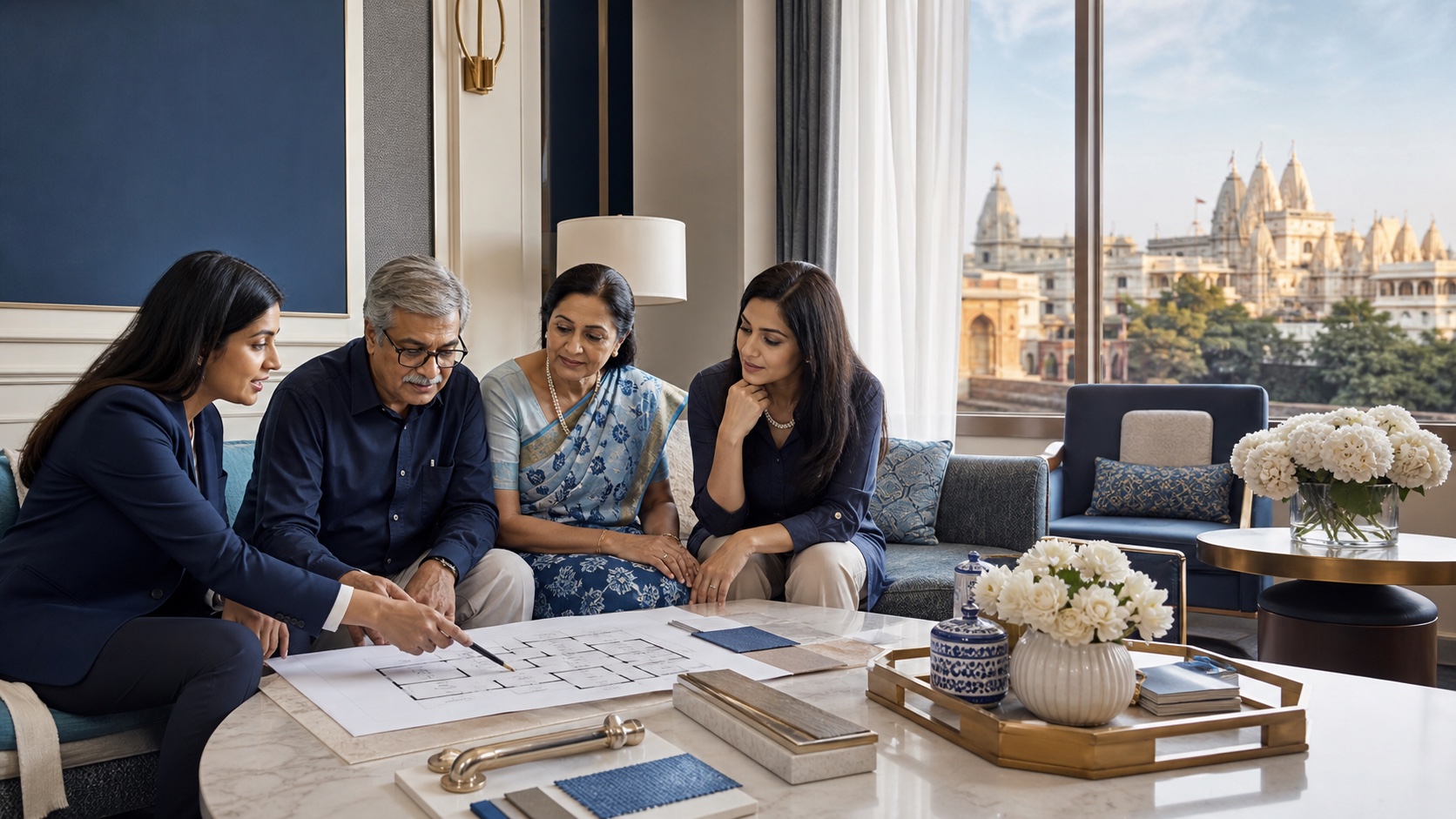
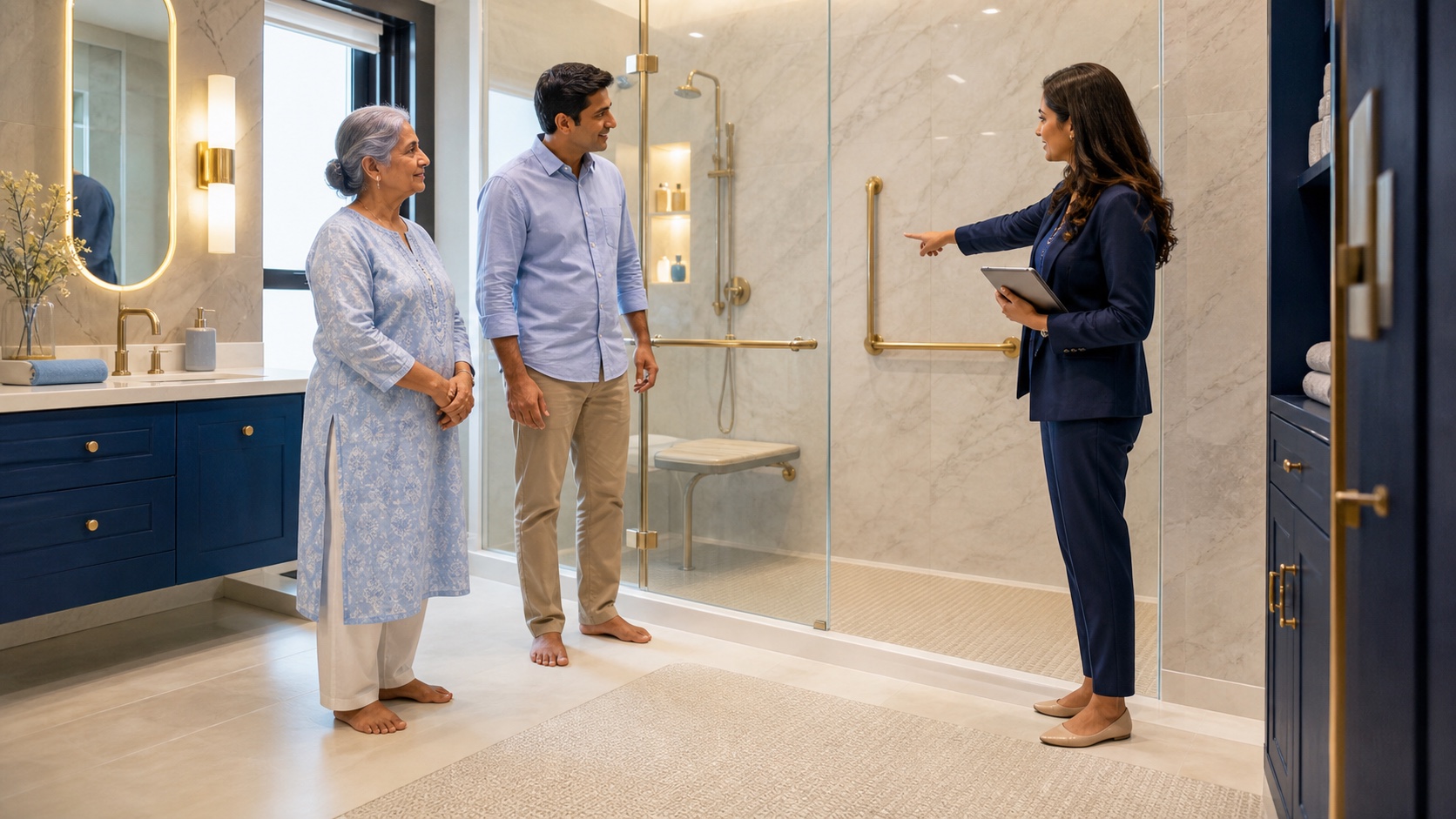
Senior-friendly lighting makes the next step, next switch, and next task obvious without making the home feel harsh or clinical.

At a glance
Age-friendly design is quiet support
The strongest senior living environments do not make elders feel supervised or reduced. They make movement, rest, help, worship, meals, guests, and emergency response feel natural inside a beautiful home and community.
Questions families ask
Is brighter lighting always safer for seniors?
No. Brighter light can create glare, reflections, hard shadows, and eye strain. Safer lighting is even, low-glare, layered, and placed where the route or task needs it.
Where should families start the lighting audit?
Start with the night route from bed to bathroom. Then inspect the medicine area, kitchen counter, bathroom mirror and shower, entrance, balcony, lift lobby, and any outdoor route used after sunset.
What is the biggest mistake in luxury homes?
Relying on decorative lighting and glossy finishes. A chandelier, cove light, or polished stone floor may look beautiful but still hide edges, create glare, or leave the actual task surface dark.
Do community paths need special lighting?
Yes. Seniors are more likely to use gardens, temples, dining rooms, and social spaces when routes are evenly lit, benches are visible, ramps and steps are clear, and lighting does not shine into their eyes.
How should families plan for power cuts?
Keep emergency or backup lighting where movement actually happens: bedside, bathroom, corridor, lift lobby, stairs, and main door. Do not depend only on a phone torch kept in another room.
Sources