
Senior Friendships After 60: Build a Real Support Network
A practical guide for families and senior communities on turning friendship from a vague social idea into visible routines, dignity, safety, and early support.
Quick Answer
Senior friendships become real support only when they are repeatable, chosen by the elder, and connected to ordinary life. Families should map who the elder actually talks to, protect low-pressure routines such as tea, walks, meals, satsang, or hobby groups, remove barriers such as hearing loss and mobility fear, and agree when a friend or community team should alert family. Friendship is not a replacement for medical care or family responsibility; it is a practical layer that makes withdrawal, grief, appetite change, confusion, and absence easier to notice.
Daily visibility, weekly companionship, trusted help, and family bridge serve different needs.
Two reliable touchpoints often help more than one large monthly event.
Friends can support an elder without taking away privacy or choice.
Main guide
Start with connection, not entertainment
A weak senior friendship article says friendship is good. A useful plan asks a harder question: who will notice when an elder stops coming for tea, avoids the dining room, repeats the same fear, looks thinner, or stops laughing at the same joke?
Older adults do not need a packed social calendar to prove they are ageing well. Many need two or three steady relationships where they are expected, remembered, and not treated like a project.
The goal is not entertainment. The goal is a lived support network that protects mood, appetite, movement, memory cues, grief recovery, and dignity without making the elder feel monitored.
Map the elder's real friendship network
Families should not assume a parent is socially connected because a community has events. Write down the actual network: who the elder greets daily, who they sit with weekly, who they trust with worry, who can accompany a walk, and who the family may call if there is concern.
This map should include peer friends, younger neighbours, staff who respectfully notice absence, relatives nearby, and old friends reachable by phone. It should also show gaps: no same-language friend, no quiet friend, no walking partner, no one after dinner, or no one trusted after the spouse died.
For NRI children, this map is valuable because it turns vague reassurance into visible support. Instead of asking only whether the parent is okay, ask who they met this week, which routine they skipped, and who would alert the family if they disappeared from meals.
Make friendship repeatable through ordinary routines
Friendship after 60 usually grows through repetition, not big introductions. The useful settings are ordinary: the same bench, same tea time, same walking route, same prayer group, same dining table, same gardening corner, same library hour.
A community should design for repeated low-pressure contact. That means accessible paths, shaded seating, smaller tables, good lighting, audible sound, restrooms nearby, water access, and activities that allow people to participate quietly before they are ready to talk.
Families can support this without forcing it. Help with hearing checks, walking aids, transport, comfortable clothing, spectacles, phone charging, or a fixed call time with an old friend. These small barriers often decide whether friendship continues.
Protect dignity, privacy, and boundaries
Friendship should not become surveillance. An older parent still has the right to choose friends, refuse a group, keep conversations private, and decide what they want children to know.
At the same time, families should set clear safety boundaries. Friends should not be expected to manage medicines, money, legal papers, medical decisions, or emergency response unless this has been discussed and documented with the elder.
A practical boundary sounds simple: a friend may tell the family if the elder has not appeared for a usual routine, seems unsafe, talks about self-harm, repeatedly misses meals, or appears confused. That is support, not control.
Know what friends may notice first
Children often hear a polished phone version: I am fine, I ate, everything is okay. Friends may see the real day: the parent pushed food around the plate, stopped walking, repeated one worry, avoided stairs, or sat alone after a difficult festival.
This is why friendship belongs inside the care conversation. It can reveal appetite change, grief, depression risk, cognitive change, hearing problems, mobility fear, pain, and conflict before these become emergencies.
Do not turn friends into unpaid caregivers. Use their observations as early signals and then bring in family, community staff, doctors, counsellors, or emergency support when the issue is health or safety related.
Use community design to reduce isolation
Senior living communities should not judge friendship by the number of events on a brochure. The better measure is whether a quiet resident can become known without being pushed, whether absence is noticed respectfully, and whether small groups survive beyond the first week.
Useful community design includes predictable dining, resident-led groups, small seating clusters, accessible prayer or reflection spaces, hobby rooms, walking loops, intergenerational touchpoints, and staff who know when withdrawal is a health signal.
For families comparing options, ask practical questions: who notices if my parent skips meals for three days, how are new residents introduced, how are introverts included, how are conflicts handled, and what happens when a close friend dies?
10-point senior friendship support plan
Create a friendship map
List daily, weekly, trusted, and emergency-aware contacts. Include gaps, not only names.
Choose two repeat routines
Use tea, meals, walks, satsang, gardening, reading, or calls that happen every week.
Protect low-pressure entry
Let shy or grieving elders sit nearby before expecting active participation.
Fix access barriers
Check hearing, mobility, lighting, transport, pain, toilets, seating, and phone access.
Use shared tasks
Seva, kitchen help, gardening, prayer preparation, music practice, or resident groups can build connection faster than forced talk.
Agree alert rules
With the elder's knowledge, decide when a friend or staff member should notify family.
Respect private conversation
Do not ask friends to report ordinary personal talk. Focus alerts only on health, safety, or sustained withdrawal.
Plan for loss of a friend
When a close friend dies or moves away, treat it like a real grief event and rebuild routine gently.
Give NRI children facts
Share simple weekly signals: meals attended, walks joined, visitors met, routines missed, and concerns.
Review monthly
Friendship needs change after illness, falls, grief, medication changes, cognitive decline, or family travel.
What friendship can reveal
| Community Area | What to Watch | Family Action |
|---|---|---|
| Stops attending meals | A friend says the elder has not come to the dining table, tea group, or usual seat. | Check appetite, mood, grief, pain, illness, and whether eating alone has become the default. |
| Only phone contact remains | The elder speaks to old friends but avoids in-person walks, meals, or visits. | Review mobility fear, transport, hearing, continence worries, fatigue, and confidence. |
| A group becomes too loud | The elder withdraws because conversations are noisy, fast, political, or dominated by others. | Offer smaller tables, quieter seating, one-on-one tea, or a different group. |
| Money or favours enter friendship | Loans, repeated gifts, pressure to sign papers, or one person controlling access. | Do not accuse without facts. Review boundaries, money safety, and trusted oversight with the elder. |
| Friend notices repetition | Same question, same worry, missed route, confusion about time, or unusual suspicion. | Treat it as a possible health signal. Review sleep, medicines, cognition, infection risk, and stress. |
| Friend dies or leaves | The elder stops going to the place associated with that friend. | Acknowledge the loss and rebuild one routine slowly with another trusted person. |
| Conflict or gossip | Friendship turns into humiliation, exclusion, pressure, or repeated complaints. | Protect dignity. Change seating, groups, or routines without making the elder feel punished. |
| NRI blind spot | Children hear cheerful calls but local friends report withdrawal or missed meals. | Use local observations as evidence and arrange a health, mood, or community review. |
Community scenes
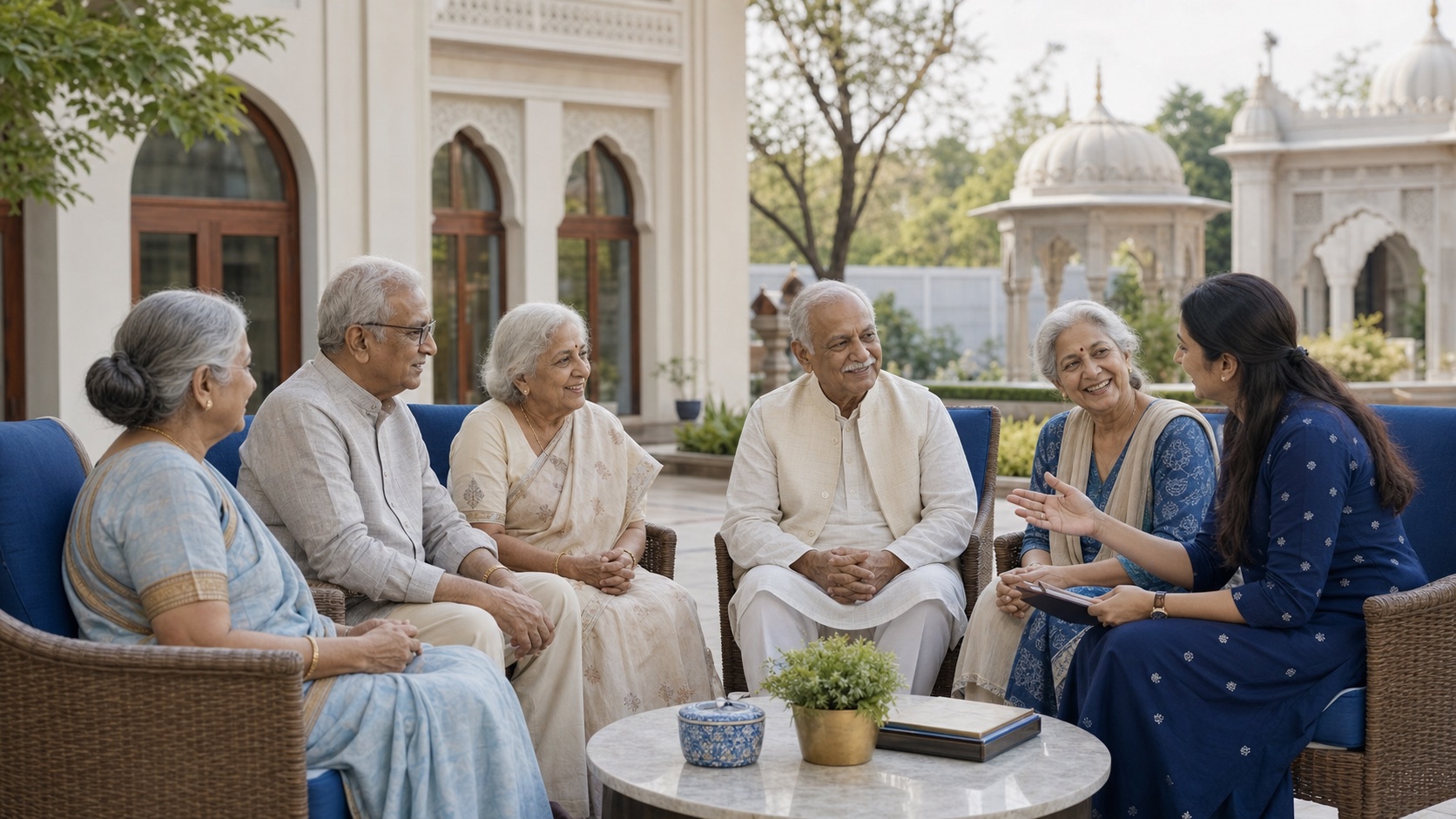
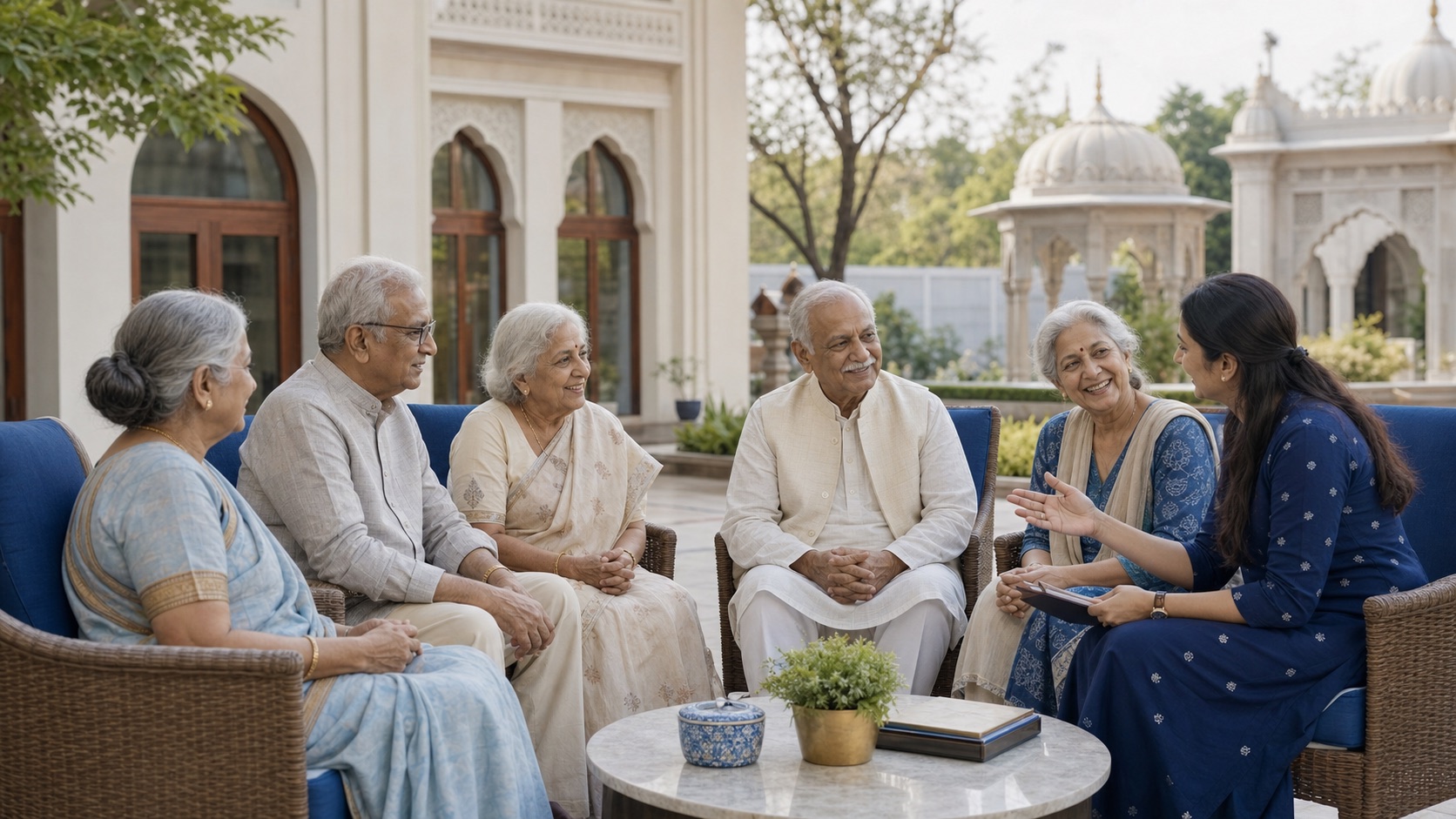
At a glance
Friendship should be visible, chosen, and repeatable
The best senior friendship plan is not a forced group photo. It is a set of ordinary relationships where the elder is expected, respected, and noticed without losing privacy.
Daily visibility, weekly companionship, trusted help, and family bridge serve different needs.
Two reliable touchpoints often help more than one large monthly event.
Friends can support an elder without taking away privacy or choice.
Questions families ask
Can family replace friends for an older parent?
No. Family is important, but peer and community friendships provide a different kind of dignity. Seniors often speak differently with people who share age, illness, widowhood, retirement, faith, or daily routine.
What if my parent says they do not want friends?
Do not force friendship. Start with visibility rather than intimacy: a regular seat, a familiar greeting, one tea companion, or a short call with an old contact. Also check pain, hearing, grief, depression, fatigue, and fear of falling.
How many social activities are enough?
There is no fixed number. Two reliable routines with people the elder chooses may be better than a packed event calendar. Judge by appetite, sleep, mood, energy, movement, and whether the elder feels respected.
Should friends be asked to update the family?
Only with boundaries. A friend can alert family about absence, unsafe behaviour, self-harm language, missed meals, or confusion. They should not be expected to report private conversations or manage medical, financial, or legal decisions.
How can NRI children use this practically?
Ask for a weekly local view: which meals were attended, which walks or groups happened, who visited, what was missed, and whether anyone noticed appetite, mood, memory, or mobility change.
What should a senior living community provide?
Look for predictable dining, small groups, accessible paths, quiet seating, resident-led activities, staff who notice absence respectfully, and a clear process for raising health or safety concerns.
Sources
- WHO - Commission on Social Connection
- WHO - Healthy Ageing and Functional Ability
- WHO - Mental Health of Older Adults
- National Institute on Aging - Loneliness and Social Isolation
- National Institute on Aging - Participating in Activities You Enjoy As You Age
- National Institute on Aging - Cognitive Health and Older Adults
- National Institute on Aging - Mental Health Benefits of Exercise and Physical Activity