
Seva After Retirement: A Practical Role Design Guide for Elders
How families and senior communities can create safe, optional seva roles that give retired elders purpose without turning service into pressure.
Quick Answer
Seva after retirement is useful only when it is designed as a small, chosen role with limits, backup, and review. Before asking a retired parent to help with temple or community service, write a role card: what the elder wants to do, when it happens, whether it is seated, maximum time, medicine and meal protection, transport, privacy rules, who covers if the elder is unwell, and signs that mean stop. Good roles include flower sorting at a table, welcoming visitors while seated, mentoring children, reading bhajans, checking on consenting residents, preparing small festival packets, or helping with lists. Poor roles include crowd control, heavy lifting, late-night duty, fundraising pressure, emotional mediation, or anything that makes the elder feel guilty for resting.
Care and dignity note
This guide is educational and cultural. It does not replace medical care, mental health support, legal advice, spiritual counselling, or emergency help. If an older adult has severe depression, self-harm thoughts, sudden confusion, chest pain, breathing difficulty, a fall, severe weakness, or immediate danger, seek urgent local help.
3
non-negotiables
Choice, time limit, and backup decide whether seva supports dignity.
30
minute trial
A short first shift reveals fatigue, hearing, standing, and social comfort.
gentle
is not vague
The role should name the task, place, time, backup, and stopping signs.
Start with consent, not busyness
Many retired elders miss being needed. That does not mean families should assign them work to keep them busy. Seva is meaningful only when the elder chooses the role, understands the commitment, and can say no without embarrassment.
Ask what the elder wants to protect now: quiet prayer, public contribution, teaching, social contact, time with children, festival involvement, or simply being useful in a small way. The answer should shape the role more than the community's staffing need.
Write the role like a safety plan
A useful seva role has clear edges: start time, end time, sitting or standing needs, walking distance, lighting, hearing support, who helps, what is private, what is not the elder's responsibility, and how the elder leaves early.
Medicine, meals, hydration, toilet access, rest, and transport should sit on the same role card. If the role regularly delays medicines, causes skipped meals, or turns rest into guilt, the role is badly designed.
Review for quiet overload
Older adults may not complain when seva becomes too much, especially when the language of duty is used. Families should watch for fatigue, pain, dizziness, irritability, sleep disruption, missed medicines, dread before the role, conflict with others, or withdrawal after the role.
If those signs appear, reduce the time, change the task, add support, or pause the role. Persistent sadness, confusion, anxiety, self-harm talk, or major withdrawal is not solved by giving more seva; it needs family attention and professional help.
The seva role card
Let the elder choose the purpose
Ask whether they want prayer support, teaching, social contact, planning work, quiet preparation, or a small public role.
Set a hard time limit
Start with 20 to 30 minutes and end on time, even if the elder says they can continue.
Design the seated version first
Flower sorting, reading, phone calls, list checking, mentoring, or welcoming can happen without long standing.
Protect medicines and meals
No seva slot should regularly move prescribed medicines, meals, hydration, or rest.
Name the backup person
The elder should be able to miss a session without apology because someone else can cover it.
Keep privacy rules clear
If the role involves resident calls, family stories, donations, illness, or grief, consent and confidentiality matter.
Review after one week
Ask what felt meaningful, what felt tiring, whether the elder wants to continue, and what must change.
Seva roles to accept, modify, or avoid
| Practice | Why it matters | Family question |
|---|---|---|
| Flower preparation | Good when it is seated, well lit, time-limited, and not rushed before a ritual. | Can the elder stop after 30 minutes without guilt? |
| Reading or storytelling | Uses memory, voice, culture, and presence without requiring physical strain. | Is hearing, seating, water, and a short ending planned? |
| Resident calls | Can reduce isolation when the recipient has agreed and the caller is not made responsible for crises. | Who handles distress, medical concerns, or privacy questions? |
| Festival preparation | Helps elders feel included, but festivals can bring heat, crowds, noise, and pressure. | What is the low-energy festival role? |
| Crowd or donation duty | Often creates pressure, conflict, standing, and responsibility beyond an elder-friendly role. | Can this be avoided or given to trained younger staff? |
Spiritual ageing scenes to inspect
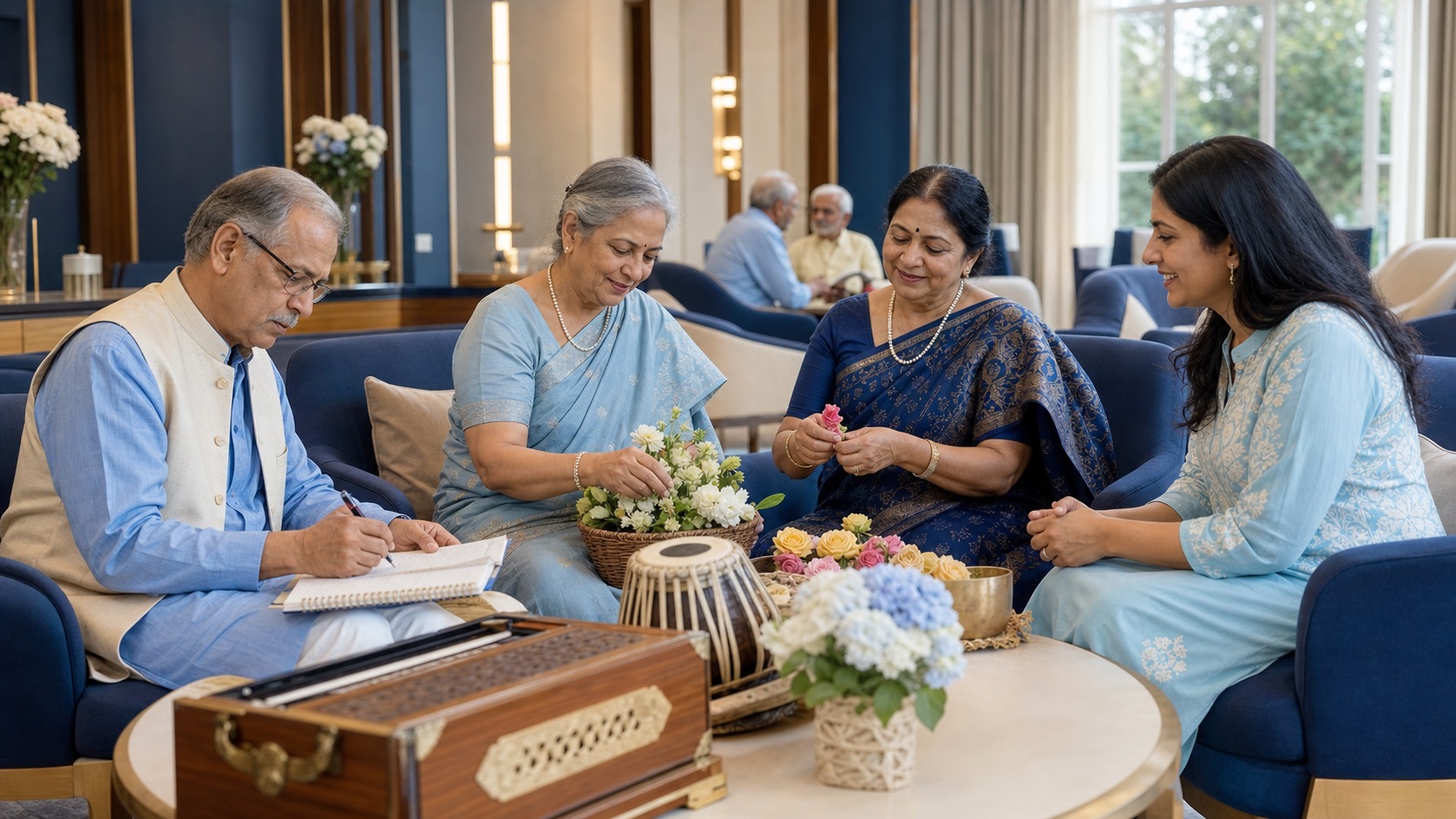
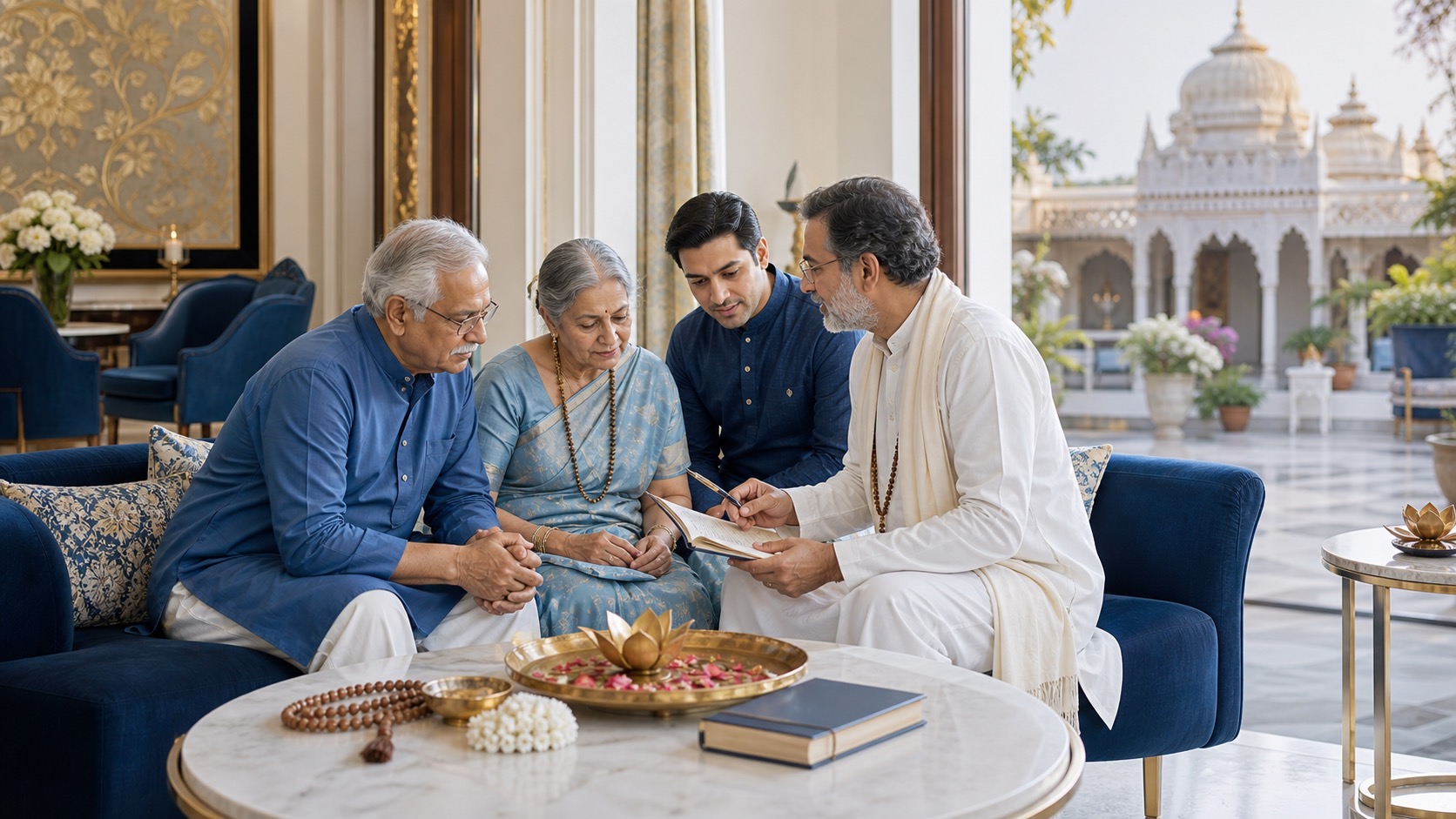
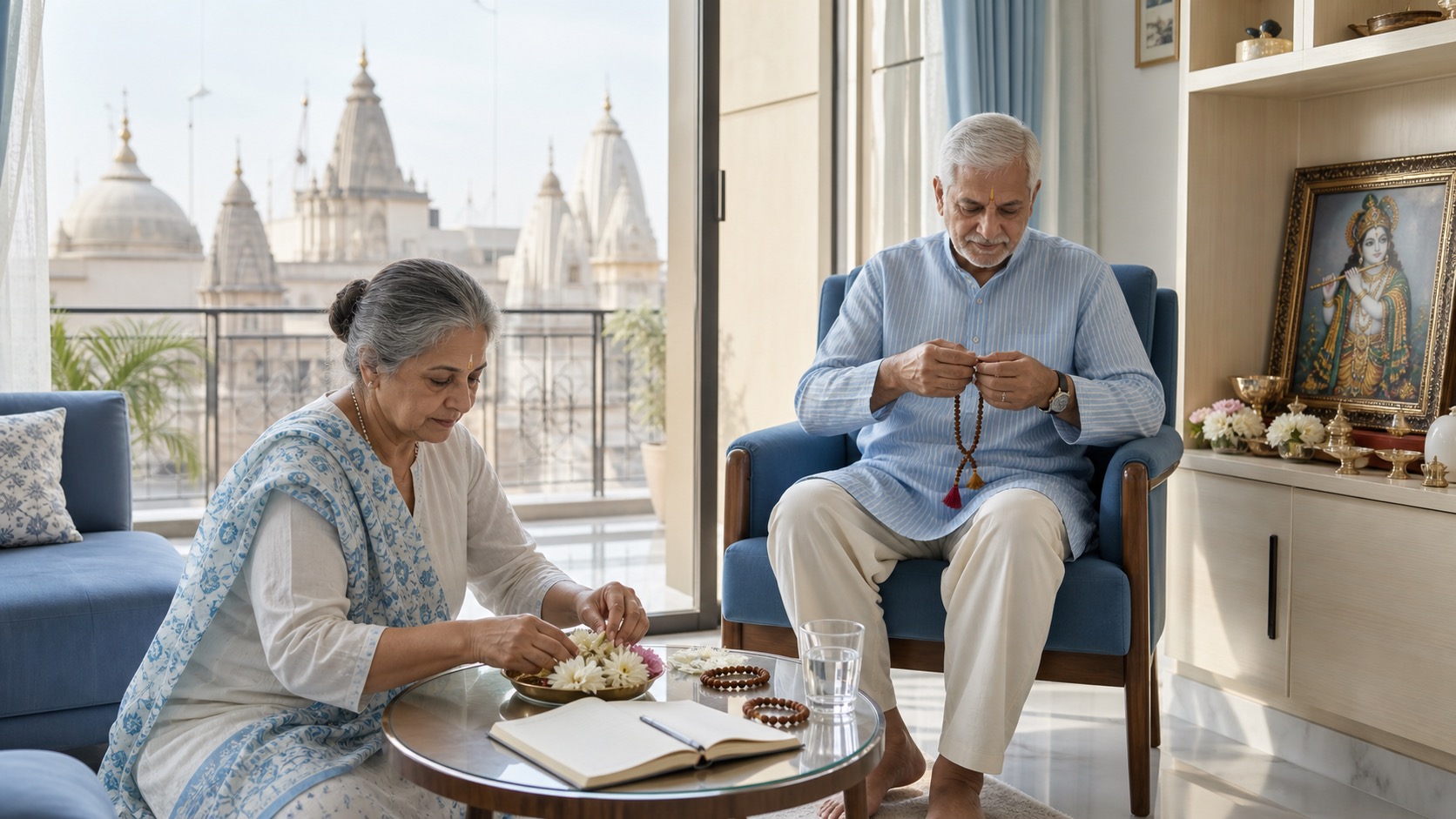
Look for service roles with a chair, a finish time, a backup person, and permission to stop. That is where purpose becomes practical.
At a glance
Spiritual ageing needs both meaning and support
The strongest spiritual retirement setting does not ask seniors to ignore the body. It brings devotion, safety, companionship, rest, family clarity, and dignity into one daily rhythm.
Questions families ask
Can seva become stressful for seniors?
Yes. If it becomes mandatory, physically tiring, emotionally heavy, or socially pressured, it can harm dignity. Keep roles optional, short, adjustable, and backed up.
What if a retired parent refuses seva?
Respect the refusal. Purpose can also come from prayer, rest, family time, learning, music, private giving, or simply living with more peace.
Which seva roles should elders avoid?
Avoid heavy lifting, crowd control, late-night duty, heat exposure, long standing, aggressive fundraising, conflict handling, or roles that delay medicines and meals.
How often should the role be reviewed?
Review after the first week, after any illness or fall, and before festival periods. The question is not only whether the work got done, but whether the elder still feels respected and well.
Sources