
Spiritual Support for Dementia: A Consent-First Family Guide
A practical guide for families using prayer, bhajans, darshan, familiar rituals, and community support without pressure, memory testing, crowd overload, or replacing medical care.
Quick Answer
Spiritual support for dementia should be familiar, optional, calm, and person-centered. Families can use short bhajans, simple mantras, familiar photos, devotional objects, quiet darshan, temple memories, and patient community presence to support identity and comfort. They should not test memory, force rituals, argue theology, crowd the elder, use spiritual explanations to delay medical care, or treat refusal as disrespect. The best support preserves dignity while still tracking safety, mood, medicines, sleep, pain, behaviour changes, and caregiver strain.
Write the elder's familiar prayers, songs, festivals, temples, and comfort cues for all caregivers.
Short, repeated, familiar practices usually work better than long ceremonies.
Spiritual care should not become a quiz about names, mantras, dates, or rituals.
Main guide
Start with the elder's spiritual baseline
Do not design spiritual care from what the family wishes the elder would do. Start with the person's own history: which bhajans, mantras, temples, festivals, photos, smells, touch, and times of day have comforted them for years?
Create a one-page life-history card for caregivers: preferred name, familiar deity or devotional image, favourite bhajan, prayer words, rituals to avoid, crowd tolerance, touch preference, food restrictions, temple memories, calming phrases, and distress signs.
This prevents generic spiritual activity from becoming pressure. A person who loved quiet japa may not tolerate a loud group kirtan. A person who enjoyed temple visits may now need short darshan at a low-crowd hour.
Use familiar cues without asking the elder to perform
The purpose is comfort, not proof. Do not ask do you remember this shloka, who is in this photo, or what festival is today if the question may embarrass the elder.
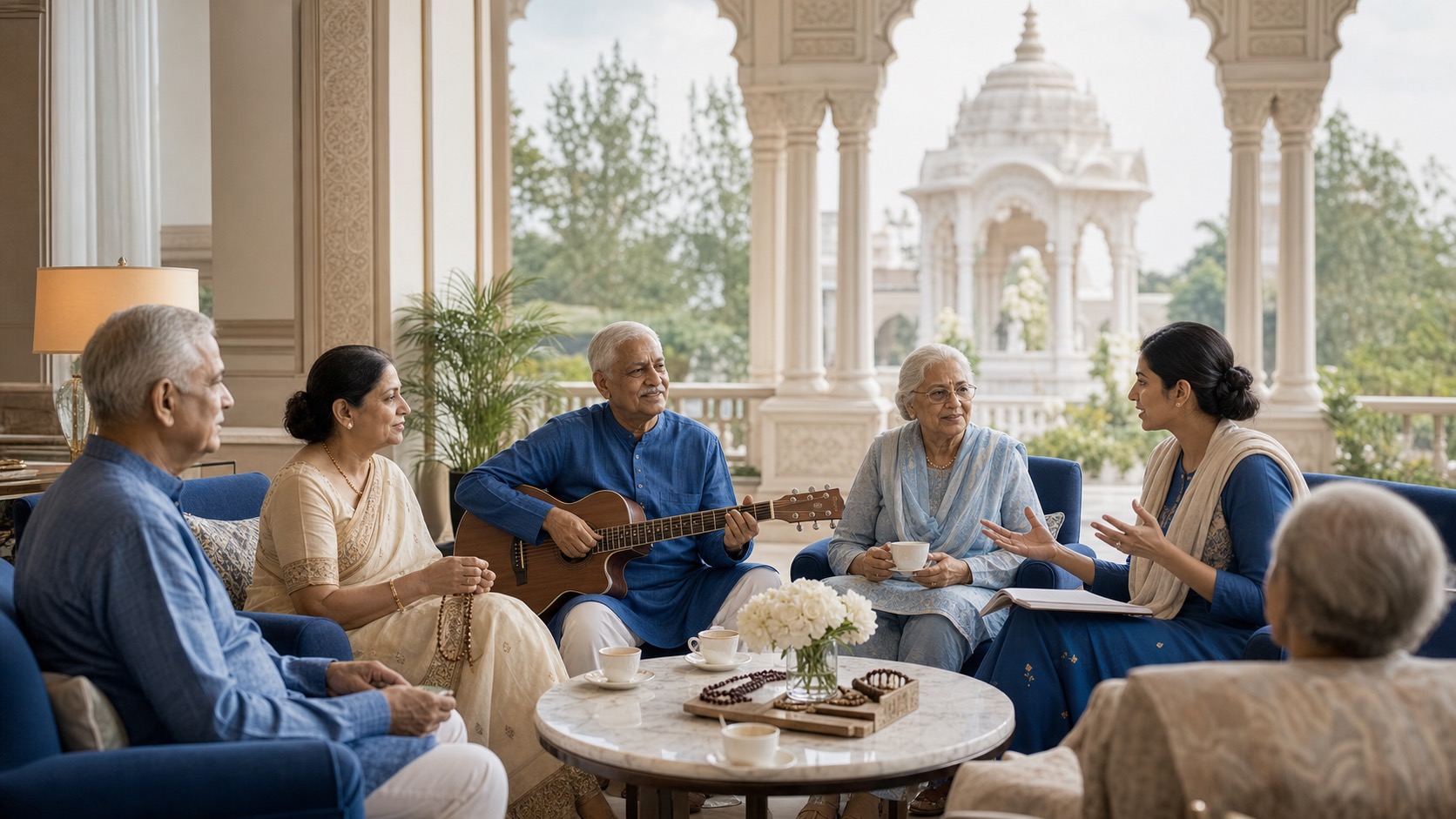
Use low-demand cues: hum a familiar bhajan, place a known photo nearby, sit quietly during aarti, offer beads only if they soothe, speak a short mantra, or tell a warm memory without requiring an answer.
Watch the body response. Relaxed face, softened breathing, humming, eye contact, or settled hands suggest comfort. Pulling away, agitation, frowning, shouting, pacing, or closing eyes tightly means the activity should stop or change.
Keep temple visits short, supervised, and low-crowd
For many Vrindavan families, darshan is emotionally important. But dementia changes the risk calculation: crowds, heat, stairs, loud sound, waiting, footwear confusion, prasad queues, bathroom urgency, and wandering can turn devotion into distress.
Plan temple support like a safety visit: choose low-crowd timing, use one responsible companion, keep the visit short, carry water, medicines if needed, ID/contact card, recent photo, and avoid forcing the elder to stand, chant, explain, or stay longer than tolerated.
If the elder becomes confused, frightened, or fixated on leaving, the visit is complete. Respectful retreat is better than completing a ritual at the cost of distress.
Separate faith comfort from medical explanation
Spiritual meaning can help families cope, but it should not become a substitute diagnosis. Dementia symptoms are not solved by telling the elder to pray harder or by blaming karma, weakness, stubbornness, or lack of devotion.
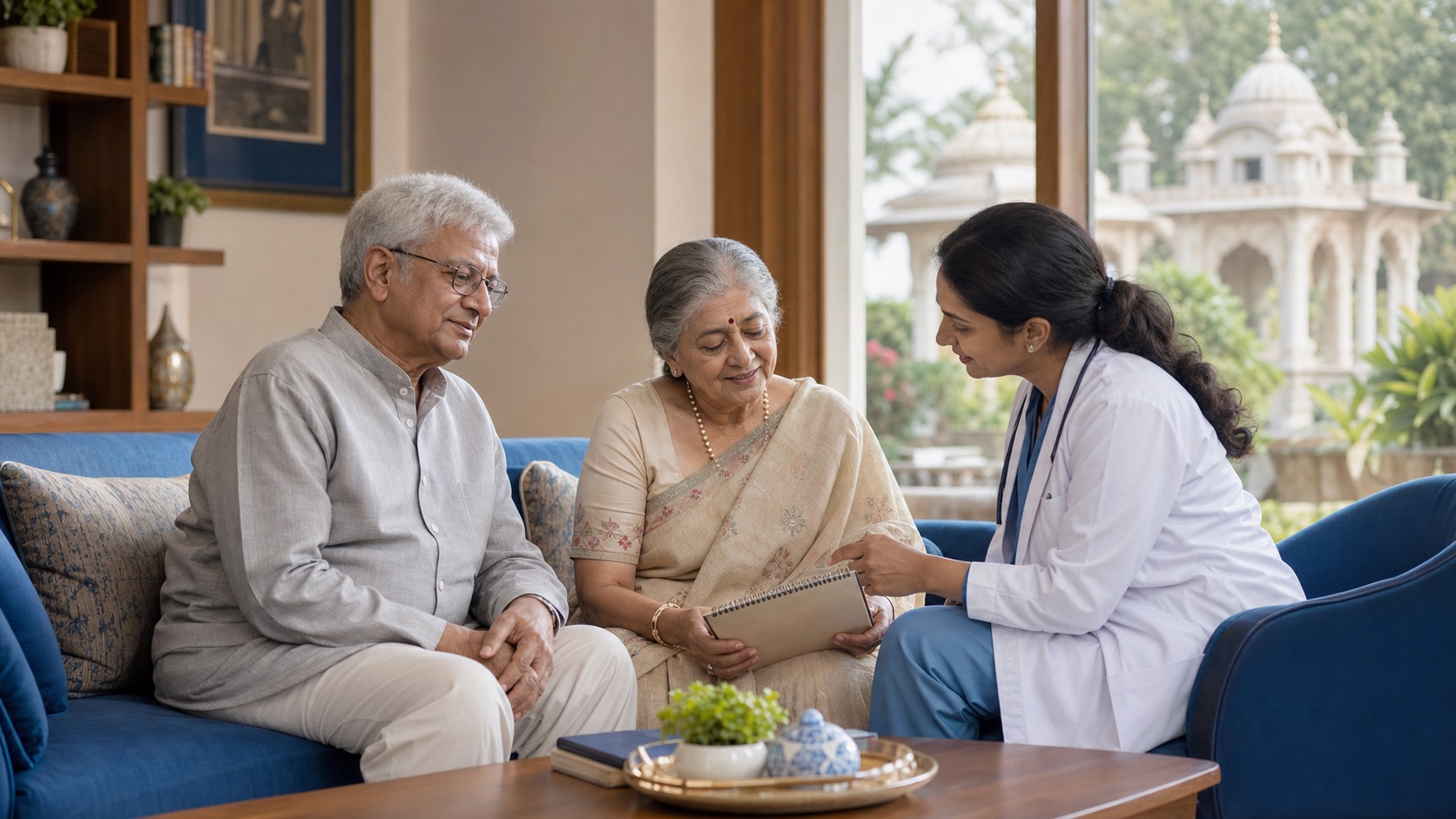
Continue medical assessment, medicine review, sleep and pain evaluation, home safety, caregiver support, and behaviour planning. Sudden confusion, fever, falls, dehydration, new weakness, unsafe wandering, severe sleepiness, or serious medicine error needs medical attention.
Good spiritual care sits beside clinical care. It helps preserve belonging while the family still acts responsibly on safety and health changes.
Give relatives and visitors simple rules
Visitors often mean well and still cause harm by testing memory, correcting mistakes, making loud religious demands, asking many questions, or saying you used to know this.
Give visitors a short script: greet warmly, speak slowly, do not quiz, do not argue, do not crowd, keep the visit short, and leave if the elder seems tired. One familiar bhajan or story is enough.
For family functions, assign one person to watch fatigue, bathroom need, heat, noise, and exit risk. Participation should be optional and brief.
Support the caregiver's spiritual stamina too
Family caregivers may feel grief, guilt, anger, and spiritual confusion when a parent forgets prayers or behaves differently in sacred settings. That pain is real.
Caregiver reflection, seva groups, quiet prayer, counselling, respite, and honest family rotation can prevent spiritual language from becoming a mask for burnout.
At Krishna Bhumi, spiritual senior living should mean patient routines, low-shame community, safe access to devotion, and respect for the person even when memory and behaviour change.
Consent-first spiritual support checklist
Life-history card
Write familiar prayers, songs, temples, festivals, touch preferences, and distress signs for every caregiver.
Short familiar bhajan
Use songs the elder has known for years and keep volume, duration, and group size comfortable.
Simple prayer cue
Use brief repeated phrases rather than long recitation demands or memory tests.
Quiet darshan plan
Choose low-crowd timing, short duration, one companion, ID support, water, and a clear return plan.
Optional sacred objects
Offer beads, photos, cloth, fragrance, or books only if they calm the elder.
No forced touch
Ask or observe consent before hand-holding, tilak, garland, hugging, or helping with ritual movement.
Visitor rules
Tell relatives not to quiz, correct, crowd, argue, or pressure ritual participation.
Stop signal
End the activity when distress, fatigue, heat, wandering risk, or refusal appears.
Medical boundary
Keep spiritual support alongside doctor review, safety planning, and caregiver support.
Caregiver support
Give caregivers respite and emotional space so devotion does not become another duty.
Spiritual care decisions families can make
| Care Area | What to Watch | Family Action |
|---|---|---|
| Bhajan or mantra | Calm humming, relaxed body, or overstimulation from volume and repetition. | Use familiar music softly and stop when distress appears. |
| Temple visit | Crowd, heat, stairs, fatigue, bathroom need, wandering risk, or confusion. | Choose short quiet visits with one responsible companion. |
| Prayer memory | Family asks the elder to recite or remember and the elder becomes embarrassed. | Shift from testing to shared listening or simple repeated phrases. |
| Sacred objects | Comfort from beads, photos, cloth, or books, or irritation from handling them. | Offer, observe, and remove if the object causes distress. |
| Touch and ritual help | Resistance to tilak, garland, hand-holding, or guided movement. | Respect refusal and use verbal or visual support instead. |
| Family gathering | Noise, many questions, correction, children crowding, or late hours. | Set visitor rules and create a quiet exit option. |
| Spiritual explanation | Relatives blame karma, lack of faith, possession, or stubbornness. | Protect dignity and keep medical care, safety, and support active. |
| Caregiver strain | Prayer becomes another task, guilt rises, or family patience collapses. | Add respite, rotation, counselling, or community support. |
Care scenes
At a glance
Spiritual support is recognition, not performance
The deepest support may be simple: familiar sounds, patient company, optional ritual, safe darshan, and the refusal to reduce a person to symptoms or tests.
Write the elder's familiar prayers, songs, festivals, temples, and comfort cues for all caregivers.
Short, repeated, familiar practices usually work better than long ceremonies.
Spiritual care should not become a quiz about names, mantras, dates, or rituals.
This guide is for education only and does not replace advice from a qualified doctor, geriatrician, neurologist, psychiatrist, psychologist, legal professional, financial professional, or other licensed specialist.
Questions families ask
Can spirituality cure dementia?
No. Spiritual support can comfort, preserve identity, and support mood, but it does not diagnose, treat, or reverse dementia and does not replace medical care.
What if the elder no longer remembers prayers?
Do not test them. Use music, presence, simple repeated phrases, familiar images, or quiet company that feels safe without demanding performance.
Are temple visits safe?
They can be meaningful if short, supervised, low-crowd, and matched to stamina, heat tolerance, bathroom need, mobility, and wandering risk.
Should we force rituals because they were once important?
No. Past devotion matters, but current consent and comfort matter too. Adapt the ritual rather than forcing participation.
How should relatives behave during visits?
They should greet warmly, avoid memory quizzes, avoid correction, keep noise low, stay briefly, and leave if the elder becomes tired or distressed.
When should spiritual distress trigger medical review?
Sudden confusion, new fear, hallucinations, severe agitation, refusal to eat, unsafe wandering, falls, fever, dehydration, or rapid change should be discussed with a doctor.
Sources
- WHO - Dementia
- National Institute on Aging - Caring for a Person With Alzheimer's Disease
- National Institute on Aging - Tips for Caregivers and Families of People With Dementia
- National Institute on Aging - Managing Personality and Behavior Changes in Alzheimer's
- National Institute on Aging - Loneliness and Social Isolation