
Temple Proximity in Vrindavan: A Senior Family Audit
A practical audit for families judging whether temple proximity will actually support an older parent's daily darshan, satsang, social connection, rest, safety, and emergency needs.
Quick Answer
Temple proximity helps seniors only when it becomes a repeatable daily routine, not a tiring excursion. Families should test the actual route from residence to prayer space, temple, satsang hall, lift, toilet, seating, water, and return path after evening aarti. The right question is not 'how many minutes from the temple?' It is whether the parent can participate on good days, low-energy days, festival days, hot days, rainy days, and after sunset without losing dignity or safety.
Design safety note
This guide is educational and does not replace advice from qualified architects, accessibility consultants, occupational therapists, physiotherapists, doctors, emergency responders, or licensed care providers. If an older adult has repeated falls, dizziness, confusion, sudden weakness, injury, severe pain, breathing difficulty, or immediate danger, seek urgent local medical help.
route
beats distance
A nearby temple still fails if the route is hot, crowded, uneven, confusing, or hard to return from.
energy
changes by day
The plan should allow full darshan on strong days and gentle participation on weak days.
people
make access work
Priests, staff, neighbours, family, and resident groups matter as much as the physical route.
Define the parent's real spiritual routine
In Vrindavan, a temple is not only an amenity on a brochure. For many older parents, it may shape morning rhythm, memory, grief, friendships, visiting relatives, festival identity, and the feeling that the day has a centre. That deserves planning, not slogans.
Start by asking what the parent actually wants: morning darshan, evening aarti, quiet japa, Bhagavatam listening, satsang, kirtan, prasadam, festival participation, or simply living close to sacred sound and people. Each routine has a different route, timing, crowd level, seating need, and recovery need.
A senior may not need the biggest temple visit every day. The useful plan gives choices: full visit on strong days, short darshan on tired days, a nearby prayer room when walking is difficult, audio participation when unwell, and family-supported festival visits instead of forced endurance.
Walk the darshan route like a caregiver
Distance on a map hides the real work of ageing: footwear changes, lift waiting, temple steps, wet floors, queues, loud sound, flower waste underfoot, heat, slippers, crowds, toilets, lighting, and the return route when energy is lower than at departure.
Families should walk slowly from the residence to the prayer space or temple and back. Test the route in the morning, near evening aarti, after sunset, and during a busier day if possible. Notice where the parent would need to pause, hold a wall, avoid a slope, search for a shoe area, or feel embarrassed asking to sit.
The route must also work when the family is not present. Ask who notices if an elder is late returning, dizzy, lost in a crowd, or unable to continue. Temple access is not only architecture; it is operations and relationships.
Design for festivals without pretending they are normal days
Festival days are often the reason families want Vrindavan, but they are also when ordinary senior access can break. A route that works on a quiet weekday may fail during Janmashtami, Holi, Kartik, Ekadashi, evening aarti, or visiting-family weekends.
Families should ask for the festival plan in plain terms: senior seating, crowd flow, vehicle drop-off, wheelchair or walker access, toilet access, first aid, staff supervision, noise management, lost-person process, and whether frail seniors are encouraged to use alternate timings.
Good spiritual planning protects joy. It lets an elder participate without being trapped in a crowd, separated from family, dehydrated, forced to stand, or pushed into a level of activity their body cannot safely manage.
Use temple proximity to reduce isolation, not create pressure
Social connection matters in later life, but it cannot be manufactured by placing a parent near a temple and assuming community will happen. Some elders make friends easily; others are shy, grieving, hearing-impaired, widowed, cognitively changed, or worried about being a burden.
Look for real social pathways: resident groups that go together, familiar staff, small satsang circles, neighbour introductions, language comfort, seating where conversation happens, and ways for the elder to be known by name. The goal is belonging, not constant programming.
Families should also watch for overpressure. A parent may want quiet spiritual presence rather than daily group participation. Dignity means having the option to join, leave, sit, listen, or pray privately.
Keep faith and care in the same plan
Temple proximity can support meaning, routine, gentle movement, and social contact. It should never be used as a substitute for medicines, nutrition, mobility planning, mental health support, dementia care, fall prevention, or emergency response.
A practical plan connects spiritual routine with daily care: medicines before or after darshan, hydration before aarti, walking aids near the shoe area, emergency contact in the elder's pocket, staff who know the resident, and a family rule for when the parent should not go alone.
The strongest communities do not make families choose between devotion and safety. They make spiritual life easier because the elder's body, attention, energy, and dignity have been taken seriously.
Temple proximity audit checklist
Map the parent's actual routine
Write down whether the parent wants morning darshan, evening aarti, satsang, japa, kirtan, festival visits, quiet prayer, or occasional family visits.
Walk there and back slowly
Test residence to lift, lift to temple or prayer space, shoe area, seating, toilet, water point, and return route at the parent's pace.
Check sitting before standing fails
There should be shaded or indoor seating near waiting, darshan, satsang, shoe, vehicle, and return points.
Test toilets and water
A senior should not avoid spiritual participation because the toilet is too far, hard to access, dirty, or unknown.
Ask for the festival plan
Confirm crowd flow, senior seating, drop-off, wheelchair or walker access, staff guidance, emergency contact, and low-crowd timings.
Plan low-energy alternatives
Identify a shorter darshan route, a prayer room, audio participation, family-assisted visit, or quiet seating option for weak days.
Check social belonging
Ask who will introduce the parent, whether groups go together, what languages are comfortable, and whether shy elders are noticed.
Connect care to devotion
Plan medicines, hydration, walking aids, emergency contacts, and rules for when the parent should not go alone.
Temple proximity decisions families should test
| Design feature | Why it matters | Family question |
|---|---|---|
| Daily routine | Temple proximity is useful only if it fits the parent's real rhythm, energy, and faith practice. | What exactly does the parent want to do daily, weekly, monthly, and during festivals? |
| Route usability | A short route can still fail because of heat, steps, crowds, footwear, darkness, or toilets. | Can the parent go and return slowly without hiding fatigue? |
| Seating and toilets | Fear of standing too long or not finding a toilet can stop participation. | Where can the elder sit and use a toilet before, during, and after the visit? |
| Festival access | Crowds, sound, vehicles, and queue pressure change senior risk. | What is the plan for Janmashtami, Holi, Kartik, Ekadashi, and evening aarti crowds? |
| Social connection | Spiritual places help most when the elder is known, included, and not invisible. | Who will help the parent form gentle relationships, not just attend events? |
| Care boundaries | Faith supports life but does not replace medical, mobility, memory, or emergency planning. | When should the parent not go alone, and who decides kindly? |
Age-friendly design scenes to inspect
Temple proximity has value when the elder can turn devotion into a safe daily rhythm, not when the family only counts minutes on a map.
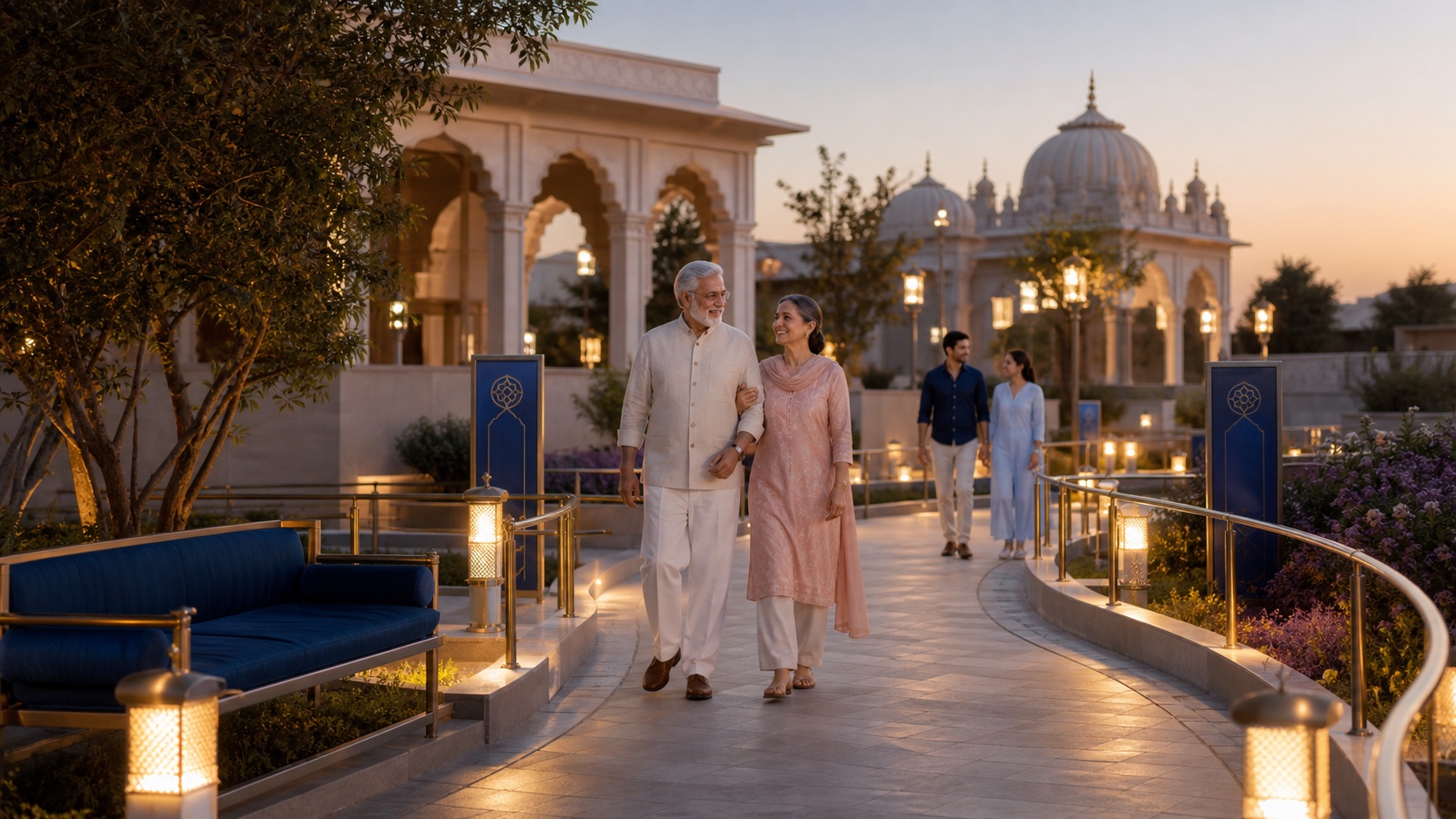

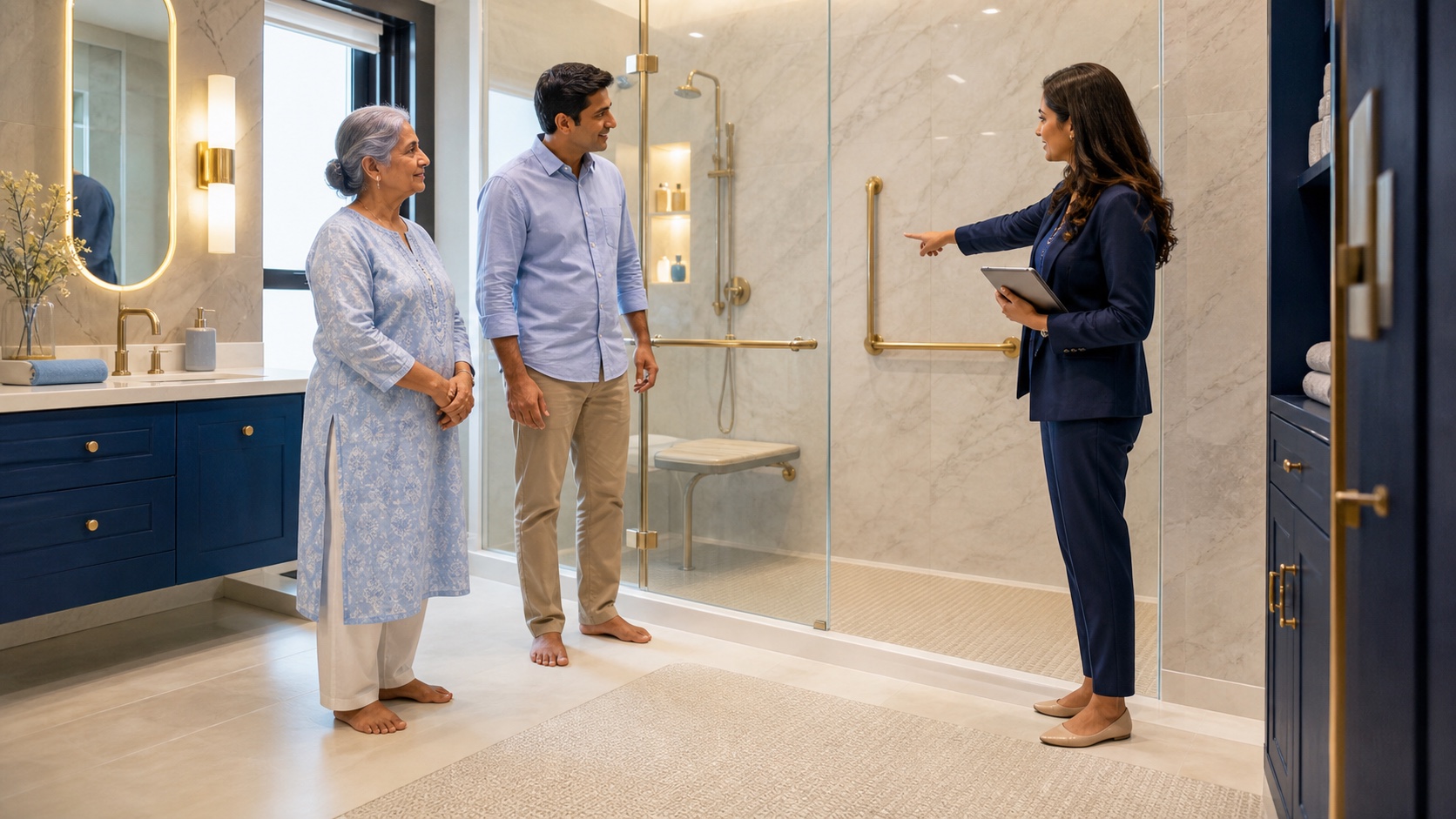
At a glance
Age-friendly design is quiet support
The strongest senior living environments do not make elders feel supervised or reduced. They make movement, rest, help, worship, meals, guests, and emergency response feel natural inside a beautiful home and community.
Questions families ask
Is temple proximity enough for senior spiritual wellbeing?
No. Proximity helps only when the elder can reach, sit, return, use toilets, manage crowds, find social belonging, and participate at different energy levels.
What should families test during a site visit?
Walk from residence to temple or prayer space and back. Test lift waiting, shoe area, seating, toilets, water, shade, lighting, crowd points, staff support, and the evening return route.
How should families handle festival participation?
Ask for a senior-specific festival plan: lower-crowd timings, seating, toilets, drop-off, route control, staff guidance, emergency contact, and a graceful option to participate from a quieter place.
Can spiritual routine reduce loneliness?
It can help some elders build routine, belonging, and community, but only if there are real social pathways. A shy, widowed, hearing-impaired, or frail elder may need introductions and small groups, not only access to a large event.
When should an elder not go alone?
Solo visits should be reconsidered after recent falls, dizziness, confusion, wandering risk, severe fatigue, unstable blood pressure, poor vision, unsafe crowds, or any condition where the parent cannot call for help or return safely.
How can families preserve devotion without overexertion?
Create tiers: full temple visit on strong days, short darshan on moderate days, nearby prayer or audio participation on weak days, and family-assisted festival visits instead of pressure to attend everything.
Sources
- World Health Organization - Age-friendly environments
- World Health Organization - Global Age-friendly Cities: A Guide
- World Health Organization - Reducing Social Isolation and Loneliness among Older People
- CDC - Health Effects of Social Isolation and Loneliness
- CDC Still Going Strong - Information for Older Adults
- Department of Empowerment of Persons with Disabilities - Accessible India Campaign
- Government of India - Emergency Response Support System 112