
Universal, Accessible, and Senior Design: A Family Audit
A practical site-visit guide for families separating universal design, accessibility compliance, and senior-specific support across rooms, routes, care routines, maintenance, dignity, and community life.
Quick Answer
Universal design asks whether a space is usable by many people without special adaptation. Accessible design asks whether measurable access features such as ramps, door widths, toilets, rails, reach, and signage actually work. Senior design asks whether an older parent can live the day safely when stamina is lower, vision is weaker, medicines are due, night bathroom trips happen, a caregiver may help, and emergency response must be dignified. Families should not accept these labels at face value; they should test the actual day and the failure cases.
Design safety note
This guide is educational and does not replace advice from qualified architects, accessibility consultants, occupational therapists, physiotherapists, doctors, emergency responders, or licensed care providers. If an older adult has repeated falls, dizziness, confusion, sudden weakness, injury, severe pain, breathing difficulty, or immediate danger, seek urgent local medical help.
3
lenses, one audit
Universal, accessible, and senior-specific design answer different questions.
measure
then test
Dimensions matter, but placement, routine, and maintenance decide daily usability.
night
reveals truth
The bed-to-bathroom route shows whether design survives real senior use.
Do not buy the label without testing the day
A brochure can honestly use words like universal, accessible, senior-friendly, or age-friendly and still leave the family with an apartment that is tiring to live in. The label is only a starting claim. The proof is whether an older parent can complete a normal day without avoidable risk, confusion, embarrassment, or dependence.
During a site visit, walk the full day: bed to bathroom, bathroom to wardrobe, kitchen to dining, apartment to lift, lift to lobby, lobby to garden, garden to temple route, temple route to clinic or help desk, and back home. Repeat the thought experiment when the parent is tired, waking at night, using a cane, carrying tea, returning after rain, or needing quick help.
This audit also protects families from buying beauty alone. A polished floor, hidden step, distant toilet, decorative handrail, or poorly placed call button can look premium in a showroom and still fail the parent who has to use it every day.
Universal design answers the broad-use question
Universal design is the broadest lens. It asks whether the environment can be accessed, understood, and used by people with different ages, body sizes, abilities, and situations. For a home or township, this means step-free movement, intuitive layouts, readable controls, enough light, comfortable doors, clear paths, and features that do not require explanation.
This baseline helps everyone: older parents, grandchildren, visiting relatives, household staff, residents recovering from surgery, and guests with temporary injuries. A universally designed home does not announce that it is only for older adults; it simply feels easier, calmer, and less tiring to use.
But broad usability is not the whole answer. A place can be easy for many people and still fail a parent with frailty, dementia risk, low night vision, urinary urgency, medicine schedules, heat sensitivity, or anxiety about asking for help. That is why families need the next two lenses.
Accessible design answers the measurable-access question
Accessible design is the measurement lens. It asks whether a person using a walker, wheelchair, cane, or support from another person can actually enter, turn, reach, sit, stand, wash, use the toilet, read signage, and move through the property. Standards help because they turn vague claims into dimensions and placement requirements.
Families should ask for the measurable details: ramp slope and landing quality, door clear width, bathroom turning space, toilet height, grab-bar location, shower entry, threshold height, lift access, corridor width, switch height, shelf reach, signage contrast, and the distance to accessible toilets in common areas.
Then test the feature in the room. A grab bar that is too far from the toilet, a ramp that becomes slippery in rain, a wheelchair route blocked by planters, or a call button hidden behind furniture may satisfy a brochure photograph but not a parent in daily life.
Senior design answers the ageing-routine question
Senior design starts from the actual rhythm of later life. What happens after age 60, 70, or 80 when sleep is lighter, walking is slower, knees hurt, hearing changes, blood pressure fluctuates, medicines must be taken on time, and a parent may want spiritual routine without feeling watched or restricted?
This lens joins architecture with operations. The apartment, dining plan, temple route, garden benches, clinic access, staff response, family communication, housekeeping, lift reliability, maintenance speed, and social calendar all become part of the design. A senior living environment is not just a safe bathroom; it is a day that still works.
Good senior design also respects privacy and pride. It allows a caregiver to help without turning the bathroom, bedroom, or dining room into a public display of dependence. It makes support normal enough that the parent will actually use it.
Use failure scenarios, not showroom conditions
The most useful family audit is a failure-scenario audit. Ask what happens during a power cut, wet bathroom floor, stuck lift, missed meal, dizzy spell in the garden, misplaced medicine, confused visitor, festival crowd, late-night fever, or delayed maintenance complaint.
For each scenario, identify the route, the responsible person, the response time, and the fallback. Who answers the call? Who has the family number? How does staff reach the apartment? Is there a place to sit while waiting? Can a parent find the help desk without reading small signs? Are common toilets close enough? Does the temple route still work during rain or crowding?
If the developer or operator can show only the design feature but not the operating process behind it, the family has not yet seen the full product. Senior design is proven when the feature, staff, maintenance, and family communication work together.
Three-layer family audit
Ask which claim is being made
Separate broad usability, accessibility compliance, and senior-specific support before judging the property.
Measure accessible features
Check ramp slope, door width, bathroom turning space, toilet support, switch height, signage contrast, and common-area toilet access.
Walk the lived route
Trace bed, bathroom, kitchen, lift, lobby, dining, garden, temple, clinic, help desk, and return routes.
Test night and low-energy use
Imagine the same route when the parent is sleepy, unwell, carrying water, using a cane, or returning after rain.
Include caregiver privacy
Check whether a helper can assist with bathing, dressing, meals, and mobility without humiliating the parent.
Check maintenance ownership
Every light, call bell, ramp surface, lift, handrail, sign, and bench needs a named owner and response time.
Extend beyond the apartment
A senior-friendly home fails if the clinic, temple, dining room, garden, or visitor route is hard to reach.
Reject beauty-only support
Premium design should hide stigma, not hide risk. If a safety feature looks elegant but cannot be used, it is decoration.
Design claim versus family proof
| Design feature | Why it matters | Family question |
|---|---|---|
| Universal design | Creates broad usability across ages, body sizes, abilities, and temporary conditions. | Who else can use this easily without instruction? |
| Accessible design | Turns access claims into dimensions, placement, route continuity, and usable fixtures. | Do dimensions and placements actually work for a walker, wheelchair, cane, or assisted movement? |
| Senior design | Accounts for ageing reality: low stamina, night movement, vision, medicines, food, response, and dignity. | Does the parent's day still work when tired, slower, or unwell? |
| Age-friendly community | Connects the apartment to meals, clinic access, social life, worship, toilets, transport, and staff support. | Do meals, routes, clinic, temple, toilets, staff, and social rhythm work together? |
| Operations and maintenance | Keeps the design useful after occupancy, weather, wear, outages, and complaints. | Who fixes the light, call bell, ramp, lift, handrail, or signage, and how fast? |
| Dignity | Makes support feel normal enough that the parent will accept it before a crisis. | Will the parent use this feature without embarrassment? |
Age-friendly design scenes to inspect
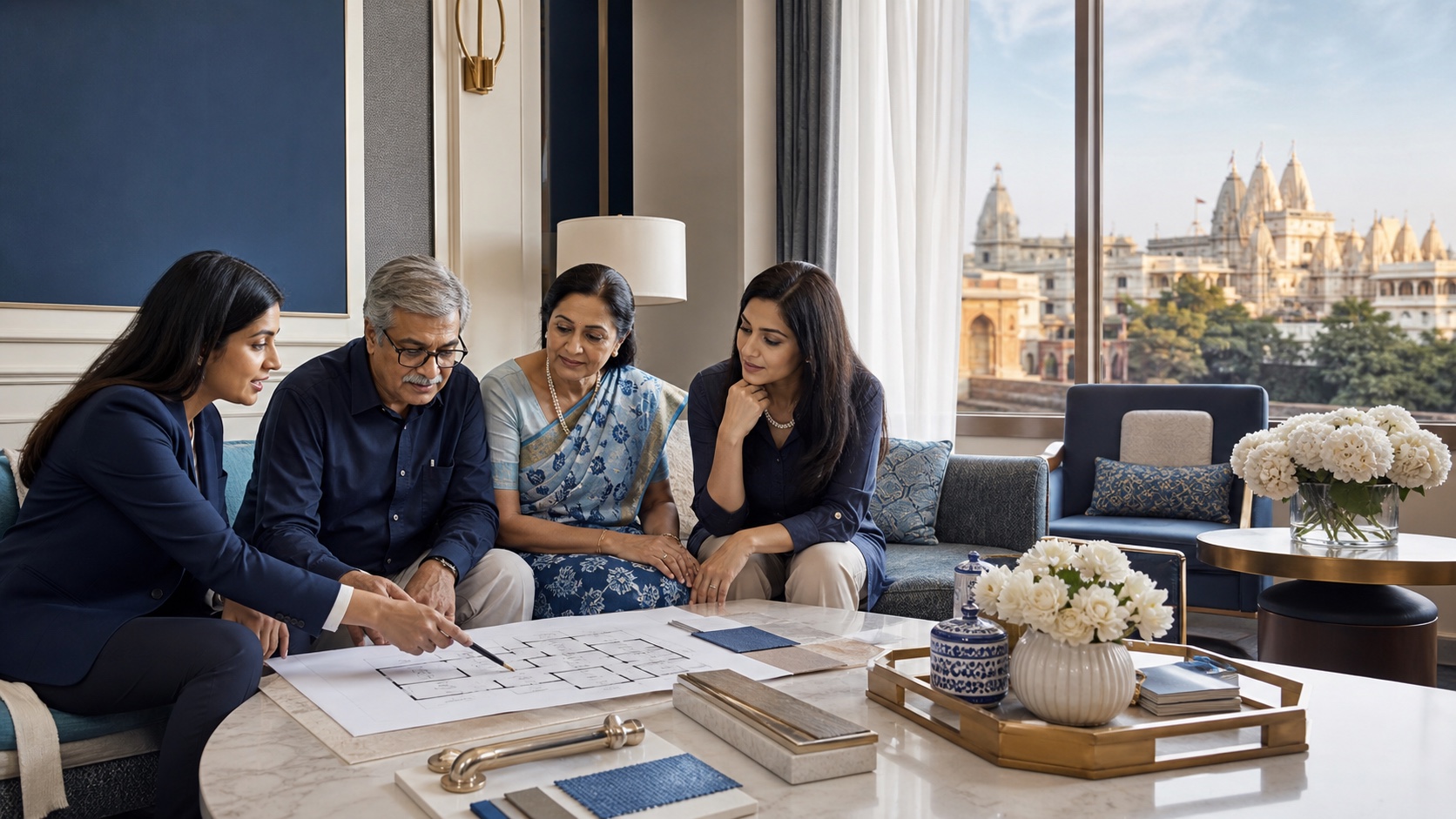
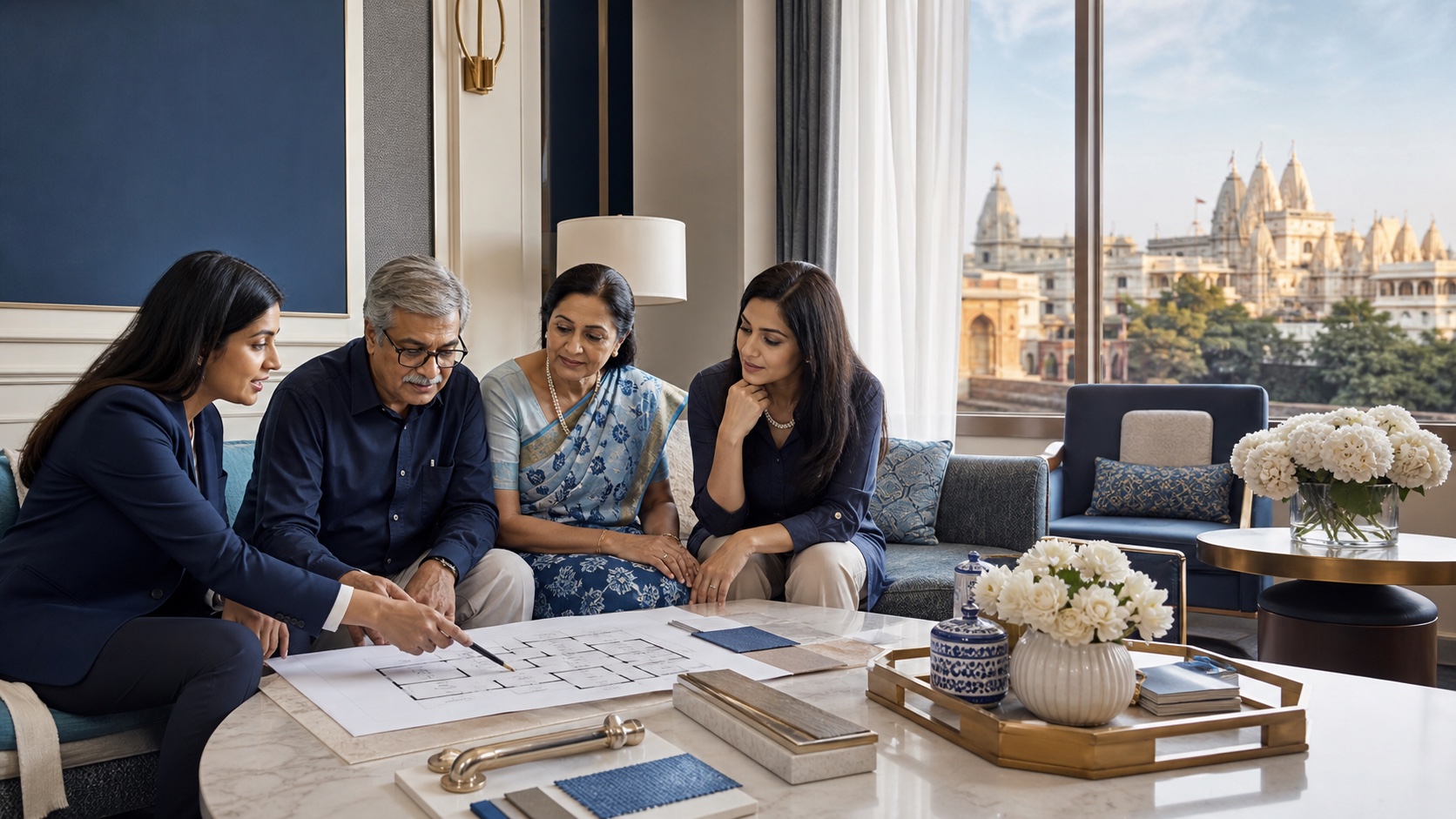
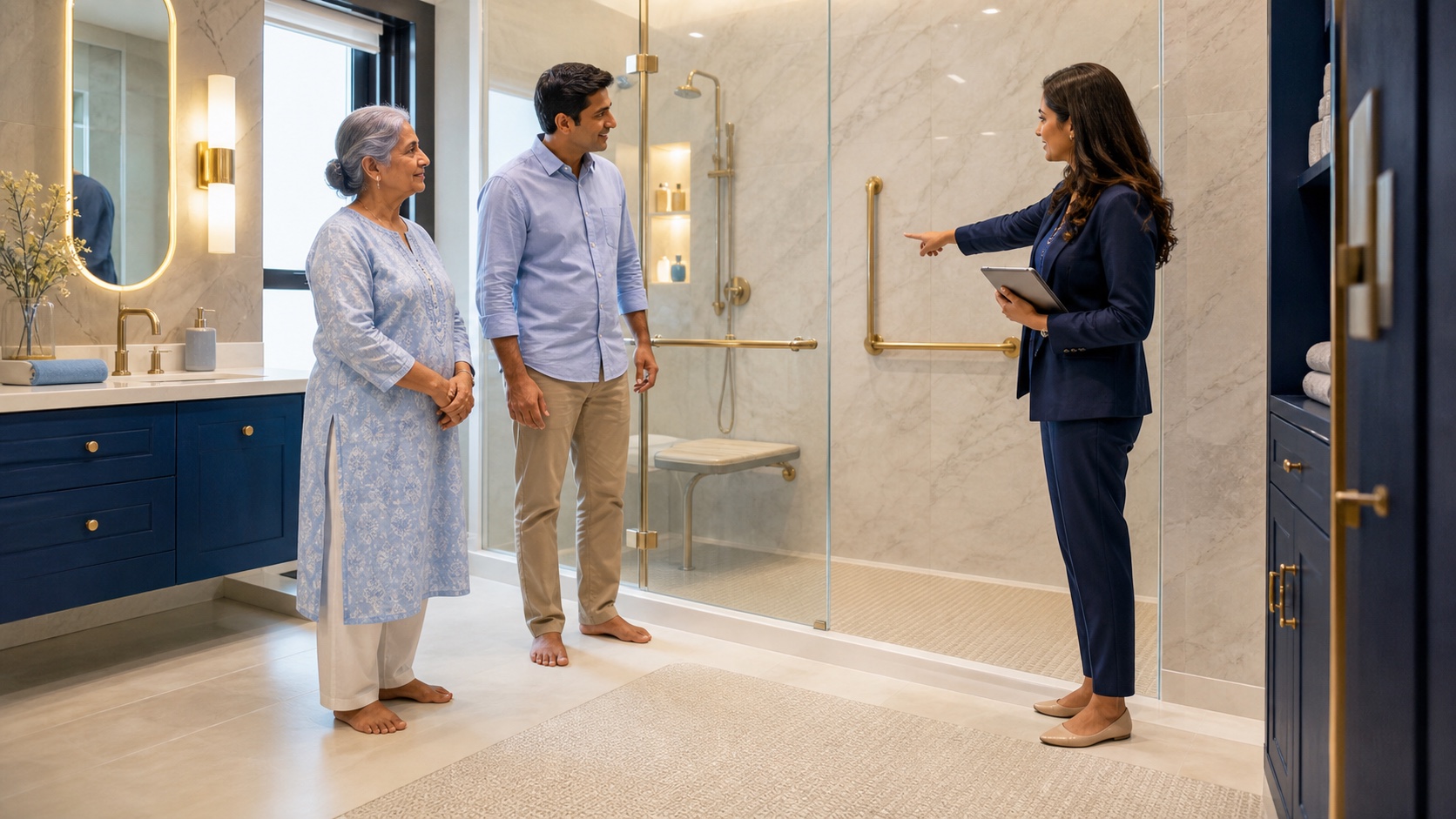
A genuine senior-friendly environment is not proved by terminology. It is proved when the parent can move, bathe, eat, pray, meet people, call for help, and recover from small failures with dignity.
At a glance
Age-friendly design is quiet support
The strongest senior living environments do not make elders feel supervised or reduced. They make movement, rest, help, worship, meals, guests, and emergency response feel natural inside a beautiful home and community.
Questions families ask
Is universal design enough for senior living?
No. Universal design is an important baseline because it makes spaces easier for many people, but senior living also needs ageing-specific checks for night movement, lower stamina, medicines, food access, caregiver support, emergency response, social routine, and dignity.
Is accessibility compliance enough?
No. Measurements and standards matter, especially for ramps, door widths, toilets, turning space, reach, and signage. But families must also test placement, maintenance, route continuity, and whether the parent can use the feature in a real daily routine.
What should families test first?
Start with the bed-to-bathroom route at night, then kitchen or dining access, lift access, route to meals, route to the temple or garden, route to clinic or help desk, and the process for calling family or staff during an emergency.
What is senior design beyond grab bars?
It includes response systems, lighting, non-slip surfaces, reachable storage, medicine flow, meal access, caregiver privacy, heat comfort, social participation, maintenance speed, family communication, and routes that remain usable during fatigue, rain, crowds, or illness.
How do families avoid being misled by jargon?
Ask the seller or operator to show the measured features, walk the daily route, explain failure scenarios, name the maintenance owner, and demonstrate how staff respond. If they can explain only the word but not the working system, the claim is incomplete.
Sources
- Centre for Excellence in Universal Design - About Universal Design
- World Health Organization - Age-friendly environments
- World Health Organization - Global Age-friendly Cities: A Guide
- U.S. Department of Justice - 2010 ADA Standards for Accessible Design
- Department of Empowerment of Persons with Disabilities - Accessible India Campaign
- CDC STEADI - Check for Safety: Home Fall Prevention Checklist
- CDC Still Going Strong - Information for Older Adults