
Walkability for Seniors: A Route Audit for Indian Communities
A practical site-visit audit for families checking walking routes, shade, benches, toilets, surface grip, lighting, crossings, temple access, heat, crowds, and emergency reach.
Quick Answer
Senior walkability is not proved by saying a garden, temple, dining hall, clinic, or lift is nearby. Families should walk the actual routes an older parent will use: apartment to lift, lift to dining, room to temple or satsang, garden loop, parking to entrance, clinic route, toilet access, and the return route after sunset. A senior-walkable community has short segments, shade, benches with arms, smooth drained surfaces, visible edges, toilets, lighting, safe crossings, wayfinding, staff reach, and options to stop before fatigue becomes risk.
Design safety note
This guide is educational and does not replace advice from qualified architects, accessibility consultants, occupational therapists, physiotherapists, doctors, emergency responders, or licensed care providers. If an older adult has repeated falls, dizziness, confusion, sudden weakness, injury, severe pain, breathing difficulty, or immediate danger, seek urgent local medical help.
2 times
to walk it
Test the same route in daytime heat and after sunset before judging walkability.
rest
before fatigue
Benches, shade, and toilets matter before the elder becomes tired, not after.
loop
beats destination
A gentle loop with exits is easier to repeat than one long path to one far place.
Walk the route, not the brochure map
A site plan can make distances look harmless. Older adults experience distance through heat, knee pain, balance, lighting, crowds, toilets, surfaces, pauses, and the confidence that help is nearby. A route that looks short on paper may still stop daily movement.
Families should walk the routes slowly, with the parent if possible: residence to lift, lift to dining, residence to garden, residence to temple or prayer area, parking to lobby, and clinic or help desk access. Notice where the parent slows, looks down, searches for support, avoids a crossing, or asks how much farther it is.
Do the walk twice. Morning or winter walkability can hide problems that appear in summer heat, monsoon wetness, festival crowds, or after sunset. A senior-friendly route should work outside brochure photography hours.
Design pauses into the path
For seniors, a bench is not decoration. It is a decision point that lets someone continue safely, wait for family, talk to a neighbour, catch breath, manage pain, or return without embarrassment. Benches should appear before fatigue becomes visible.
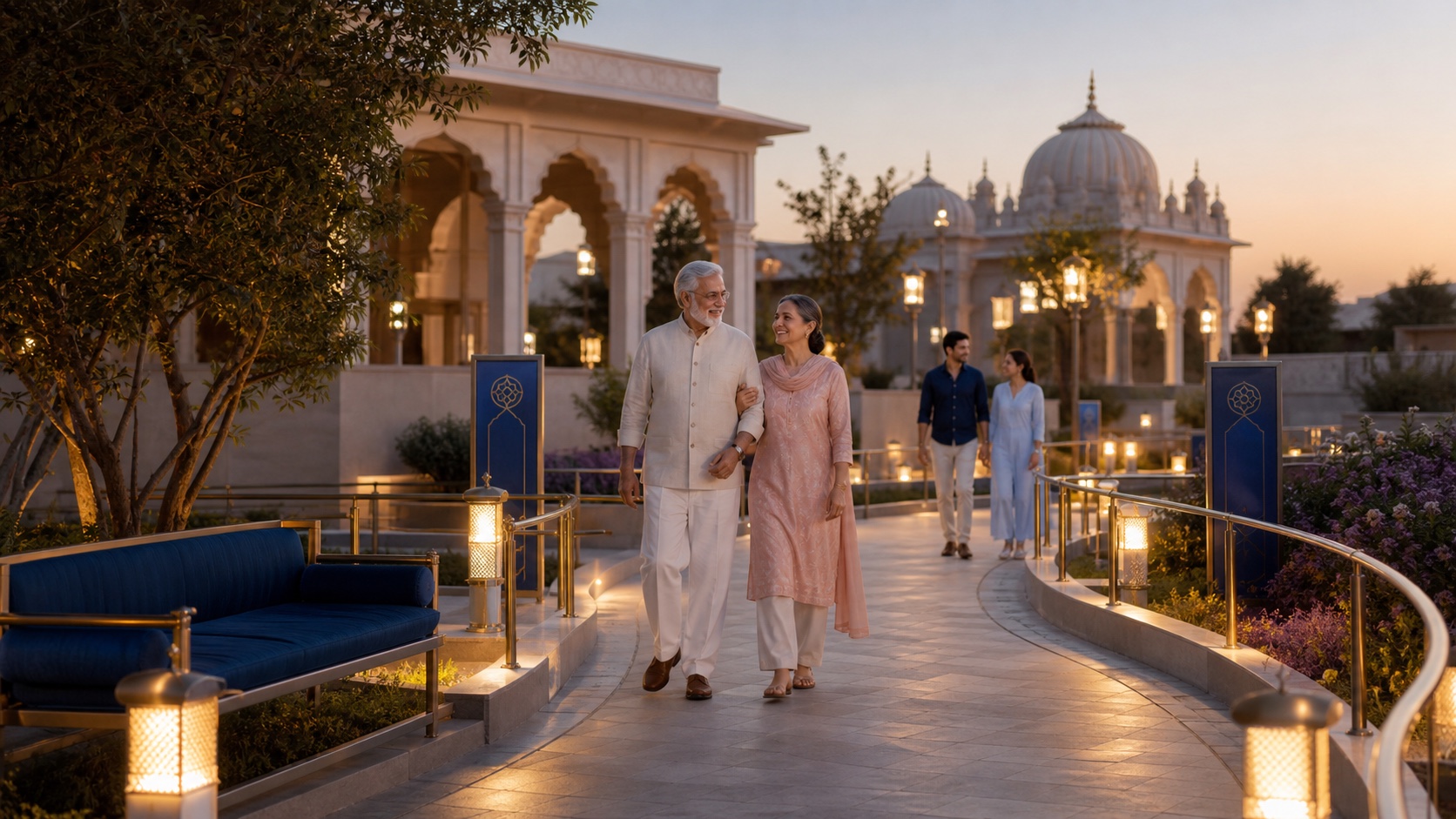
Good rest points have shade, armrests, back support, stable ground, nearby lighting, and enough space for a walker or wheelchair beside the seat. A bench in full sun or on uneven paving is a photograph, not a support system.
Toilets are part of walkability. Many older adults reduce walking if they are unsure about toilet access, cleanliness, distance, privacy, or whether they can reach a toilet quickly from gardens, dining spaces, prayer areas, and reception.
Make spiritual and social movement realistic
In Vrindavan, walking is not only exercise. It can mean darshan, satsang, evening aarti, meeting friends, receiving visitors, going to meals, and staying emotionally connected to the place. If these routes are tiring or unclear, the elder may slowly withdraw indoors.
Temple and community routes should account for footwear, crowds, sound, queues, heat, rain, return movement after dark, and places to sit without blocking circulation. Families should ask how routes work during festivals, not only on a quiet weekday.
Emergency access must be visible in the plan. If an elder feels dizzy on a garden path, who notices, how does staff reach them, where can a vehicle come close, and how does the family get informed? Walkability and response are connected.
Senior walkability audit checklist
Walk daily routes slowly
Test apartment to lift, dining, garden, temple or prayer area, clinic/help desk, parking, reception, and toilets at the elder's pace.
Check shade and heat
Look for trees, colonnades, canopies, shaded benches, and routes that remain usable during summer, bright afternoons, and monsoon humidity.
Inspect benches as support
Benches should have armrests, back support, stable approach surface, nearby lighting, and enough side space for walkers or wheelchairs.
Find toilets on the route
Garden, temple, dining, reception, and community routes should have realistic toilet access, not only toilets inside private residences.
Test surface and drainage
Paving should avoid loose stones, water pooling, slippery slopes, glare, hidden edges, and patterns that make level changes hard to read.
Walk after sunset
Check whether path edges, turns, ramps, steps, benches, signs, and return routes stay visible without glare.
Review crowds and crossings
Ask how the route works during festivals, visitor hours, car movement, service carts, and group meals.
Confirm help can arrive
Staff should know how to reach a resident who feels dizzy, falls, or cannot continue walking on a path.
Walkability decisions families should test
| Design feature | Why it matters | Family question |
|---|---|---|
| Route length | A short map distance can become difficult with heat, pain, fatigue, or return movement. | Can the parent walk there and back without needing to rush or hide fatigue? |
| Bench placement | Rest points allow safe pauses before weakness turns into risk. | Are benches shaded, frequent, stable, and easy to stand from? |
| Toilet access | Fear of not reaching a toilet can stop seniors from joining walks, satsang, or meals. | Where is the nearest usable toilet from garden, temple, dining, and reception routes? |
| Surface and drainage | Uneven, wet, glossy, or patterned paving discourages routine movement and increases trip risk. | Can the elder walk at dusk without watching every step? |
| Evening return | Spiritual and social routines often happen after sunset. | Are edges, turns, benches, ramps, signs, and steps visible without glare? |
| Emergency reach | Weakness or dizziness on a path needs quick human support. | Who reaches the elder, from where, and how fast if they cannot continue? |
Age-friendly design scenes to inspect
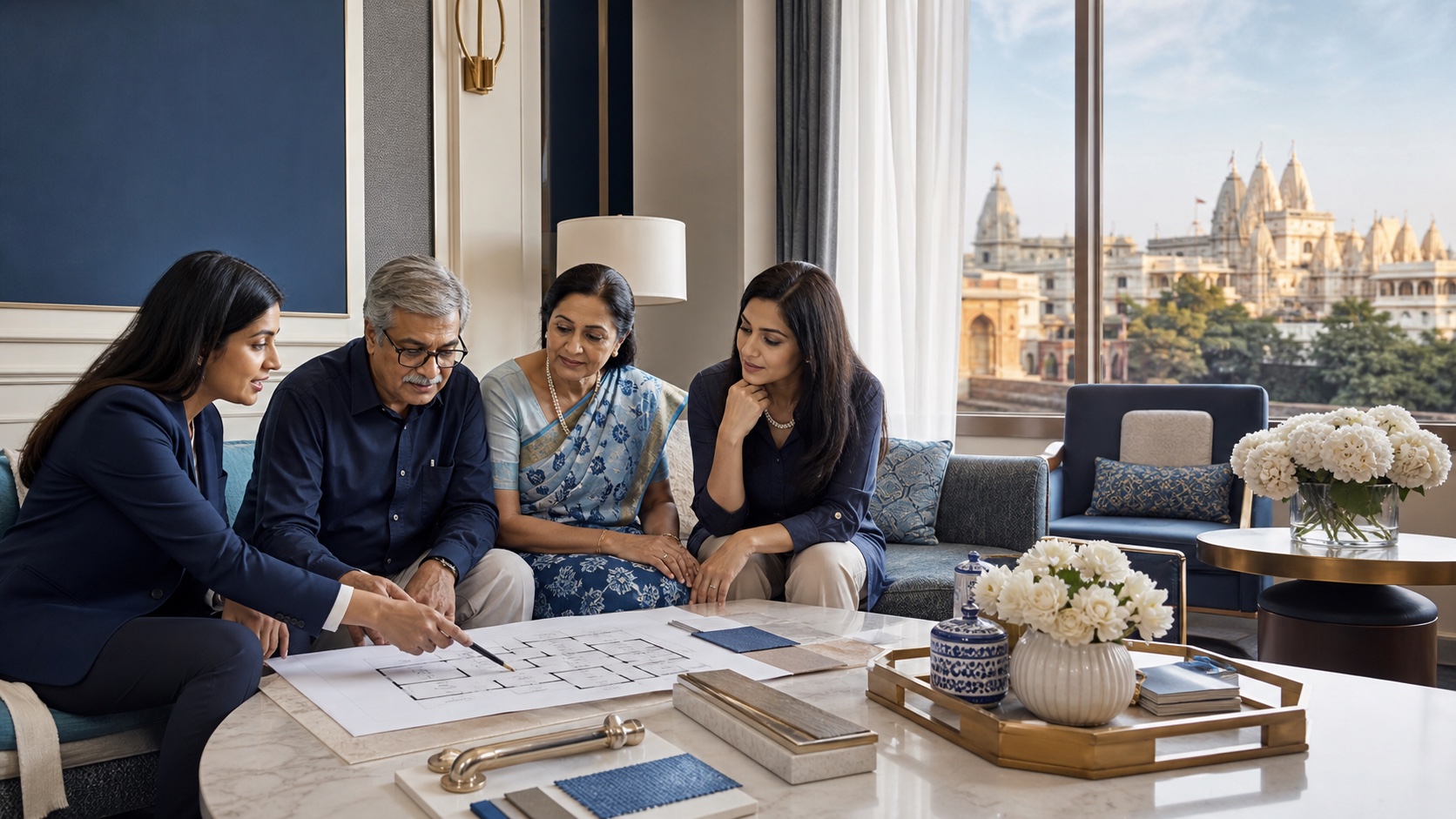
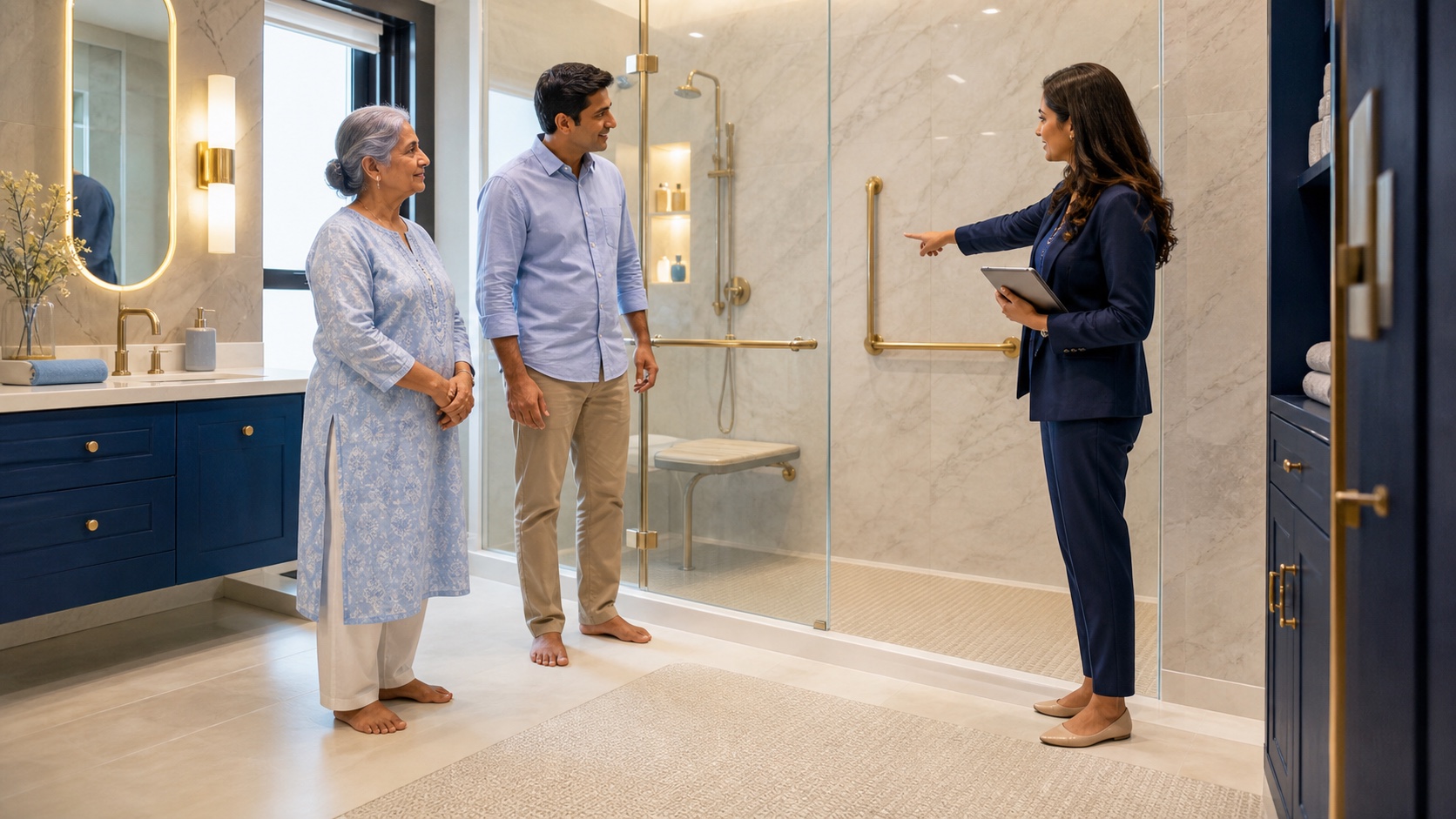
A senior-friendly path should invite one more gentle walk, not demand one more act of bravery.
At a glance
Age-friendly design is quiet support
The strongest senior living environments do not make elders feel supervised or reduced. They make movement, rest, help, worship, meals, guests, and emergency response feel natural inside a beautiful home and community.
Questions families ask
How far should seniors walk every day?
The right distance depends on health, balance, stamina, weather, medicines, and clinician advice. A community should not force one distance; it should offer short loops, rest points, and safe return options so walking can be repeated comfortably.
Are benches really a health feature?
Yes. Benches help people rest before fatigue becomes risk. Armrests, shade, back support, stable ground, and nearby lighting make the difference between a usable bench and a decorative one.
What should families test during a site visit?
Walk from residence to meals, garden, temple or prayer space, reception, parking, help desk, and toilets. Test shade, benches, surface, lighting, crossings, crowd points, and the return route.
Why do toilets matter for walkability?
Many elders avoid longer routes if they are unsure about toilet access. Gardens, dining areas, community halls, reception, and temple paths should have realistic toilet planning.
How should Vrindavan communities plan festival movement?
Routes should account for crowds, queues, footwear changes, heat, late evening return, staff guidance, seating, and emergency access. A route that works only on a quiet day is not enough.
Sources
- World Health Organization - Global Age-friendly Cities: A Guide
- World Health Organization - Age-friendly environments
- CDC - What Counts as Physical Activity for Older Adults
- CDC STEADI - Check for Safety: Home Fall Prevention Checklist
- Department of Empowerment of Persons with Disabilities - Accessible India Campaign