
How to Build a Weekly Wellness Routine for Seniors
A practical weekly routine framework for older adults covering movement, strength, meals, sleep, social connection, medical follow-up, and spiritual rhythm.
Quick Answer
A good senior wellness routine is predictable, gentle, social, and medically safe. It should include daily walking or mobility, 2 or more days of strength activity if appropriate, balance practice, regular meals and hydration, sleep rhythm, social contact, spiritual practice, and planned check-ins.
Key numbers to know
WHO physical activity guidance for adults includes this range when medically appropriate.
WHO recommends strengthening activities on 2 or more days per week.
Older adults should add varied multicomponent activity to support function and reduce falls.
Main guide
Routine beats motivation
Older adults should not have to decide from scratch every day. A predictable weekly rhythm reduces friction and makes health behaviors easier.
The routine should not be intense for the sake of intensity. It should protect function, mood, sleep, appetite, confidence, and social connection.
Start from ability and medical status
A senior with recent surgery, heart symptoms, severe arthritis, dizziness, falls, or breathlessness needs clinical guidance before changing activity.
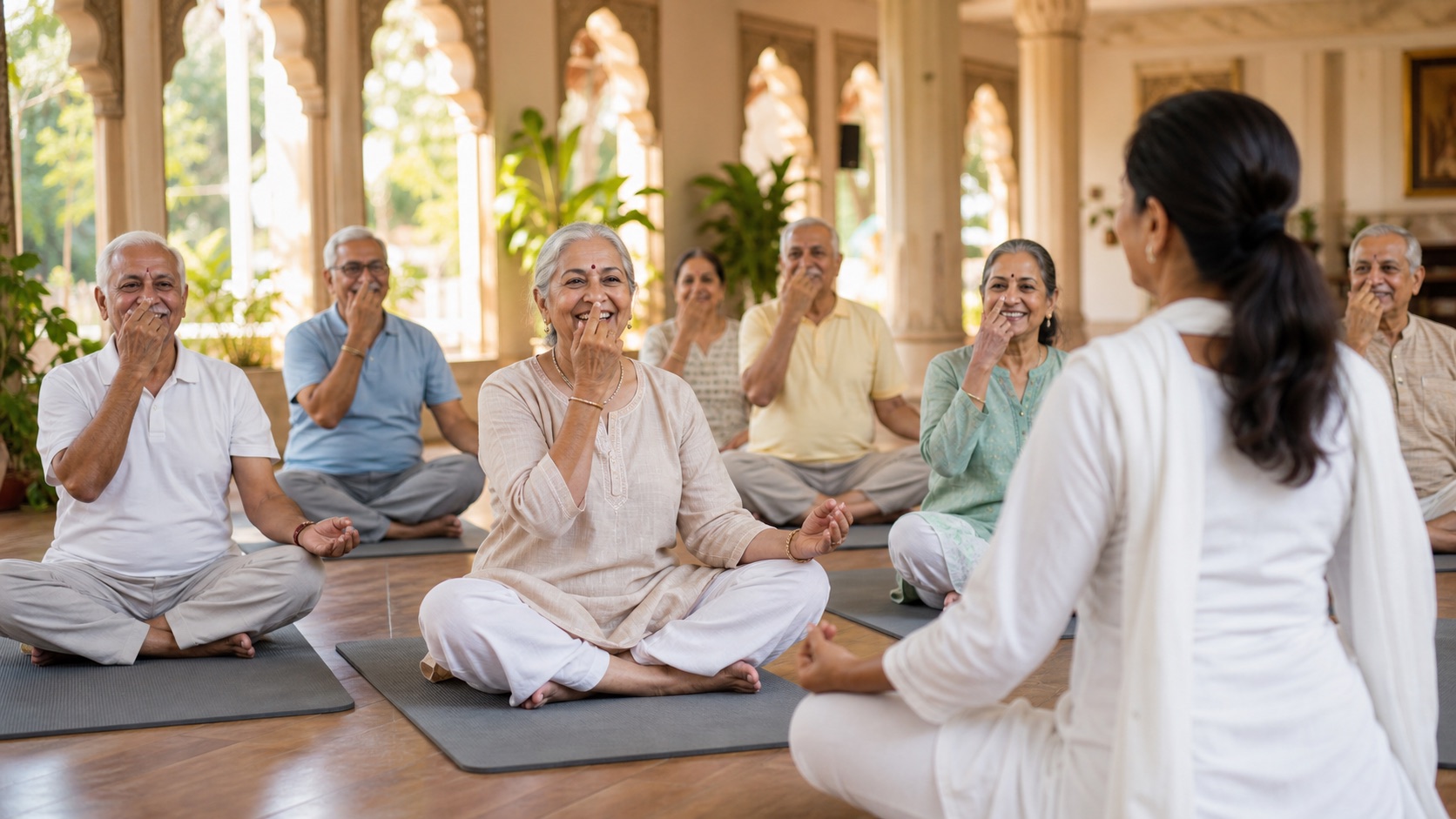
For stable seniors, the plan can start small: short walks, supported mobility, chair-based strength, gentle yoga, breathing practice, and social meals.
Why community improves consistency
Group routines make wellness visible. Seniors are more likely to show up when walks, yoga, satsang, meals, and check-ins are built into the community calendar.
For Krishna Bhumi, the message is clear: wellness is not a one-time service. It is a weekly lifestyle architecture.
7 blocks in a senior weekly wellness routine
- 01
Daily movement
A short safe walk or mobility routine supports circulation, mood, and confidence.
- 02
Strength twice weekly
Resistance bands, sit-to-stand, or supervised light weights may help if medically appropriate.
- 03
Balance practice
Supported balance work helps reduce fall risk when done safely.
- 04
Meal rhythm
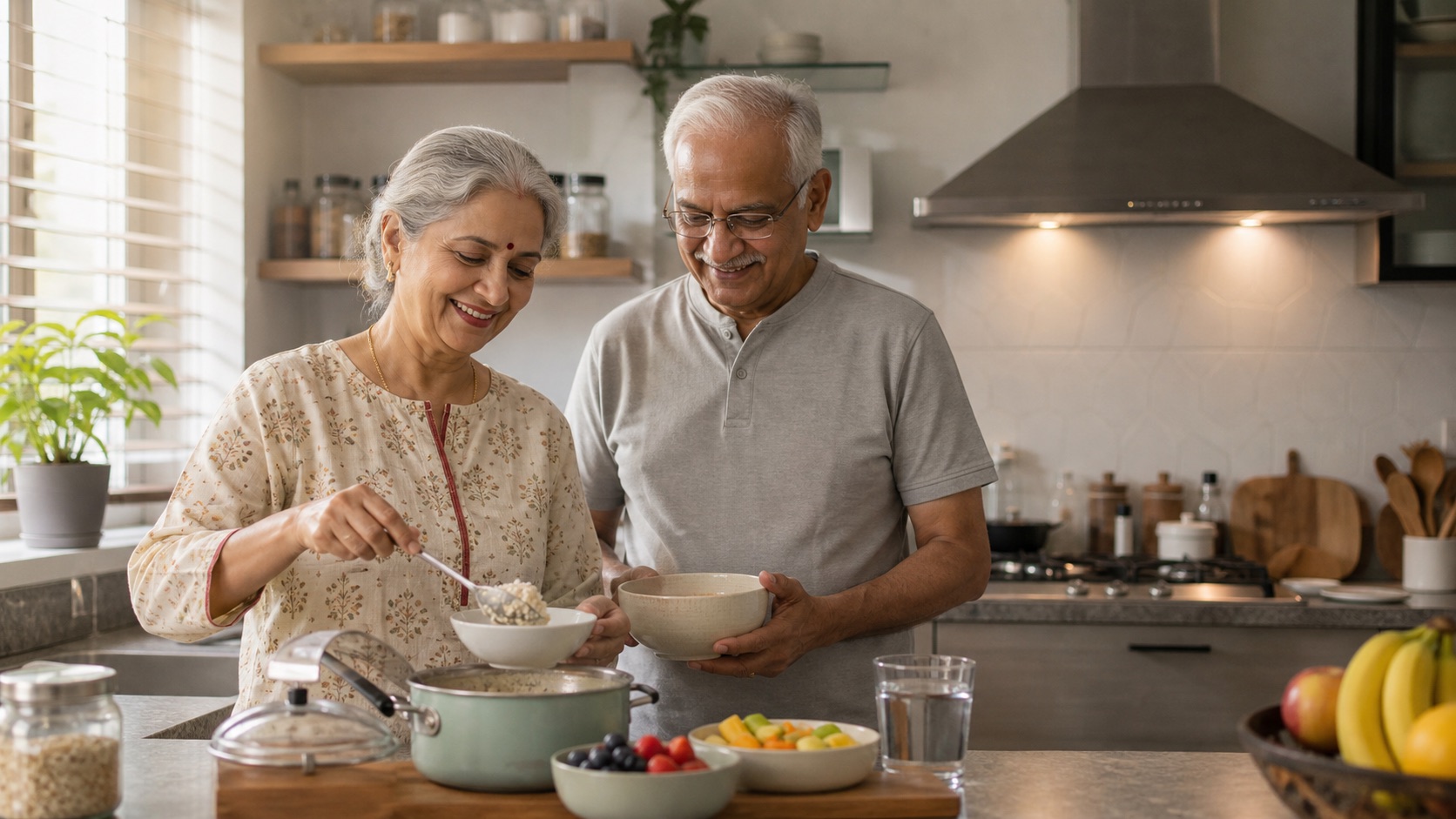
Regular meals, hydration, and protein discussion are central to elder wellbeing.
- 05
Sleep rhythm
Stable wake time, daylight exposure, pain control, and reduced late caffeine can help.
- 06
Social contact
Plan calls, group meals, walking partners, satsang, and resident activities.
- 07
Medical follow-up
Keep a weekly note of symptoms, medicines, blood pressure or sugar only if advised, and appointments.
Sample weekly routine framework
| Factor | What to Watch | Family Action |
|---|---|---|
| Morning | Stiffness, dizziness, hydration, mood. | Use gentle mobility, water, sunlight, and medicine routine. |
| Midday | Meal quality, social contact, fatigue. | Encourage a protein-containing meal and a short social check-in. |
| Evening | Walk safety, lighting, breathlessness, pain. | Use safe paths and avoid poorly lit areas. |
| Weekly | Strength, balance, appointments, spiritual calendar. | Schedule activities instead of leaving them vague. |
| Monthly | Weight, falls, mood, medicine changes. | Review with family and clinician when needed. |
Care in practice
Three scenes that show how the advice can look in daily family life, clinical planning, and community routines.

At a glance
Weekly routine rhythm
A senior wellness week should combine movement, strength, meals, rest, connection, and purpose.
WHO physical activity guidance for adults includes this range when medically appropriate.
WHO recommends strengthening activities on 2 or more days per week.
Older adults should add varied multicomponent activity to support function and reduce falls.
Before you act
This article is for education and family planning only. It does not replace advice from a qualified doctor, geriatrician, physiotherapist, psychiatrist, dietitian, or other licensed professional. Seek urgent medical help for sudden weakness, chest pain, severe breathlessness, fainting, serious injury, or sudden confusion.
Questions families ask
Should all seniors do 150 minutes of activity?
WHO guidance is for adults generally, but individual ability and medical conditions matter. Seniors should ask a clinician when symptoms or risks exist.
Is yoga safe for seniors?
Gentle, adapted yoga can be useful for many seniors, but avoid risky poses and seek guidance for falls, dizziness, severe pain, or recent surgery.
How can families improve consistency?
Use fixed times, group activities, simple tracking, and routines connected to meals or spiritual practice.
What if the elder refuses exercise?
Start with meaningful activity, such as walking to satsang, gardening, or social strolls, rather than framing it as exercise.
What should stop an activity session?
Chest pain, severe breathlessness, dizziness, faintness, new weakness, or unusual pain should stop activity and prompt medical advice.
Sources and review notes
Last reviewed: 2026-05-30. The data points in this guide are based on official public-health and ageing sources where available.