
Should Seniors Retire in Vrindavan? A Family Suitability Checklist
A practical checklist for families deciding whether Vrindavan retirement fits an elder's devotion, health, mobility, community needs, and family support.
Quick Answer
Vrindavan can be a strong retirement choice for seniors who actively want a devotional rhythm, can manage the climate and movement demands, have realistic medical continuity, and will gain community rather than isolation. It is a poor choice if the elder is being moved mainly for family emotion, cannot tolerate heat or crowds, needs frequent specialist care elsewhere, has no reliable local responder, or would lose familiar support. Families should test one ordinary week: temple route, walking distance, toilets, meals, medicines, sleep, social fit, emergency response, family travel time, and whether the elder still wants the move after the first excitement fades.
Care and dignity note
This guide is educational and cultural. It does not replace medical care, mental health support, legal advice, spiritual counselling, or emergency help. If an older adult has severe depression, self-harm thoughts, sudden confusion, chest pain, breathing difficulty, a fall, severe weakness, or immediate danger, seek urgent local help.
5
fit tests
Devotion, body, healthcare, community, and family logistics should all pass.
2
routes
Test both the temple route and the urgent-care route before deciding.
0
forced moves
Spiritual retirement should not be chosen against the elder's preference.
The right reason is daily rhythm, not emotion alone
Many families feel a genuine pull toward Vrindavan because the town carries temple rhythm, devotional memory, vegetarian food culture, bhajan, satsang, and a sense of spiritual belonging. That pull matters. It can make retirement feel purposeful instead of empty.
But the emotional reason has to become an ordinary day. If the elder cannot sleep well, reach the toilet safely, manage medicines, walk without fear, meet people naturally, or get help when unwell, the sacred setting will not solve daily life.
A temple nearby is not the same as usable access
Distance can mislead families. A temple may be geographically close but still hard for an older adult if the route has stairs, uneven surfaces, heat, road crossings, crowds, no seating, no toilet, or no easy return transport.
The useful question is not whether darshan is possible once. It is whether the elder can participate gently, return before fatigue, and skip the visit without guilt on bad health days.
Vrindavan should increase support, not reduce it
Some seniors move to a spiritual town and become more socially alive. Others lose familiar neighbours, doctors, routines, and informal help. A move is worthwhile only if it improves the elder's support system, or at least replaces what is being lost.
Before deciding, name the local responder, doctor contact, medicine system, emergency route, family visit pattern, daily meals, social entry points, and how privacy will be protected. Retirement should not make the elder dependent on hope and occasional family calls.
The Vrindavan retirement suitability checklist
Start with the elder's stated preference
Ask whether they want Vrindavan, what they expect from the move, and what they fear losing from their current home.
Run a normal-week trial
Observe sleep, appetite, mood, heat tolerance, walking confidence, social comfort, prayer rhythm, and whether the elder still wants the routine after several days.
Measure temple access like a mobility test
Count steps, road crossings, seating points, toilet access, shade, crowd exposure, transport options, and the return rule.
Map healthcare before housing
Keep records, current medicines, doctor contacts, nearest triage option, hospital route, ambulance access, and family escalation clear.
Check social entry, not only event calendars
Look for small groups, recurring faces, language comfort, resident interaction, and people the elder can speak to without being pushed.
Calculate family response honestly
Children and grandchildren should know travel time, visit frequency, emergency roles, payment roles, and who responds when health changes.
Inspect the home for ordinary dignity
Look beyond finishes to lifts, thresholds, bathrooms, lighting, bed height, kitchen reach, privacy, staff response, and night safety.
When Vrindavan retirement is a good or poor fit
| Practice | Why it matters | Family question |
|---|---|---|
| Good fit | The elder wants devotional rhythm and gains routine, community, manageable temple access, and family peace. | Does the elder want this after a normal trial week? |
| Poor fit | The move is driven by family sentiment while the elder loses doctors, friends, mobility confidence, or familiar support. | What support would disappear if they moved? |
| Needs caution | Frequent specialist visits, dementia, falls, heat intolerance, or complex medicines can make relocation harder. | Which condition could make daily life unsafe here? |
| Non-negotiable | Spiritual setting cannot compensate for unsafe bathrooms, poor night response, missing medicines, or no emergency route. | Who responds in the first 30 minutes of a problem? |
Spiritual ageing scenes to inspect
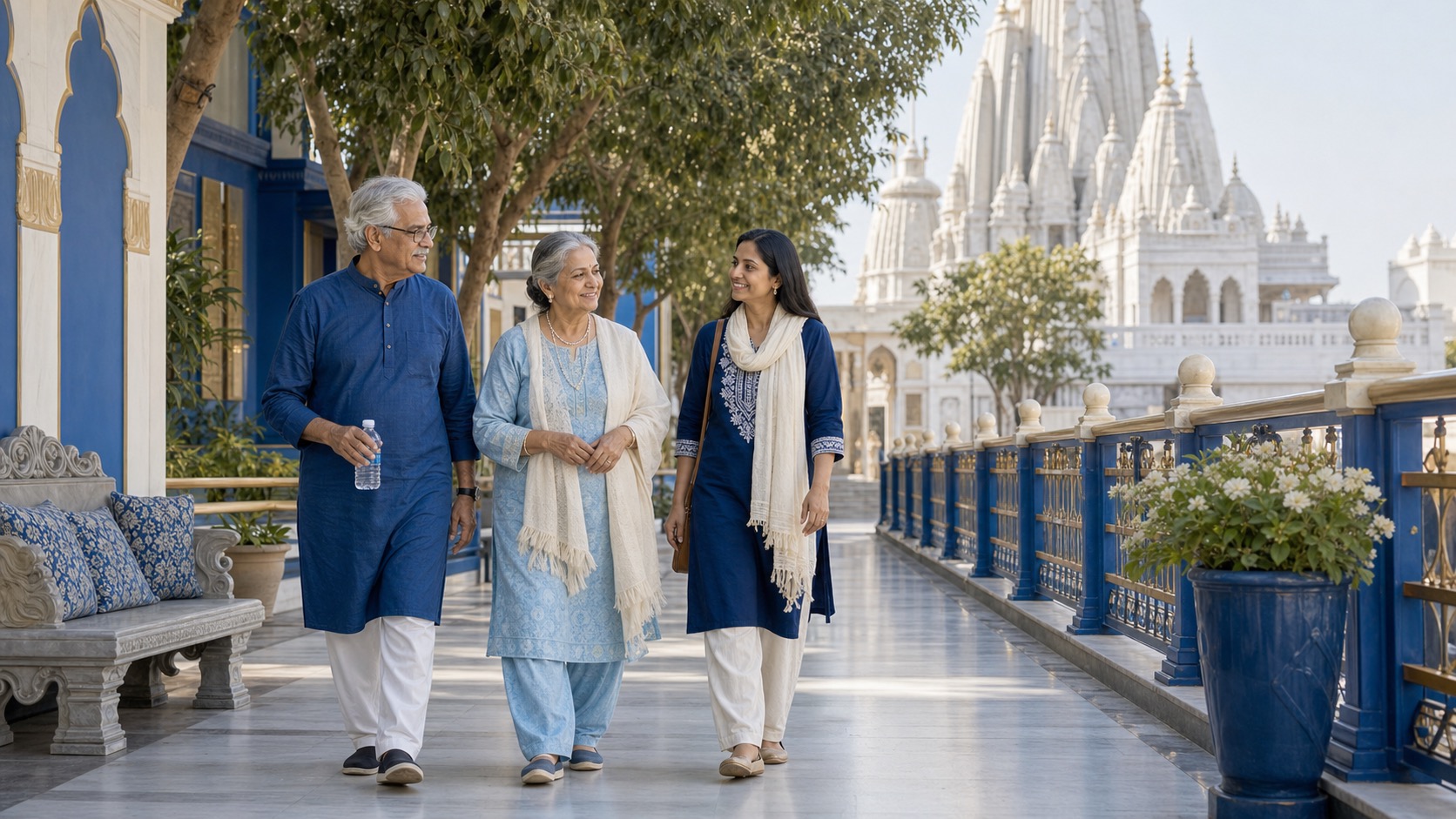
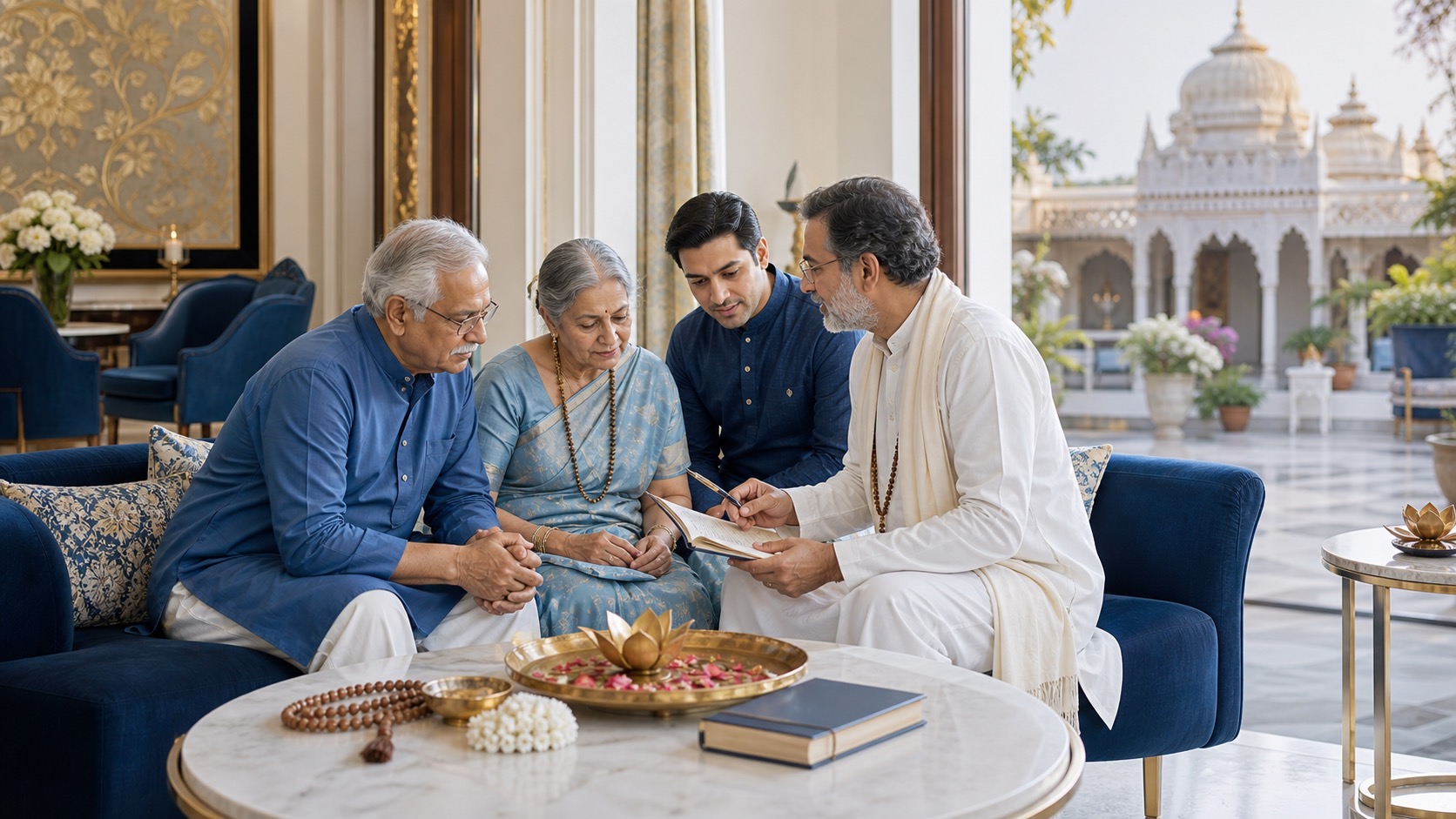
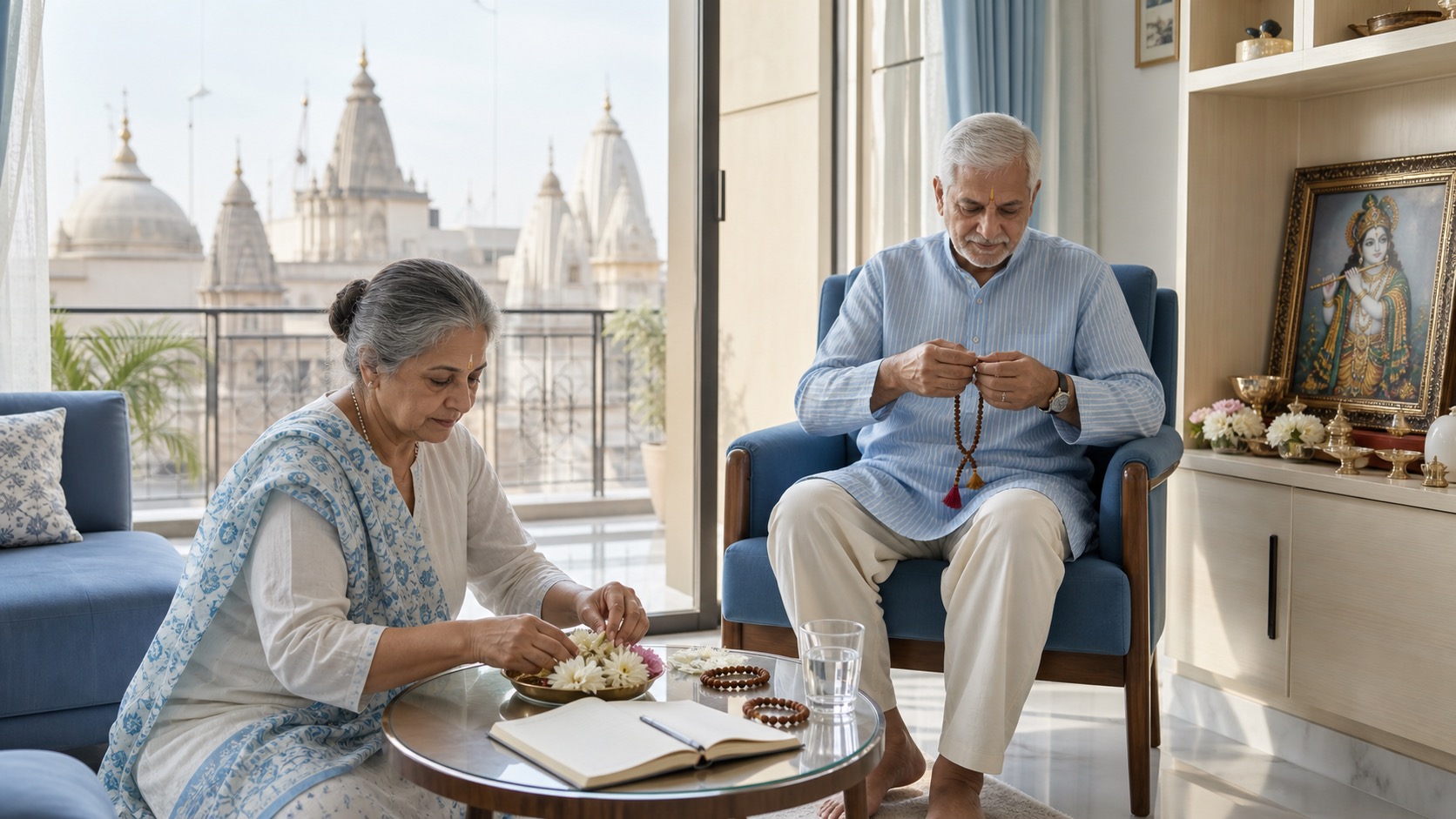
A retirement site visit should include the temple route, toilet access, shaded pause points, one ordinary meal, the medicine routine, a quiet rest period, social introductions, and the emergency route.
At a glance
Spiritual ageing needs both meaning and support
The strongest spiritual retirement setting does not ask seniors to ignore the body. It brings devotion, safety, companionship, rest, family clarity, and dignity into one daily rhythm.
Questions families ask
Is Vrindavan suitable for every senior?
No. Families should consider the elder's preference, health conditions, mobility, weather tolerance, social style, budget, medical continuity, and emergency support.
Should seniors live very close to a temple?
Close access helps only if the route is usable. Shade, benches, toilets, road crossings, transport, crowd exposure, and return options may matter as much as distance.
Can NRI children support parents living in Vrindavan?
Yes, but they need a written plan for local contacts, health records, medicine changes, emergency access, regular updates, payment authority, visit rhythm, and parent consent.
What is the biggest mistake families make?
They confuse a meaningful place with a complete care plan. The sacred setting matters, but daily safety, social fit, health access, and elder choice decide whether retirement works.
When should the family delay the move?
Delay if the elder is unsure, recovering from illness, frequently hospitalized, adjusting medicines, showing new confusion, falling, or unable to tolerate the travel and climate.
Sources