
Widowhood in Vrindavan: A Practical Support Plan for Older Adults
A practical first-30-days guide for families supporting a widowed elder through grief, documents, medicines, meals, privacy, community contact, relocation decisions, and warning signs.
Quick Answer
Widowhood changes daily routine, documents, finances, medicines, meals, sleep, privacy, identity, and safety. The first support plan should not start with relocation or public participation. It should name one immediate helper, protect medicines and meals, list urgent documents, arrange doctor contact, set a daily check-in, define a privacy rule, offer consent-based community contact, and write warning signs that require professional help. Vrindavan's spiritual community can support routine and companionship, but it cannot replace medical or mental health support when grief becomes unsafe or unmanageable.
Care and dignity note
This guide is educational and cultural. It does not replace medical care, mental health support, legal advice, spiritual counselling, or emergency help. If an older adult has severe depression, self-harm thoughts, sudden confusion, chest pain, breathing difficulty, a fall, severe weakness, or immediate danger, seek urgent local help.
30
days to stabilize
The first month should protect meals, medicines, sleep, documents, and one reliable check-in.
1
private grief rule
The elder chooses what is shared, with whom, and when.
3
support lanes
Practical help, emotional companionship, and clinical escalation are different tasks.
Stabilize the first month before big decisions
The first month after a spouse dies is not the time to solve the elder's whole future. The useful work is smaller and more urgent: medicines are taken, meals are eaten, sleep is watched, the doctor knows what has happened, bills and bank access are not lost, and one trusted person checks in every day.
Families should make a document folder with identity papers, medical records, prescriptions, insurance details, bank contacts, property papers, pension records, phone numbers, and death certificate copies. This is not only paperwork. It reduces the panic that often follows when the person who handled records is gone.
Major choices like selling a home, moving to Vrindavan, changing caregivers, or giving away possessions should usually wait until the elder is steadier. A trial stay, a familiar helper, and a doctor-reviewed plan are safer than an emotional relocation made during shock.
Make community support consent-based
Spiritual community helps when it gives gentle structure without taking ownership of the elder's grief. One neighbor, relative, or community coordinator can offer a temple walk, shared meal, bhajan, satsang, or quiet visit, but the elder should be free to say no without explanation.
Privacy needs an explicit rule. Families can agree that details about the death, finances, property, family conflict, health, or future plans are not discussed publicly unless the elder permits it. Concern becomes harmful when it turns into gossip, pressure, or constant advice.
Good support is specific. Instead of saying, 'Be strong' or 'Come to satsang every day,' say, 'I can bring lunch on Tuesday,' 'I can sit with you during the bank visit,' or 'We can leave the program early if you feel tired.'
Separate grief from warning signs
Crying, silence, anger, memory waves, disrupted sleep, appetite changes, and avoiding social events can be part of grief. Families should not treat every sad day as a crisis or force public cheerfulness to make themselves comfortable.
At the same time, spiritual language should not hide risk. Seek professional help urgently if the elder talks about self-harm, stops eating or drinking, becomes newly confused, cannot take essential medicines, wanders unsafely, neglects basic hygiene for days, is exploited financially, or says life is not worth living.
The safest plan names who will call the doctor, who will stay with the elder in an emergency, which hospital or clinic is preferred, and which family member can make decisions if the elder asks for help.
The first-30-days widowhood support card
Name one primary helper
Choose one person who coordinates calls, visits, documents, medicine refills, and urgent decisions so the elder is not answering everyone separately.
Protect medicines and meals
Write the daily medicine schedule, confirm refills, check appetite, arrange simple meals, and watch dehydration or skipped doses.
Create the document folder
Collect identity, medical, insurance, pension, bank, property, contact, and death certificate records before a missing paper becomes a crisis.
Schedule predictable contact
A fixed morning or evening check-in is better than random calls. Predictability lowers the elder's burden of asking for help.
Offer grief-safe rituals
Prayer, japa, bhajan, lamp lighting, temple darshan, or reading can help when the elder chooses the pace and can stop at any time.
Set privacy boundaries
Agree what relatives, neighbors, community members, and staff may know. Do not turn grief into public discussion.
Delay major relocation decisions
If Vrindavan is being considered, begin with a short supported stay, doctor continuity, familiar routines, and clear consent from the elder.
Write escalation signs
List the symptoms or situations that mean family should call a doctor, mental health professional, emergency service, or trusted local support.
Widowhood support decisions families should make
| Practice | Why it matters | Family question |
|---|---|---|
| Immediate helper | Too many callers can overwhelm the elder and still leave important tasks undone. | Who coordinates visits, calls, documents, medicines, and urgent decisions? |
| Documents and money | Widowhood often exposes gaps in records, access, passwords, pensions, and bill payment. | Which papers must be gathered this week, and who will help without taking control? |
| Daily routine | Meals, medicines, sleep, movement, and prayer stabilize the day when the household rhythm has collapsed. | What is the smallest daily schedule the elder can actually follow? |
| Community contact | Satsang, temple visits, and shared meals can reduce isolation only when they remain voluntary. | Who will invite gently, protect privacy, and accept refusal without pressure? |
| Relocation | A sudden move can remove familiar doctors, neighbors, routines, and emotional anchors. | Can we test Vrindavan through a supported short stay before any permanent decision? |
| Clinical escalation | Some grief reactions need medical or mental health support, especially when safety or basic functioning is at risk. | Which warning signs mean we call a doctor or emergency support immediately? |
Spiritual ageing scenes to inspect
The first duty after widowhood is not to make the elder look settled. It is to protect safety, dignity, choice, and the ordinary tasks that keep life functioning.
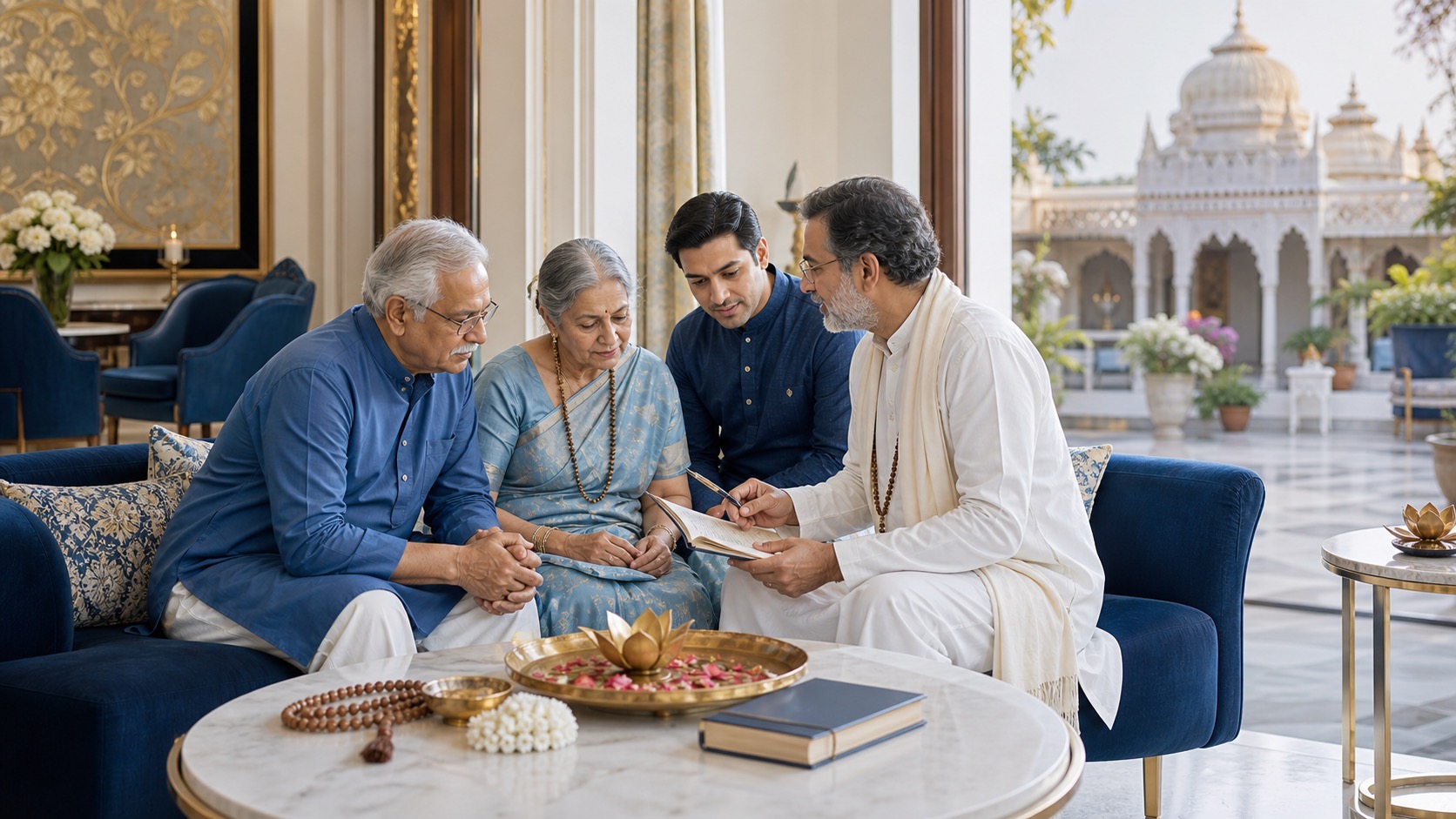
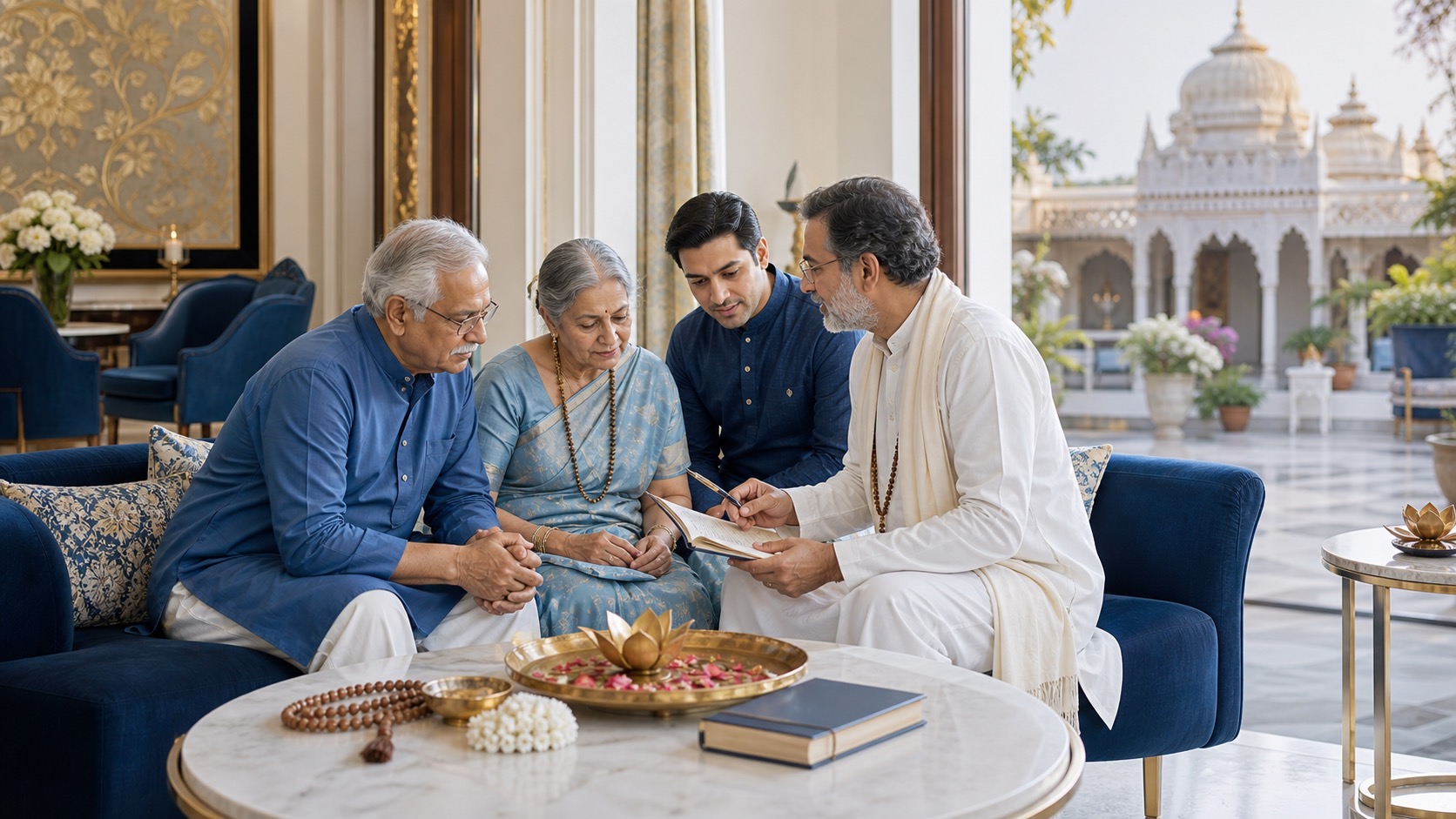
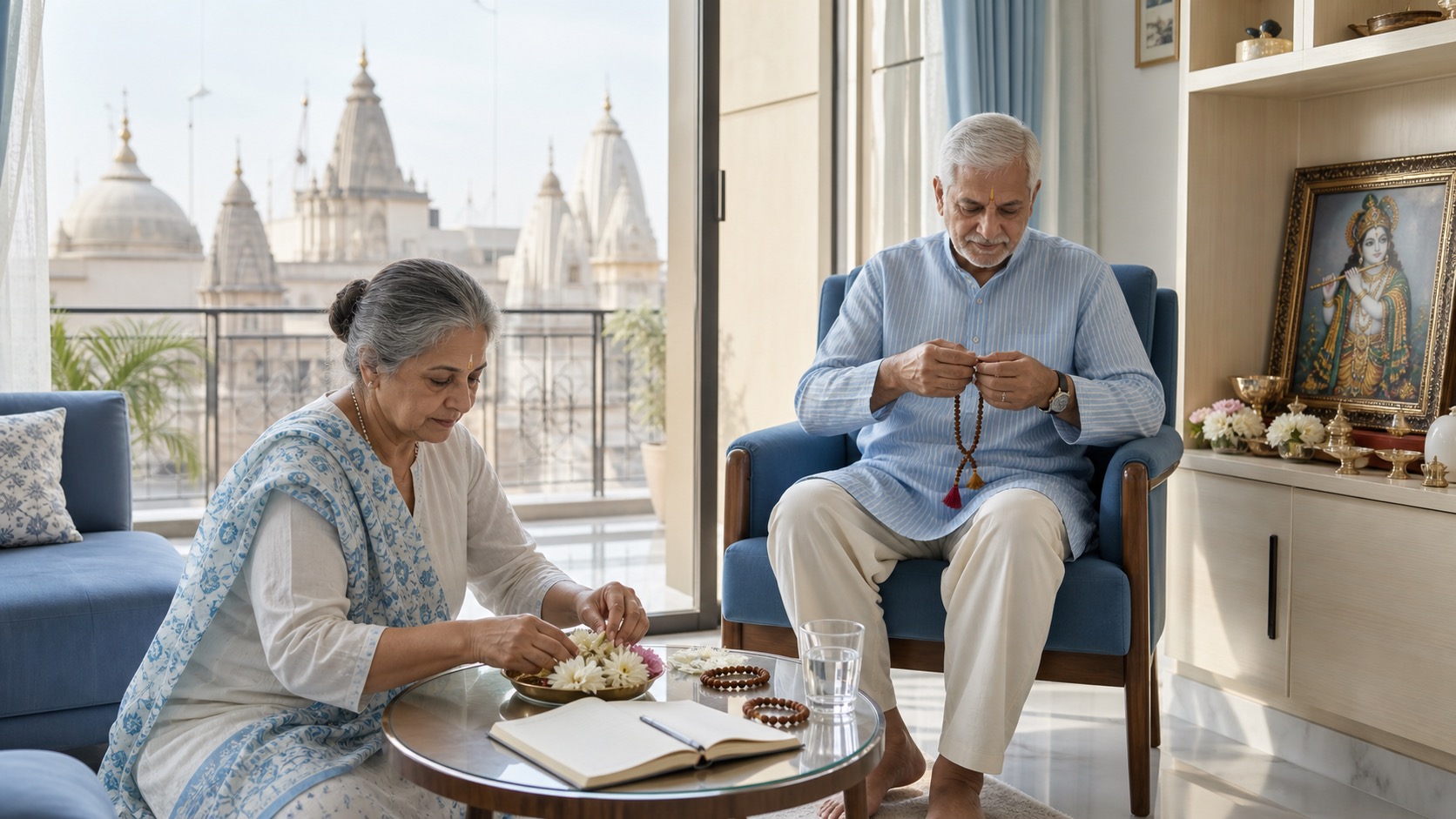
At a glance
Spiritual ageing needs both meaning and support
The strongest spiritual retirement setting does not ask seniors to ignore the body. It brings devotion, safety, companionship, rest, family clarity, and dignity into one daily rhythm.
Questions families ask
Is grief a medical problem?
Grief itself is a human response to loss, not a failure or a disease. Families should seek professional help when the elder talks about self-harm, cannot eat or sleep enough to function, becomes newly confused, stops essential medicines, withdraws in an unsafe way, or says life is not worth living.
Can moving to Vrindavan help after widowhood?
It can help some elders if they want a devotional routine, community contact, quieter living, and temple access. It should not be the first reaction to grief. Start with stabilization, then consider a short supported stay with doctor continuity, medicines, documents, familiar helpers, and clear consent.
How can community help without intruding?
Offer concrete help, keep invitations predictable, and ask before sharing personal details. A community member can bring food, accompany a temple visit, sit quietly, or help with a small task. The elder must be allowed to decline without being judged as unspiritual or ungrateful.
What should families handle in the first month?
Protect medicines, meals, hydration, sleep, doctor contact, money access, bill payment, identity records, insurance papers, pension details, bank contacts, property records, and a daily check-in. These practical pieces often matter more than speeches about strength.
Should a widowed elder attend satsang immediately?
Only if the elder wants to. Satsang can be comforting, but public gatherings can also feel exhausting in early grief. A short visit, a small bhajan group, or quiet prayer at home may be better until the elder is ready.
Sources